For the last decade, the industry believed it had solved the analytics problem.
Metrics were centralised. Definitions were standardised. Dashboards were unified. Metric stores emerged as the "single source of truth." And yet, enterprises are still asking the same questions: Why does this metric behave differently in different contexts? What caused this change? Which downstream metrics are impacted? Can I trust this number for this decision?
The uncomfortable truth is this: metric stores solved storage, not understanding. The next evolution is already underway.
The Limits of Metric Stores
Metric stores were an important step forward. They brought consistency to definitions and reduced duplication. But they were built on a narrow assumption: if we store the metric definition centrally, the rest will take care of itself.
In practice, that assumption breaks down quickly. Metric stores typically know how a metric is calculated and which column it uses. But they do not know why the metric exists, when it should or shouldn't be used, how it relates to business events, what it impacts downstream, or how meaning shifts across personas or use cases. As enterprises scale, these gaps become visible and costly.
Metrics Are Not Numbers. They Are Knowledge.
A metric is never just a formula. "Revenue" means different things before refunds vs after, gross vs net, booked vs recognised, daily vs monthly, and across finance, sales, and growth teams. A metric lives inside a web of meaning — business terms, entities, events, policies, relationships, and assumptions.
Metric stores freeze metrics as static artefacts. Enterprises, however, operate in motion. This mismatch is exactly why metrics alone are no longer sufficient.
What Is a Knowledge Machine?
A knowledge machine does not merely store definitions. It reasons about them. Instead of answering "What is the SQL for this metric?", a knowledge machine can answer: Is this metric appropriate for this question? Which version applies in this context? What events could explain the change I'm seeing? What assumptions are baked into this number?
This is not metadata. This is semantic intelligence — the ability to reason about meaning, not just retrieve it. Knowledge machines traverse relationships, not just look up definitions.
Why the Shift Is Happening Now
Three forces are pushing enterprises beyond metric stores. First, AI needs reasoning, not retrieval — LLMs don't fail because they lack SQL, they fail because they lack context. Without a semantic layer that encodes relationships, AI can only retrieve, not reason. Second, enterprises now ask causal questions — "Why did churn spike? What changed upstream?" Metric stores cannot answer why. Knowledge machines can. Third, semantics no longer fit in flat models — relationships are multi-hop, definitions are conditional, context is layered. This requires graphs, not tables.
The Role of Semantic Graphs
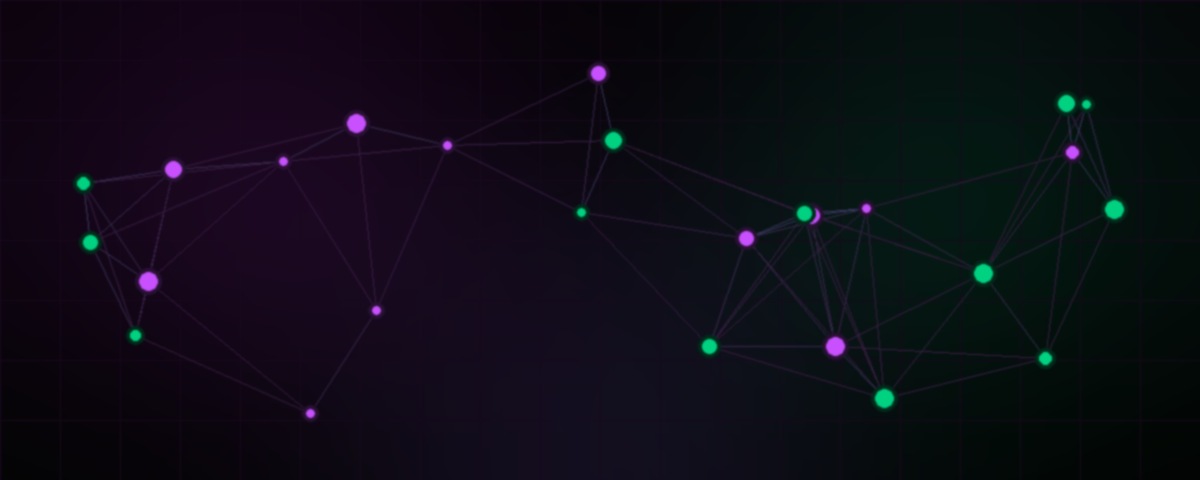
Knowledge machines are built on semantic graphs, not metric registries. A semantic graph connects metrics to business terms, entities, events, dimensions, policies, and other metrics — allowing systems to traverse meaning, not just look it up. This is the architectural direction platforms like Colrows have taken, treating metrics as nodes in a reasoning graph, not rows in a catalogue.
From Querying Metrics to Conversing With Knowledge
Metric stores answer questions like: "Give me metric X grouped by Y." Knowledge machines enable questions like: "Show me revenue impact from failed payments last week, and explain what changed." The difference is profound. One is retrieval. The other is understanding. One assumes the user already knows what to ask. The other helps the user discover what matters.
As enterprises grow more complex, storing metrics is table stakes. Understanding them is the differentiator. The winners will not be the companies with the largest metric catalogues. They will be the ones with systems that can reason across meaning.
From metrics as numbers… to metrics as knowledge… to systems that can think with them.
Published on Colrows Insights · Dec 15, 2025 · insights@colrows.com · colrows.com