
Model Context Protocol
How MCP became enterprise infrastructure, how to build governed MCP servers, and why standardizing on the protocol still needs a semantic layer behind it.
The Model Context Protocol (MCP) is the open standard, introduced by Anthropic in November 2024 and now governed by the Linux Foundation's Agentic AI Foundation, for connecting AI applications to tools, data, and systems. It collapses the M-by-N integration problem into M-plus-N: write your system as one MCP server, and any MCP client can reach it.
This collection covers MCP from the enterprise architect's point of view. Posts here examine the adoption evidence and governance model that make MCP a real infrastructure decision, the exact wire shapes and code for building a governed MCP semantic layer server, and the semantic gap the protocol leaves open. MCP standardizes access. It does not standardize meaning. These pieces argue that the winning enterprise pattern pairs MCP as the transport with a governed semantic execution layer as the logic.
← Back to all posts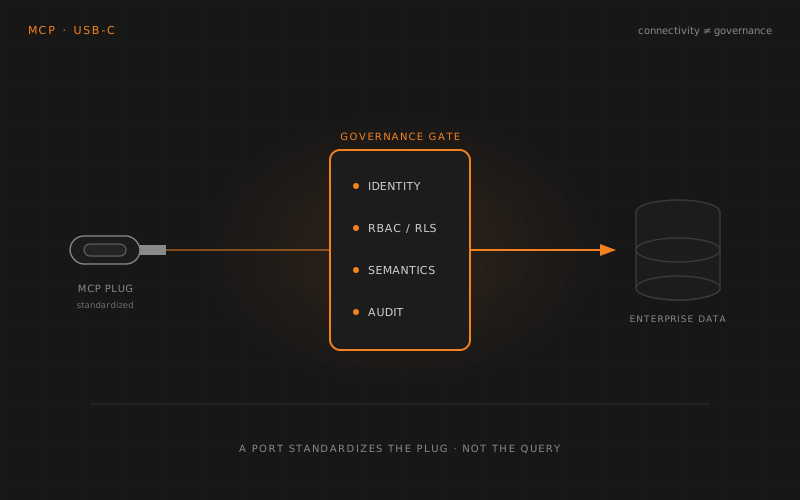
MCP Is the USB-C Port for AI Agents. Connectivity Is Not Governance.
The USB-C metaphor is correct. A port standardizes the plug, not identity, permission, or whether the answer is right.
Read more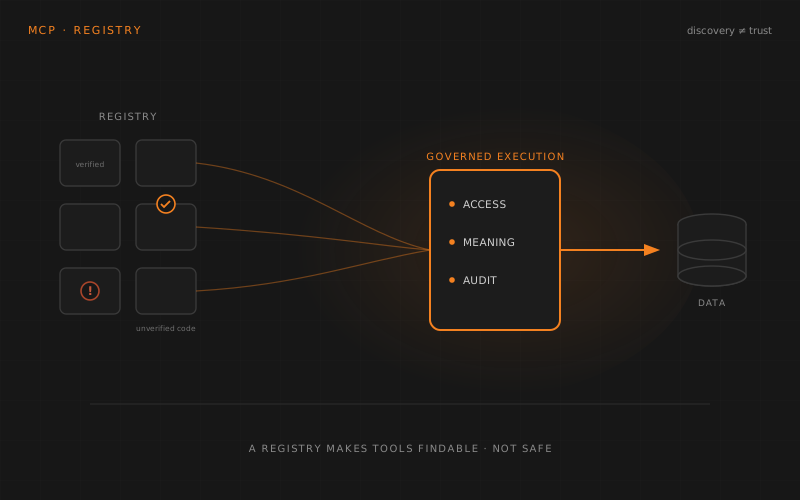
The MCP Registry Era: Discovery Is Solved. Trust Is Not.
The MCP Registry is live in preview. It verifies who owns a tool, not whether its answers are safe.
Read more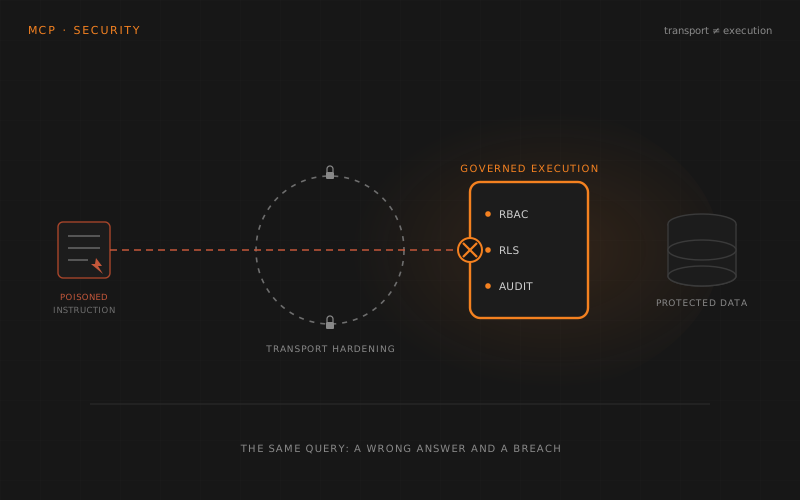
MCP Security Risks: Tool Poisoning, Prompt Injection, and Data Leakage
Real 2026 incidents, two 9-plus CVEs, and the breach transport security cannot stop.
Read more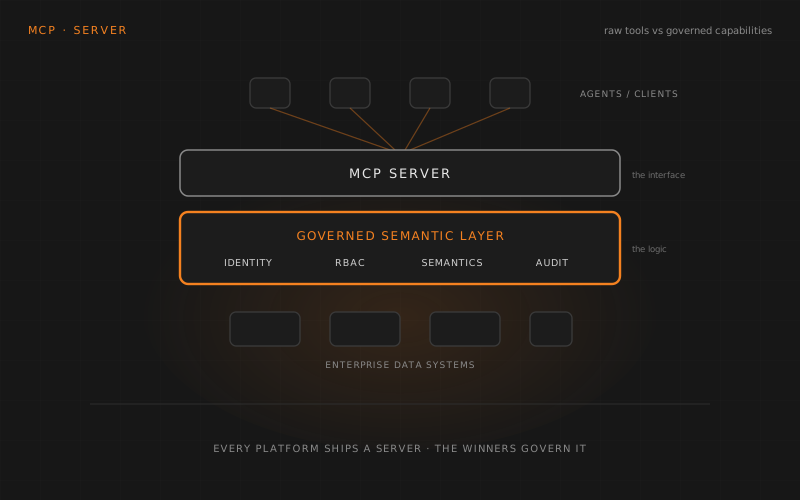
Why Every Enterprise Platform Will Ship an MCP Server
The integration unit of the agent era is a governance decision, not a checkbox. Expose governed capabilities, not raw tools.
Read more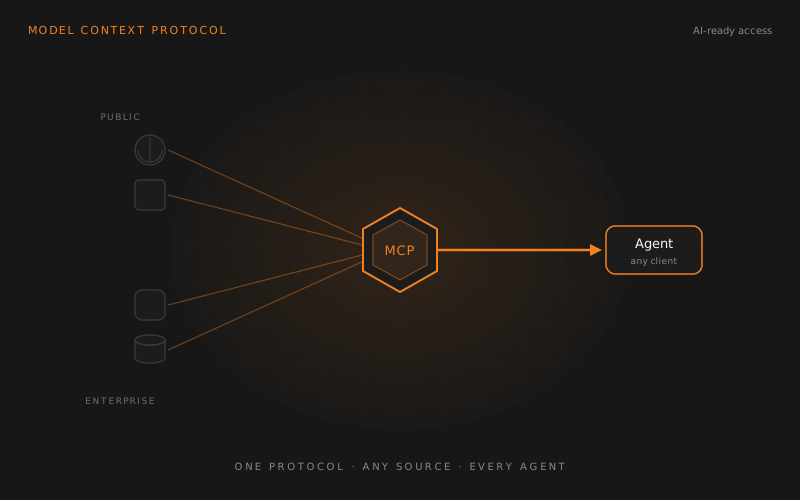
MCP for Public and Enterprise Data: The New Standard for AI-Ready Access
The public MCP servers, the OpenAPI-to-MCP pattern, and the two-axis map of what AI-ready access really means across public and enterprise data.
Read more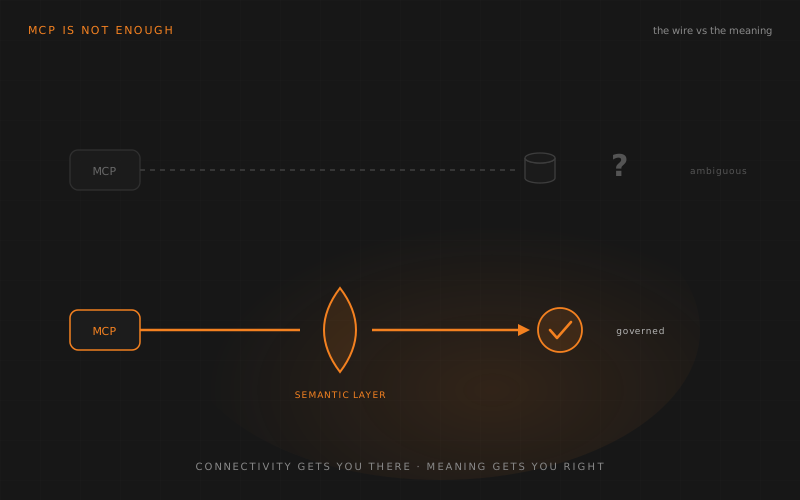
MCP Is Not Enough: Why Enterprise AI Agents Need a Governed Semantic Layer
MCP won the transport war. The dbt 2026 benchmark, the Gartner projection, and why meaning, not connectivity, is where production agents fail.
Read more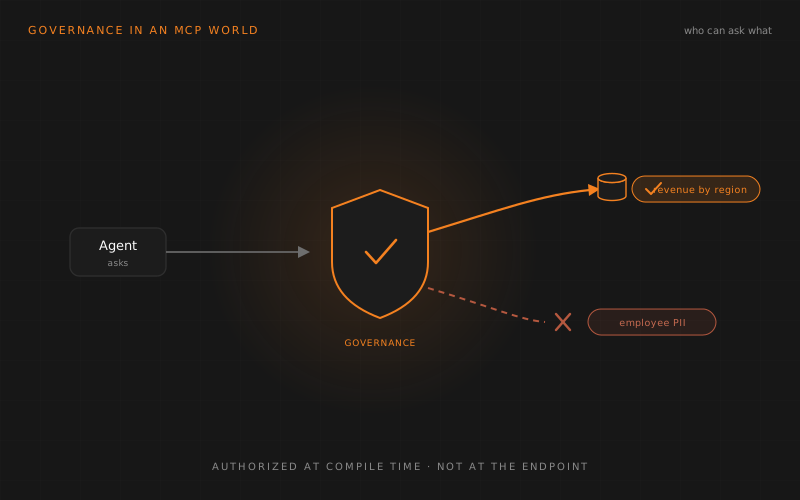
Who Controls What an AI Agent Can Ask? Governance in an MCP World
The confused-deputy problem, the six layers of MCP governance, and why row and column authorization belong at compile time, not the endpoint.
Read more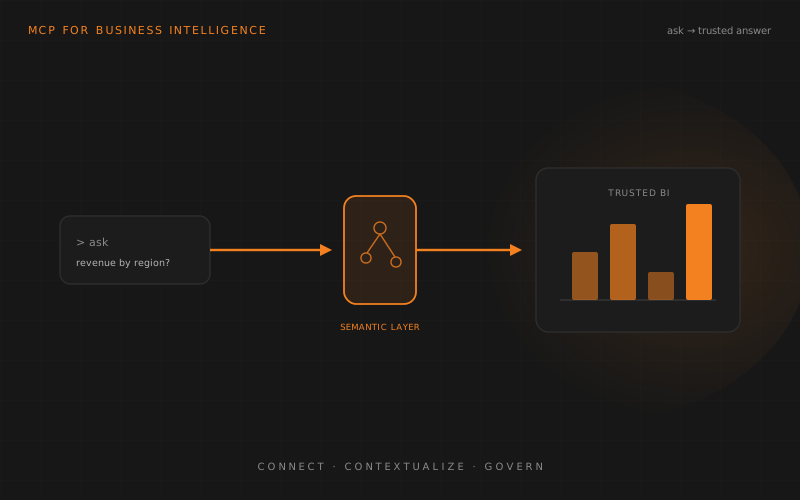
MCP for Business Intelligence: How AI Agents Should Query Enterprise Data
Text-to-SQL demos work; production breaks with wrong joins and metric drift. The dbt 2026 benchmark, the Spider 2.0 cliff, and the governed semantic layer that fixes it.
Read more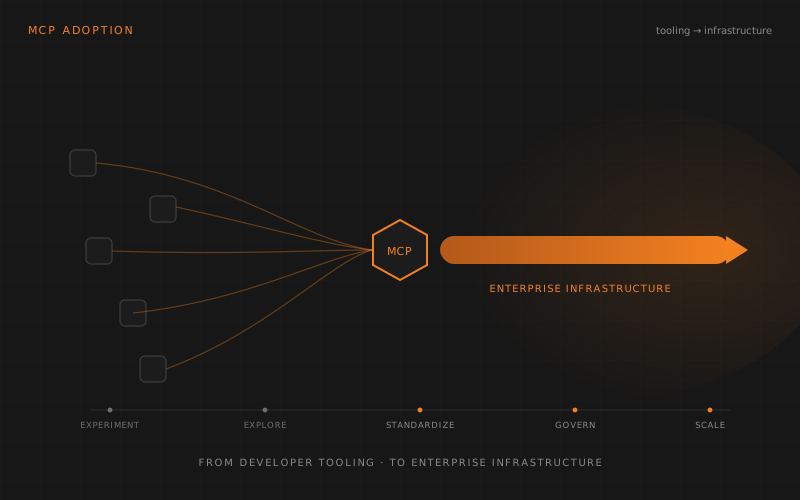
Enterprise MCP Adoption: Why the Model Context Protocol Became Infrastructure
The Linux Foundation donation, the version timeline, cross-vendor support, and why standardizing on MCP still needs a governed semantic layer.
Read more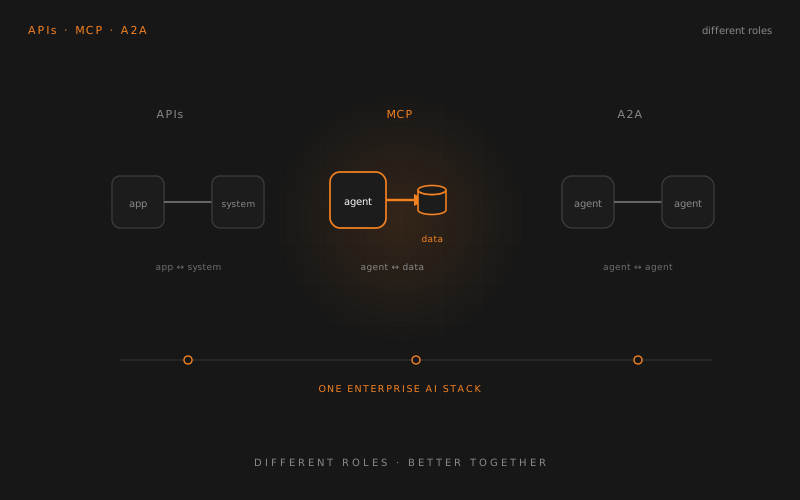
APIs vs MCP vs A2A: What Enterprise AI Teams Need to Know
A cited comparison of APIs, MCP, and A2A, a three-question decision framework, and why none of them solve the meaning problem.
Read more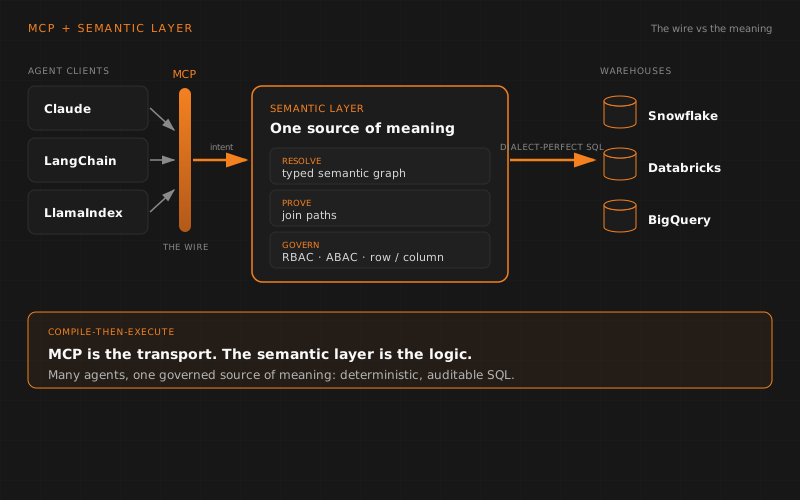
How to Build an MCP Semantic Layer Server (Architecture, Code, and the No-Rip-and-Replace Case)
The protocol in two minutes, the exact message shapes a semantic-layer server speaks, a buildable FastMCP scaffold, and the cost argument for MCP over a custom API.
Read more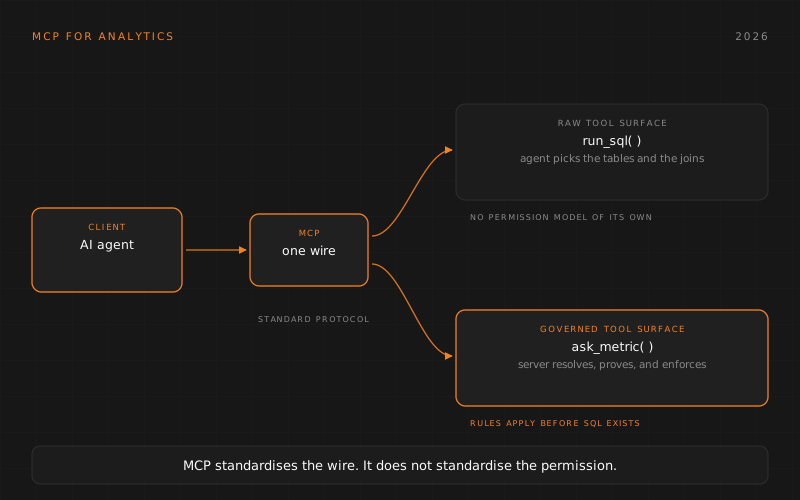
Best MCP Servers for Analytics and BI in 2026, Scored on Auth Model, Write Safety, and Governance
One server runs read-write by default. Another loses row-level security under service principal auth.
Read more