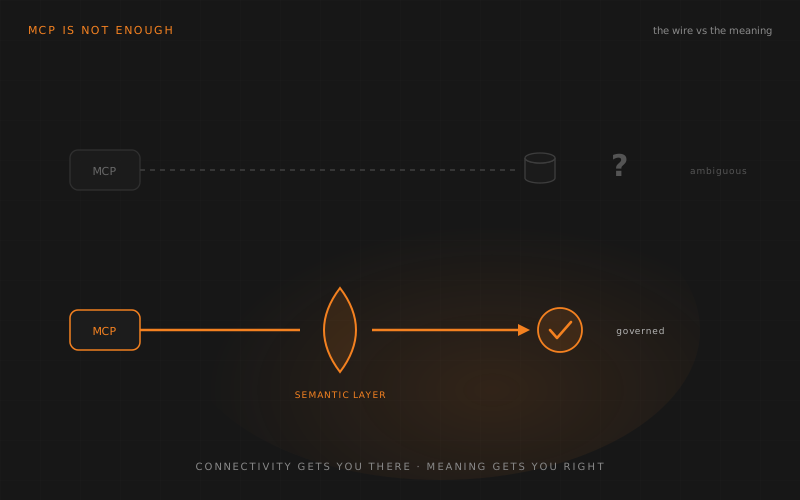
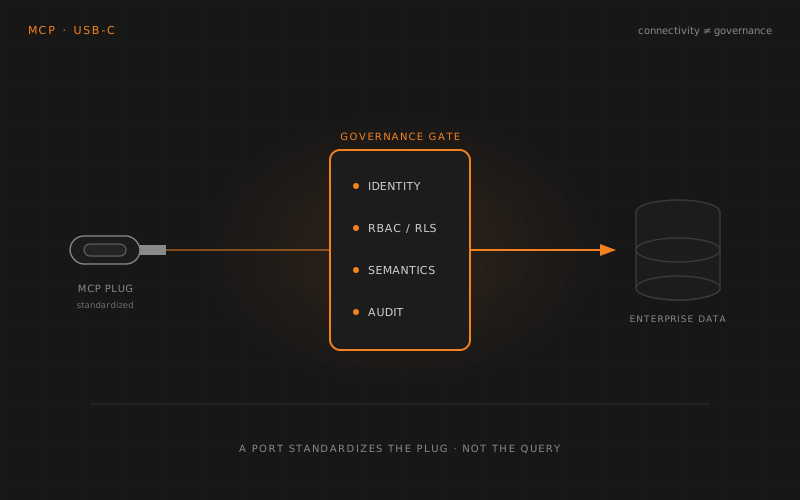
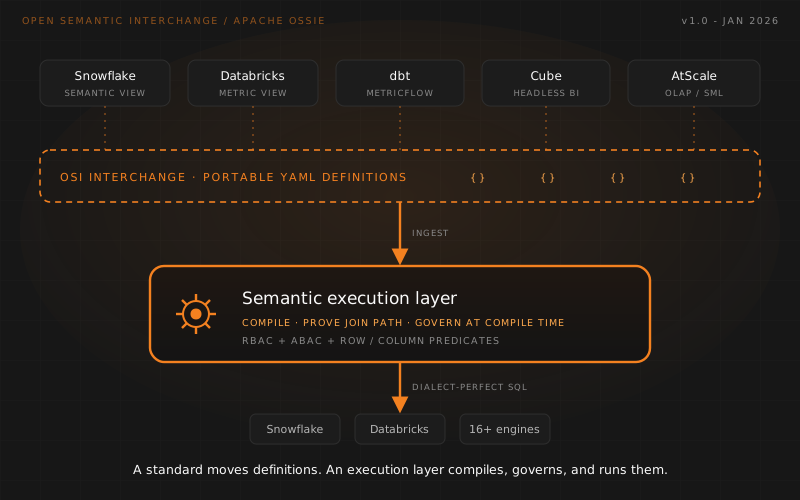
Latest posts

Field notes, deep-dives, and product perspectives.

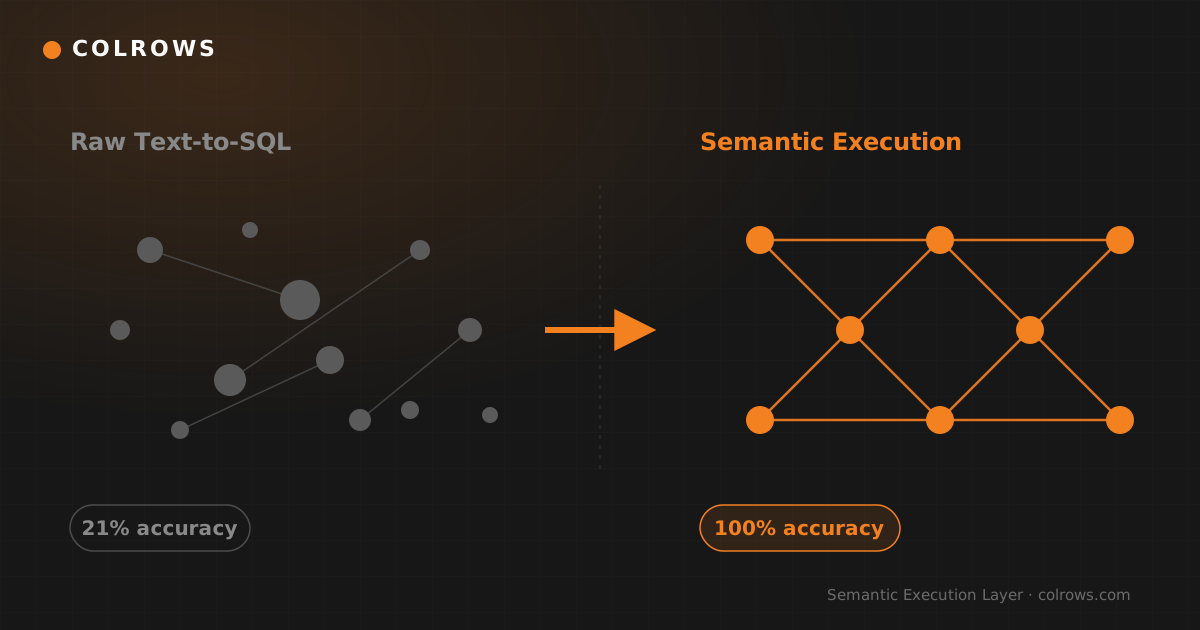
Raw LLM-to-SQL accuracy (16.7%-21.3%) vs semantic layer accuracy (54.2%-97%) across BIRD, Spider 2.0, BEAVER, data.world benchmarks. 2x–4.6x improvements shown.
Company Brain 24 Jun 2026

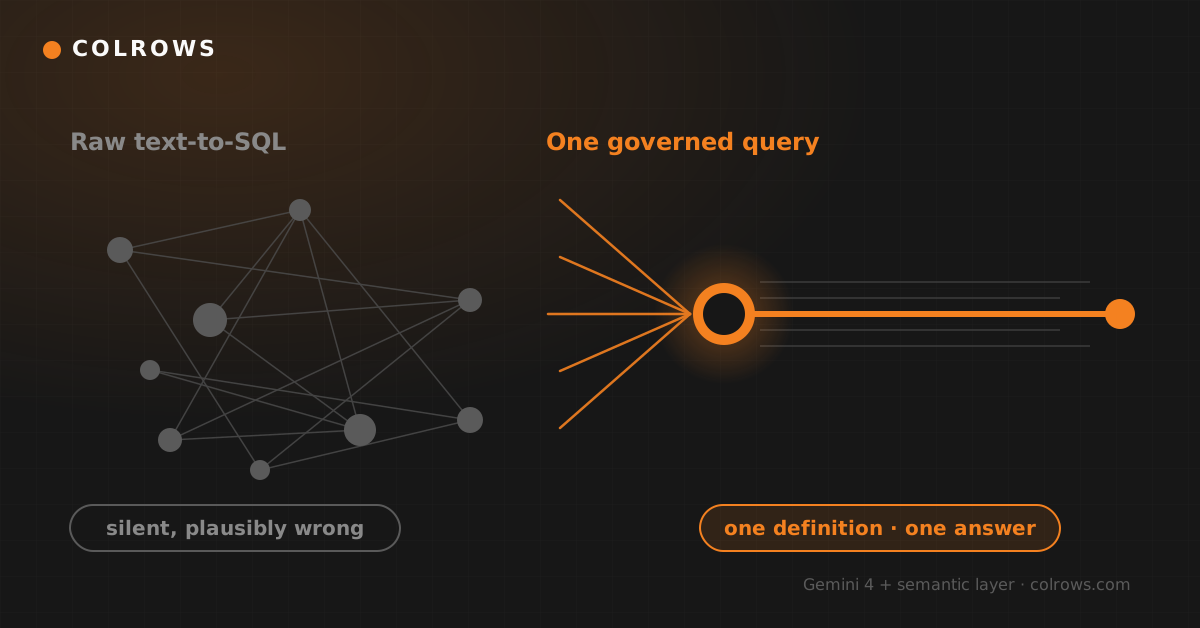
Why Current Tools Fall Short: The Semantic Layer Accuracy Imperative for Enterprise AI

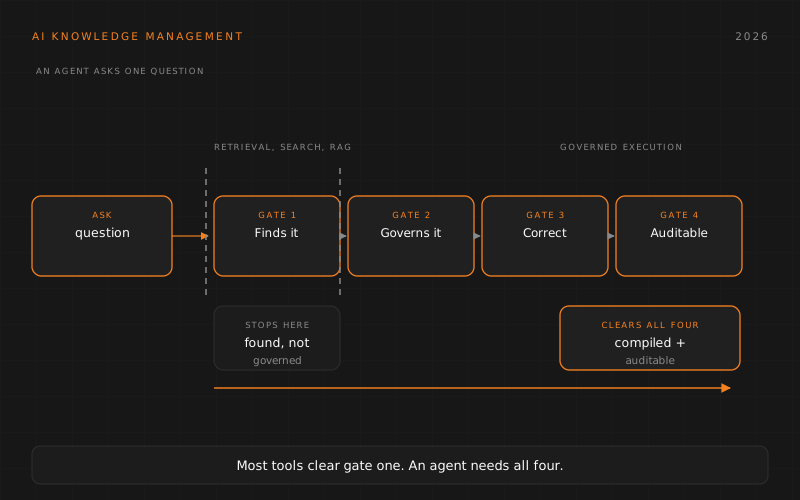
LLMs writing raw SQL achieve 16.7%–21.3% accuracy. Semantic layers push that to 54%–97%. The benchmark evidence, competitive constraints of incumbents, and the CTO evaluation framework.

Read more
Four go/no-go gates (named outcome and urgency, single accountable owner, data foundation readiness, 90-day lighthouse) and four base-rate failure stats (80% governance failure, 95% AI pilots zero P&L, 24% MDM success, 88% pilot-to-production failure). Tagline: Earn the Right to Build.
Company Brain 24 Jun 2026

The Company Brain Reality Check: Implementation Challenges, Failure Modes, and the Go/No-Go Decision Framework

80% of D&A governance initiatives fail by 2027. Only 24% of MDM programs succeed. Seven failure modes, two $60M+ cautionary cases, and four gates that tell you whether to build now, build later, or stop.

Read more
Timeline 2024-2032 with leaders trajectory rising through Foundation, Acceleration, Regulatory Pinch, Inflection, and Maturity phases gaining 10-20 points of market share, vs laggards trajectory remaining flat and acquired or exiting. Bottom stats: 60% of AI projects abandoned through 2026 (Gartner), 320% ROI and 3x decisions (Stardog/McKinsey), +10-20% valuation premium by 2028-2029.
Company Brain 23 Jun 2026

The Company Brain Advantage: What You Gain, What You Lose, and the Closing Competitive Window

The 18-24 month proactive window closes mid-2026. McKinsey 3x faster decisions, Stardog 320% ROI, EU AI Act in force August 2026. By 2028-2029, leaders consolidate 10-20 points of market share that laggards cannot recover.

Read more
Four-layer prerequisites pyramid: executive sponsorship foundation, governance + catalog, data quality + MDM, semantic layer, with Company Brain at the apex. Side stats: 5% succeed with foundations, 95% fail without them, $12.9M annual cost of poor data quality.
Company Brain 23 Jun 2026

Before You Build the Company Brain: The Prerequisites That Separate the 5% From the 95%

MIT NANDA found 95% of enterprise GenAI pilots deliver zero P&L impact. The root cause is not the model. It is the prerequisites. The three non-negotiables, the 12-18 month buildout, and how the 5% sequence it differently.

Read more
Side-by-side comparison: document retrieval feeding a content graveyard with $6.9T-$9.6T knowledge exodus stat, vs semantic compilation four-stage pipeline producing operational code with 320% ROI and 8x adoption. Tagline: Compile Knowledge. Not Documents.
Company Brain 22 Jun 2026

Capturing Tacit Knowledge at Scale: Why Semantic Compilation Beats Document Retrieval

The enterprise bottleneck is not knowledge capture. It is semantic compilation. Why document retrieval fails the analytical warehouse, and how to turn $9.6T of tacit expertise into deterministic SQL before it retires.

Read more
Side-by-side comparison: culture-mandate failure loop with 8 in 10 workers using shadow AI, vs compile-time infrastructure with DBS Bank 15 months to under 3 months. Tagline: Culture Follows Architecture.
Company Brain 22 Jun 2026

The Culture of Transparency: Why Architecture Solves What Mandates Cannot

Shadow AI is not a culture problem. It is an infrastructure signal. Why compile-time governance makes the safe path the fastest path, and how DBS Bank cut time-to-production from 15 months to under 3.

Read more
Side-by-side comparison: ad-hoc RAG with five attack vectors costing $670K extra per breach vs Colrows compile-time governance where unauthorized intent fails at compile.
Company Brain 22 Jun 2026

Security and Privacy in a Company Brain: Threats, Controls, and Why Ad-Hoc RAG Will Cost You Millions

Ad-hoc RAG adds $670K to the cost of a data breach. 97% of AI breaches lacked AI access controls. The CISO guide to compile-time governance, audit trails, and zero-trust agent execution.

Read more
The Real Cost of Silent AI Failures: 99% of enterprises lost money to AI hallucinations in 2025. Three key metrics: 3x accuracy lift, $4.4M average loss, 141-551% ROI. Fix the Context. Not the Model.
Company Brain 22 Jun 2026

The ROI of a Company Brain: What the Evidence Actually Shows Executives

Your AI model is fine. The context is broken. 3x accuracy lift, $4.4M average loss avoided, 141-551% ROI - the peer-reviewed evidence executives need before redirecting AI budgets to the semantic layer.

Read more
Cost curve comparison showing raw-schema RAG costs climbing exponentially to $600K annually while semantic layer maintains flat costs at $50K, with breakeven at 200K queries per month.
Enterprise Strategy 22 Jun 2026

The Token Cost Hidden Tax: Why Semantic Layers Beat RAG for Enterprise AI

Raw-schema RAG costs $600K/year. A semantic layer costs $50K. The CFO's guide to enterprise AI economics with worked examples, accuracy benchmarks, and a four-stage optimization path.

Read more
Two-layer autonomy architecture: ambient memory layer (blue, left) collecting context from emails, Slack, docs; semantic execution layer (orange, right) with governance checkpoints; MCP protocol layer (bottom) connecting agents
Enterprise Strategy 22 Jun 2026

From Ambient Memory to Deterministic Autonomy: Why Company Brains Need Semantic Layers

Ambient memory gives agents context. Semantic layers give them correctness. Together they enable reliable autonomous AI at scale. Here is the 2027 enterprise architecture.

Read more
Comparison diagram: left side shows unstructured company brain (Slack, emails, vector search, agent hallucinations); right side shows deterministic brain (AI agent, Colrows semantic layer, data warehouse, auditable SQL)
Enterprise Strategy 21 Jun 2026

YC's Company Brain RFS: What Hyper, GBrain, and the Competition Got Right (and Wrong)

Hyper, GBrain, and Savant are racing to build the Company Brain. But they're solving 40% of the problem. The other 60% is metric consistency and governance—where the real value lives.

Read more
Seven-layer governance stack flowing vertically: identity pinning, semantic resolution, constrained planning, compile-time enforcement, structured refusal, audit trails, and autonomous maintenance - each highlighted with orange accents.
Governance Guide 07 May 2026

How to Add Governance to AI Agents: A 7-Step Checklist

The 7 things you have to ship to make an enterprise AI agent safe to put in production.

Read guide
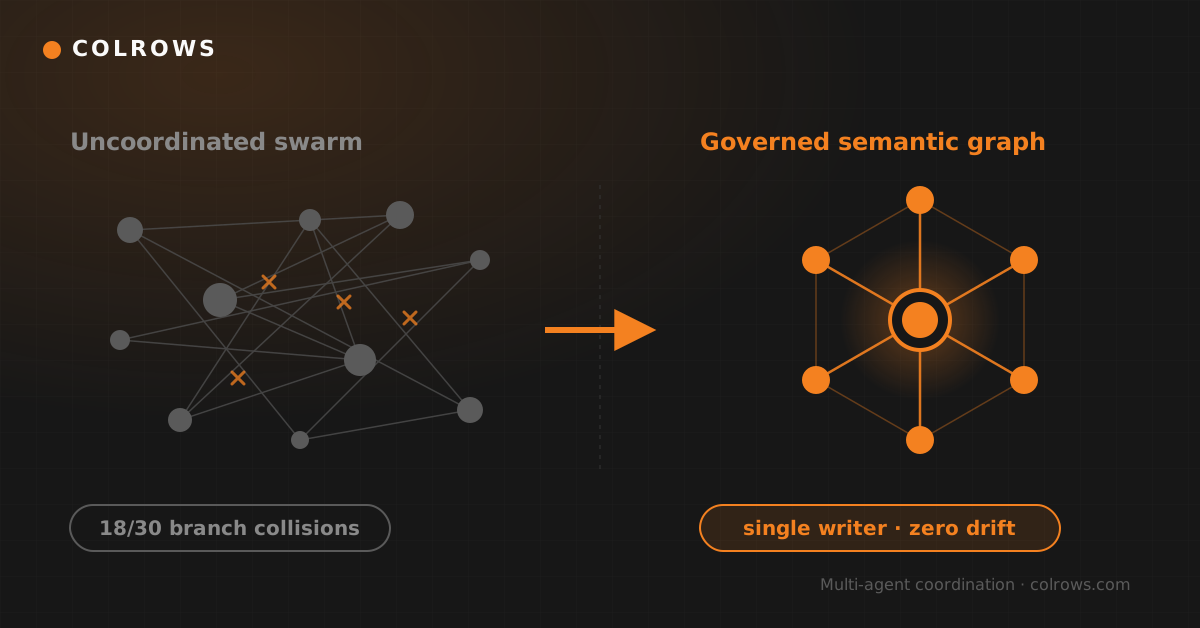
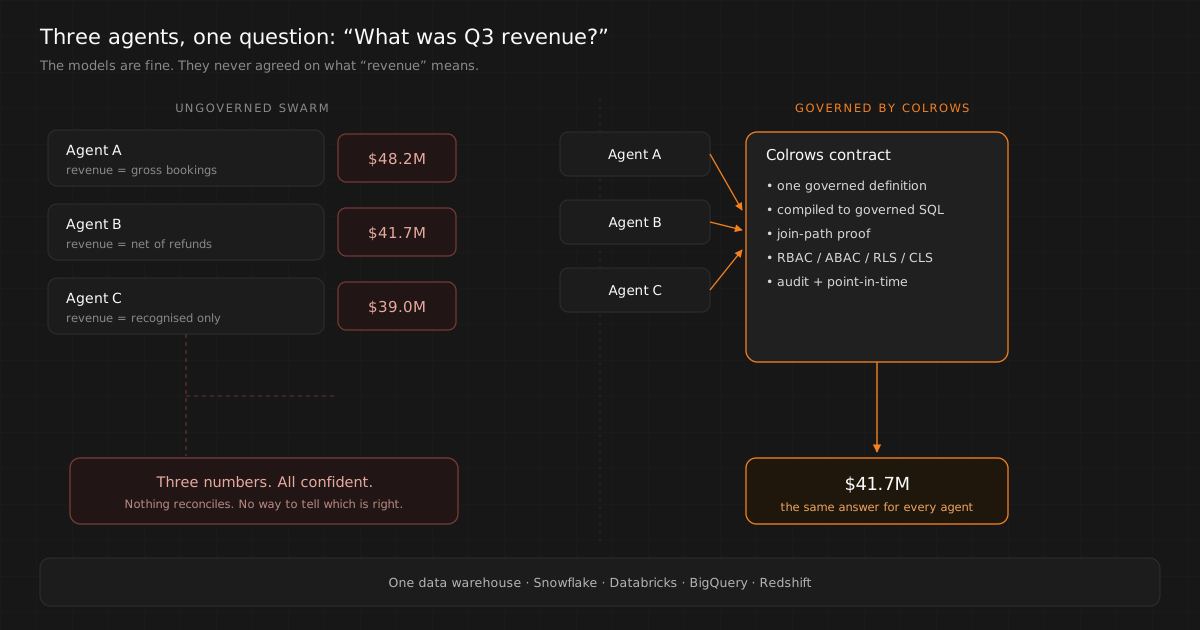
Left side shows the problem: one question branching into three different SQL queries with different answers. Right side shows the solution: the same question flowing through a semantic graph into one deterministic, proven SQL query with audit trail.
AI Reliability Guide 07 May 2026

How to Prevent AI Hallucinations on Enterprise Data

The structural fix: typed semantic graph + constrained planning + join path proof + compile-time refusal.

Read guide
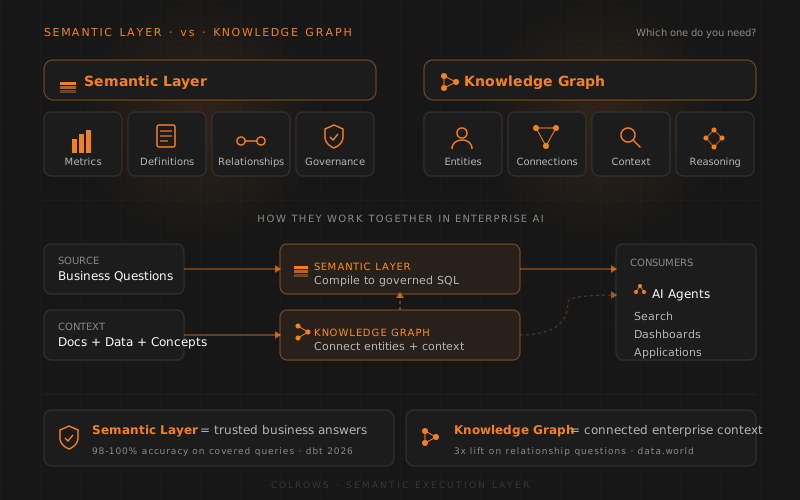
A side-by-side comparison of semantic layer and knowledge graph for enterprise AI - metrics, definitions, relationships, governance versus entities, connections, context, reasoning.
Semantic Layer & AI Agents 21 Jun 2026

Semantic Layer vs Knowledge Graph: Which One Do You Need?

dbt 2026 benchmark: semantic layers hit 98-100% accuracy on covered queries. CypherBench: best LLM reaches 61.58% on knowledge graphs. Why deterministic execution wins on metric governance.

Read more
Metric mismatch in BI dashboards resolved through semantic layer governance.
Business Intelligence 21 Jun 2026

Why BI Metrics Do Not Match Across Dashboards

Why dashboards show different numbers for the same metric, the organizational causes of mismatch, and how semantic governance centralizes metric definitions.

Read more
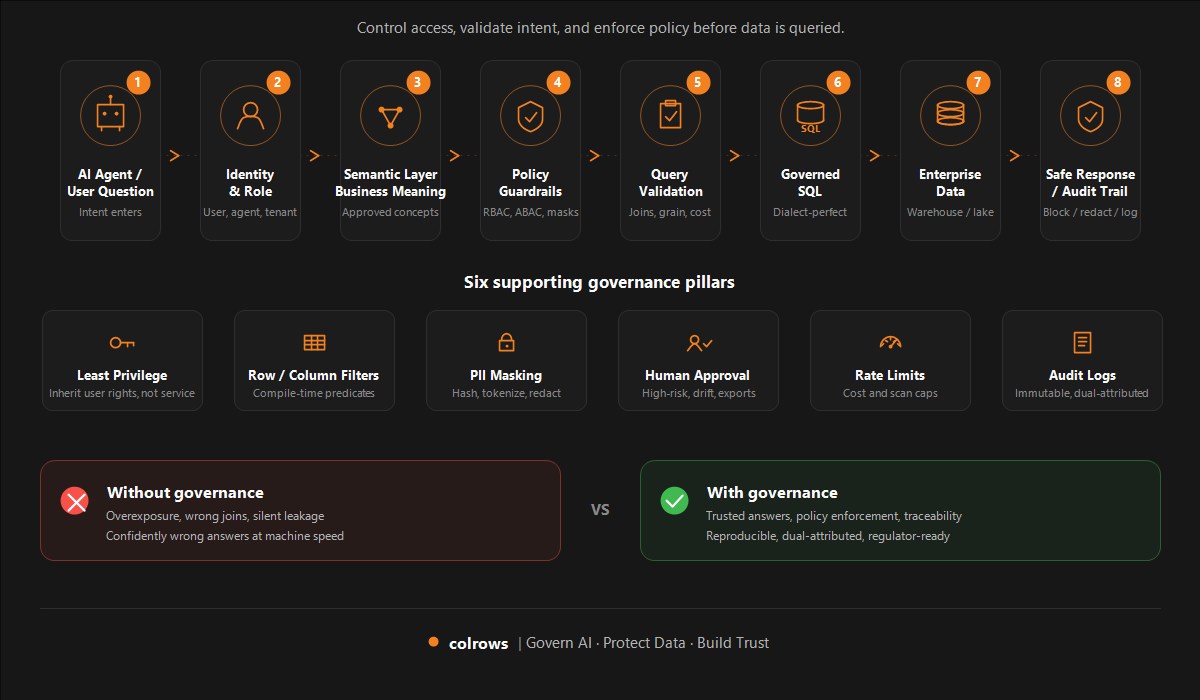
Eight governed steps from an agent's question to a safe response, plus six supporting governance pillars.
AI Governance 15 Jun 2026

How to Govern AI Agents That Query Enterprise Data

Governance must move from documentation to execution. A practical seven-layer model: identity, semantic resolution, policy enforcement, query validation, response guards, and audit trails.

Read more
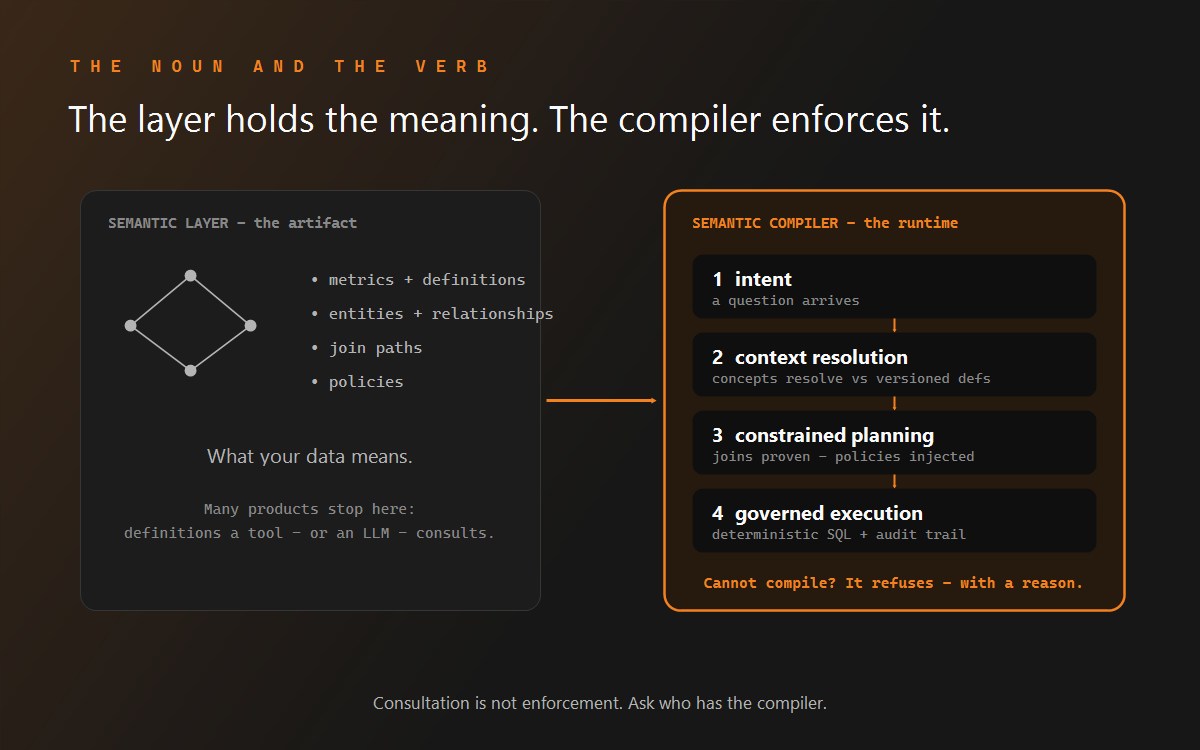
Two cards side by side: the semantic layer as the artifact holding metrics, entities, and policies, and the semantic compiler as the four-stage runtime that enforces it.
Semantic Layer & AI Agents 12 Jun 2026

What Is a Semantic Compiler? Deterministic SQL for AI

A semantic compiler resolves business metrics into deterministic, governed SQL. Definition, architecture, and a 5-point buyer test.

Read more
A risk-head question compiled into an answer carrying its audit trail - exact SQL, versioned definition, proven joins, applied policy, point-in-time reproducibility - above chips naming RBI FREE-AI, SR 26-2, the EU AI Act, BCBS 239, and PRA SS1/23.
Governance, Security & Compliance 12 Jun 2026

Auditable SQL: How Conversational Analytics Earns Its Place in BFSI

SOX, GDPR, PCI DSS, BCBS 239, MiFID II, EU AI Act, and SR 26-2 requirements — and why deterministic SQL wins.

Read more
A user prompt asking for Q3 EU revenue enters Copilot, three dotted arrows diverge to three different revenue figures - tagged NONDETERMINISTIC, with the Microsoft documentation quote beneath.
Analytics & Search 12 Jun 2026

Why Power BI Copilot Delivers Wrong Answers (and What It Costs You)

Microsoft says Copilot is nondeterministic and can give wrong answers. The business cost, the architecture, and how to make it safe.

Read more
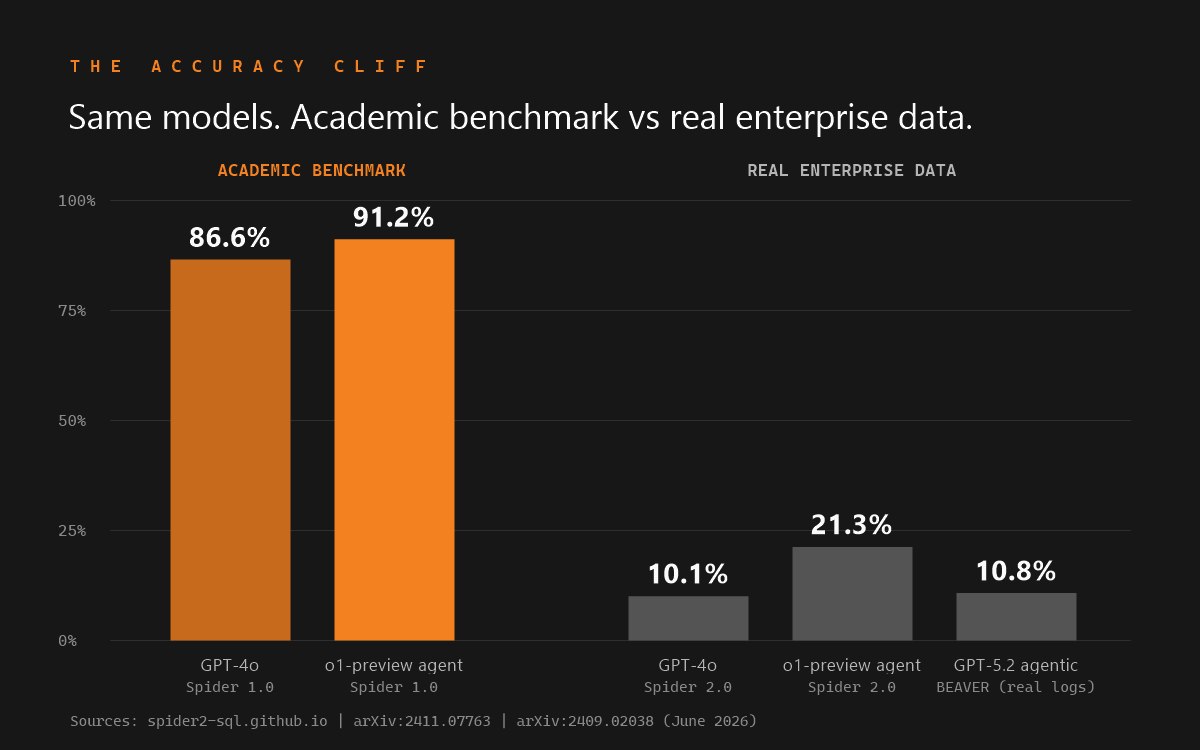
Bar chart of the text-to-SQL accuracy cliff: 86-91% on the academic Spider 1.0 benchmark collapsing to 10-21% on real enterprise data.
Semantic Layer & AI Agents 11 Jun 2026

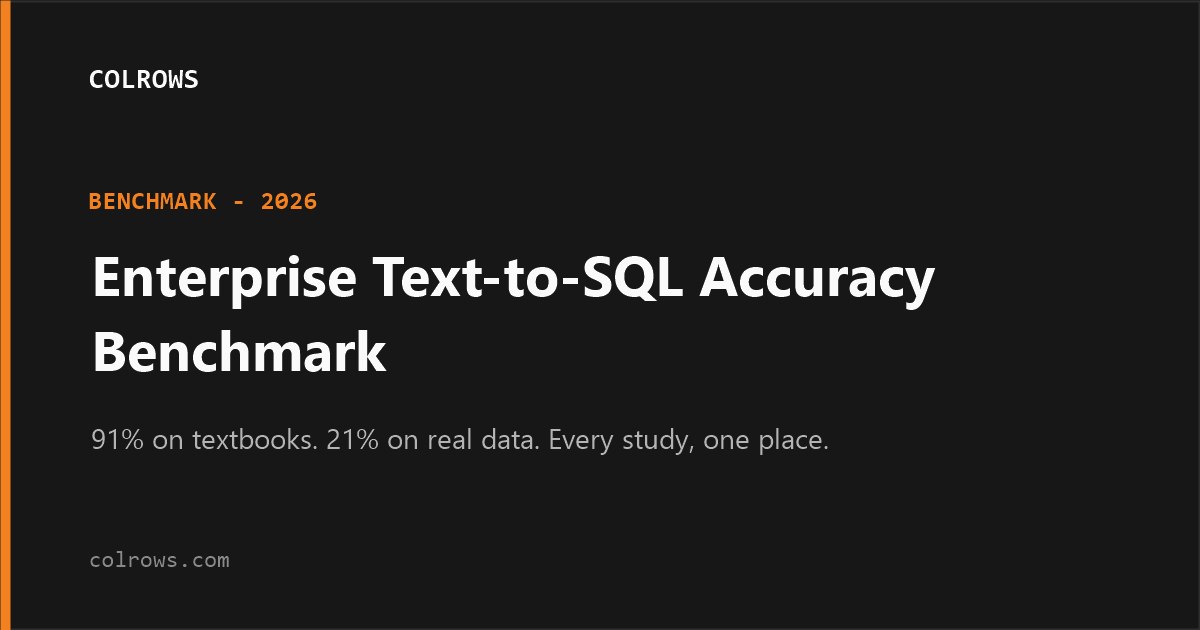
The Text-to-SQL Accuracy Cliff: 91% on Benchmarks, 21% in Production

What Spider 2.0, BEAVER and BIRD actually measure, the three gaps that create the cliff, and what provably closes it.

Read more
A balance scale tilted decisively toward Buy: the build pan stacked with FTE salaries, drift, reconciliation tax, opportunity cost, and integration; the buy pan light with a single license line.
Enterprise Strategy 7 Jun 2026

The Build vs. Buy Decision for Enterprise Semantic Layers

A practical framework for calculating the real three-year cost of building your own semantic layer - and the tipping points that should change your mind.

Read more
Enterprise AI agents that execute and are governed by humans, orbiting a central context layer - the autonomous semantic layer between agents and enterprise data.
Enterprise Strategy 1 Jun 2026

From Copilots to Autonomous Companies: The Shift to AI-Native Operations

Why the bottleneck to enterprise AI is no longer the model. It is the context - and why an autonomous semantic layer is the missing infrastructure.

Read more
A typed semantic graph at the centre - the company brain that every enterprise AI agent compiles through.
Enterprise Strategy 10 May 2026

Company Brain for Enterprise AI: Why the Data Layer Decides Everything

A company brain turns fragmented knowledge into a governed layer AI can act on. Why the data-semantics pillar decides if your agents are trustworthy.

Read more
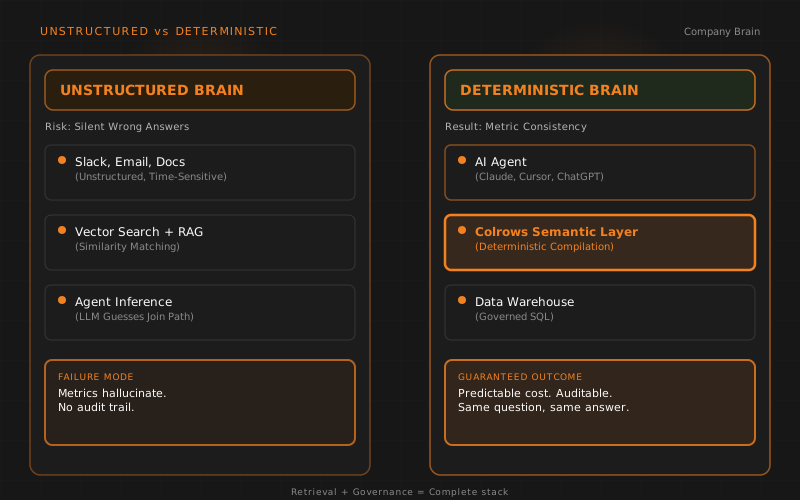
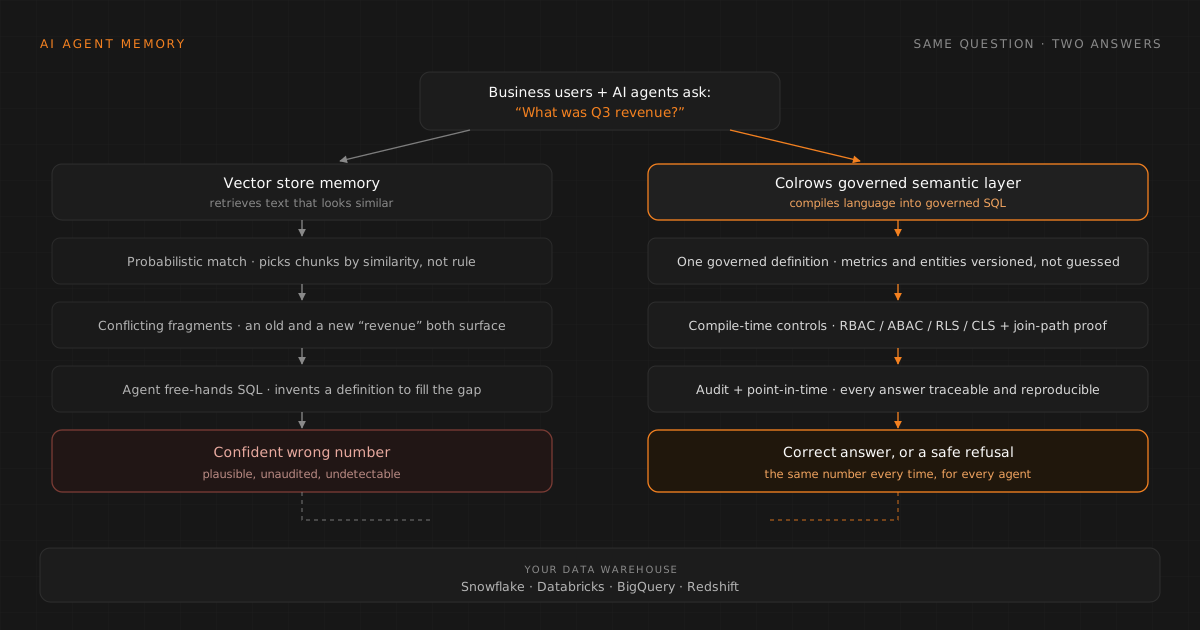
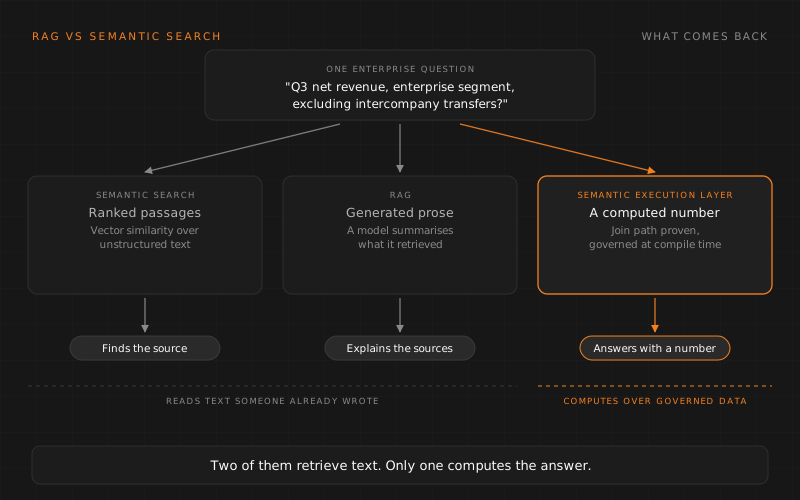
Four enterprise AI agents reasoning through a single shared semantic graph - the substrate that complements but does not replace document retrieval.
Semantic Layer & AI Agents 10 May 2026

RAG vs Semantic Layer: Architecture, Cost, and When You Need Both

RAG is retrieval-first; a semantic layer is compilation-first. Architecture, failure modes, cost, and when enterprises need both.

Read more
A vertical OS-style stack with applications on top, semantic OS kernel in the middle, and data sources at the bottom - the substrate MCP plugs into.
Semantic Layer & AI Agents 10 May 2026

MCP Semantic Layer: Build a Governed MCP Server

How to build an MCP semantic layer server: protocol, tool definitions, FastMCP code, LangChain and Claude integration, and the no-rip-and-replace case.

Read more
Code-based access rules on the left and semantic-graph-bound policies on the right - illustrating governance bound to meaning, not files.
Governance & Architecture 10 May 2026

The Semantic Control Plane for Data and AI

A semantic control plane declares, observes, and enforces what your data means at compile time, before any query runs. Why it is the next infra layer.

Read more
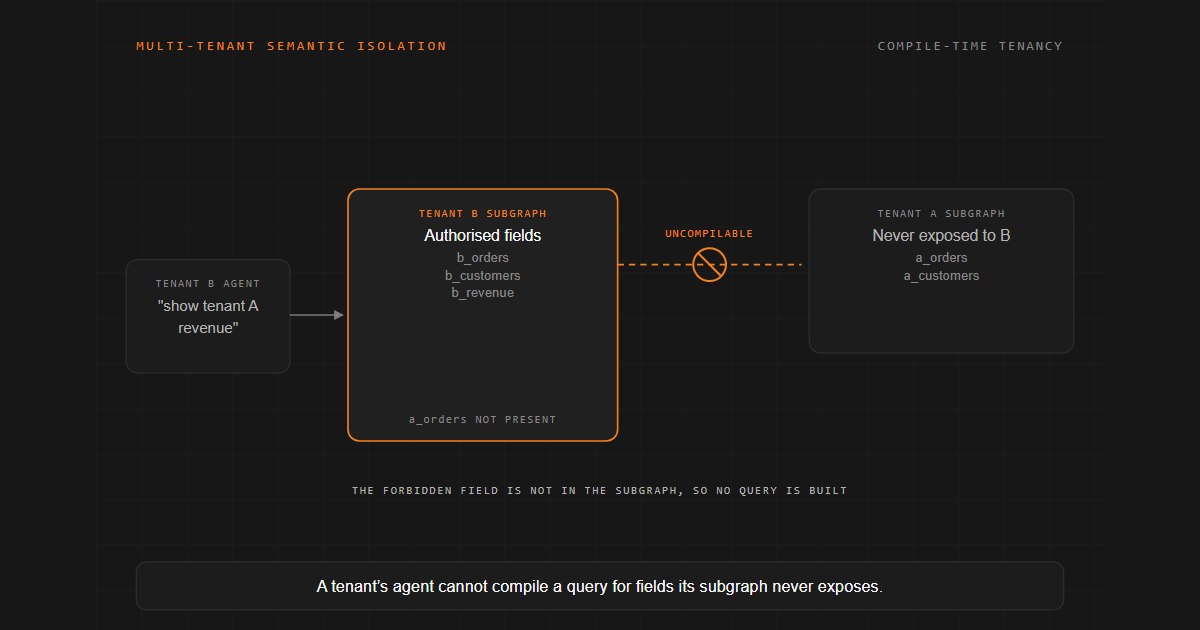
Four concentric scope rings - GLOBAL, TENANT, PERSONA, USER - with the concept Revenue resolving differently at each scope, illustrating multi-scope semantics in a multi-tenant AI system.
Architecture 03 May 2026

Multi-Tenant Semantic Isolation: Compile-Time Tenancy

Data can be isolated. Meaning cannot. Why full semantic isolation is impossible - and how multi-scope semantics solves it.

Read more
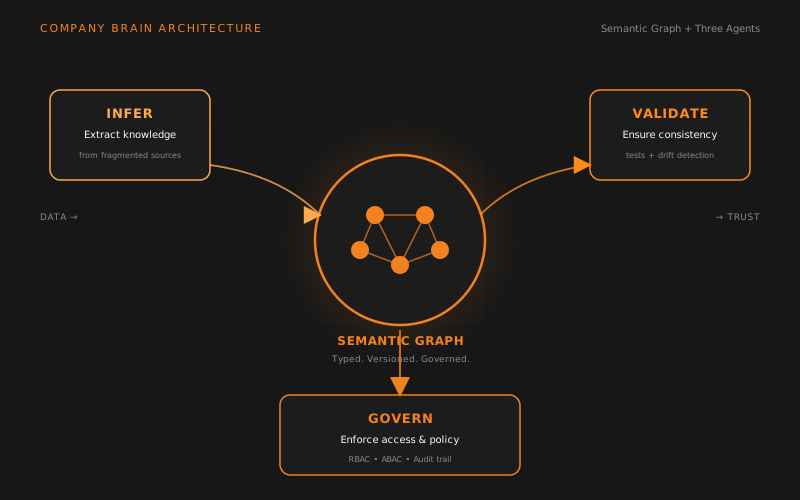
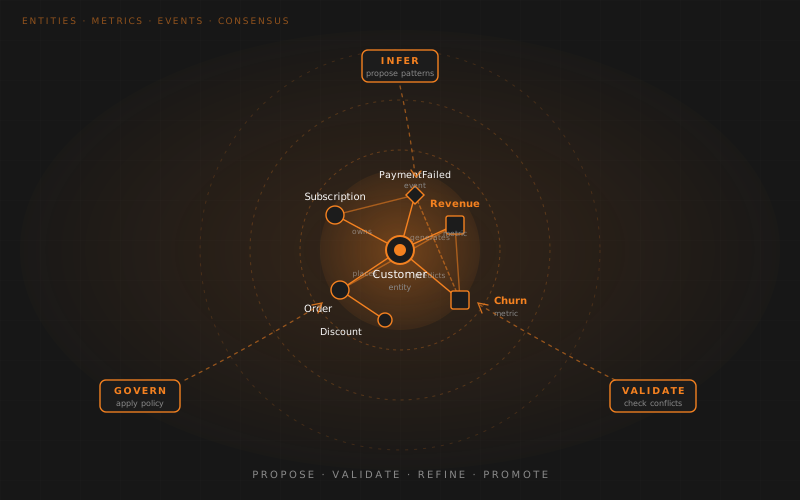
A typed semantic graph at the centre - entities, metrics, and events connected by relationships - orbited by INFER, VALIDATE, and GOVERN agents that drive continuous semantic consensus.
Architecture 03 May 2026

The Enterprise Memory Graph: Why AI-Native Companies Need a Memory They Can Trust

A technical deep dive into the six-layer architecture of semantic consensus.

Read more
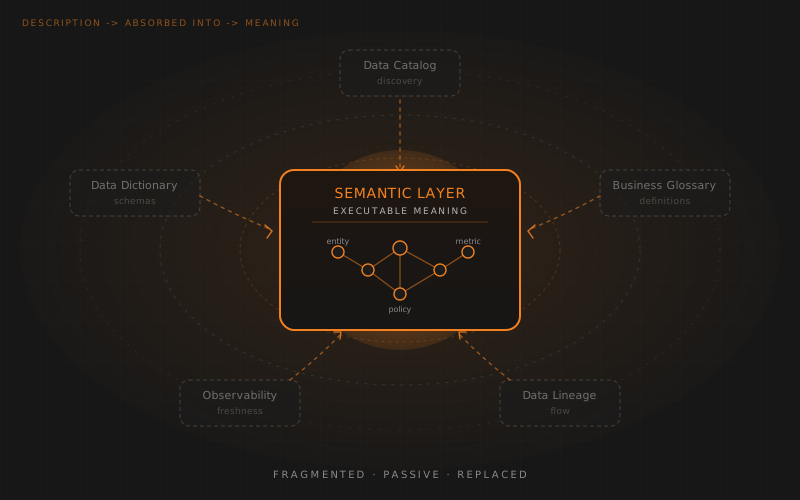
Five metadata tools - data catalog, business glossary, lineage, observability, and dictionary - decaying around the perimeter of an orbital ring with arrows fading into a central glowing semantic-layer core.
Architecture 03 May 2026

The Decline of Metadata Tools: Why the Center of Gravity Moved to the Semantic Layer

Why standalone data catalogs failed: market evidence, vendor trajectories, and the structural reason semantic layers won.

Read more
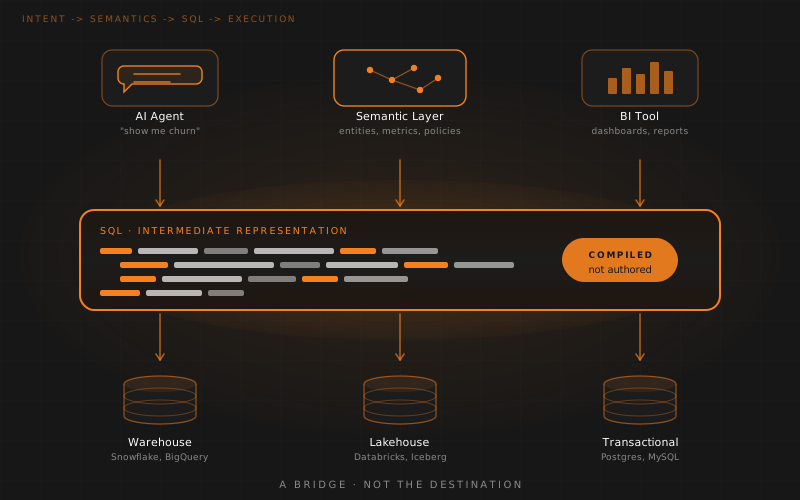
Three intent sources flow downward into a central glowing band labelled SQL Intermediate Representation, which then flows into three execution engines at the bottom - illustrating SQL as a compile target between intent and execution.
Architecture 30 Apr 2026

SQL as a Compiler Target: Why Deterministic Compilation Beats Text-to-SQL

Why deterministic semantic SQL compilation beats text-to-SQL: Spider 2.0 accuracy, compiler phases, regulation-ready auditability.

Read more
One question, two paths: an LLM generating three different SQL variants versus a compiler producing one proven query through a semantic graph.
Semantic Layer & AI Agents 12 Jun 2026

Semantic Layer vs Text-to-SQL: When Each Wins, and Why Mature Teams Use Both

The architecture decision behind natural-language analytics - accuracy, cost, failure modes, and when raw text-to-SQL is genuinely fine.

Read more
One question, two architectures: a probabilistic LLM producing three different SQL queries, versus deterministic compilation through a semantic graph producing one proven, governed query.
Semantic Layer & AI Agents 11 Jun 2026

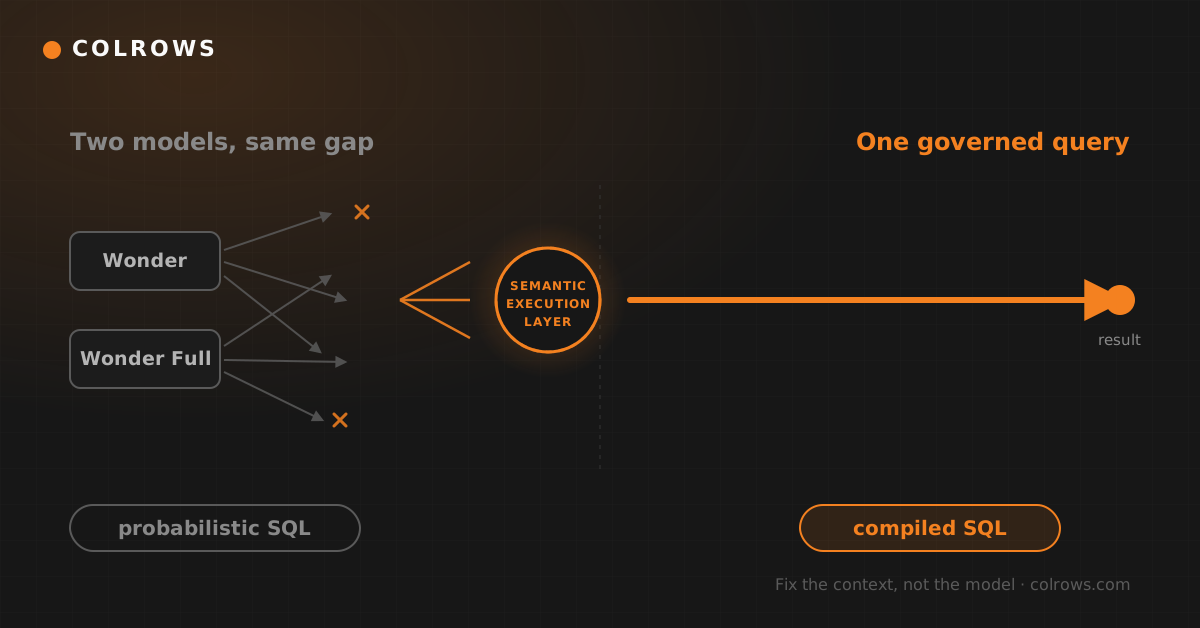
Deterministic vs Probabilistic Text-to-SQL: Why Reproducibility Is Becoming Table Stakes

Why probabilistic text-to-SQL fails silently while deterministic compilation does not, with accuracy, cost, and compliance evidence.

Read more
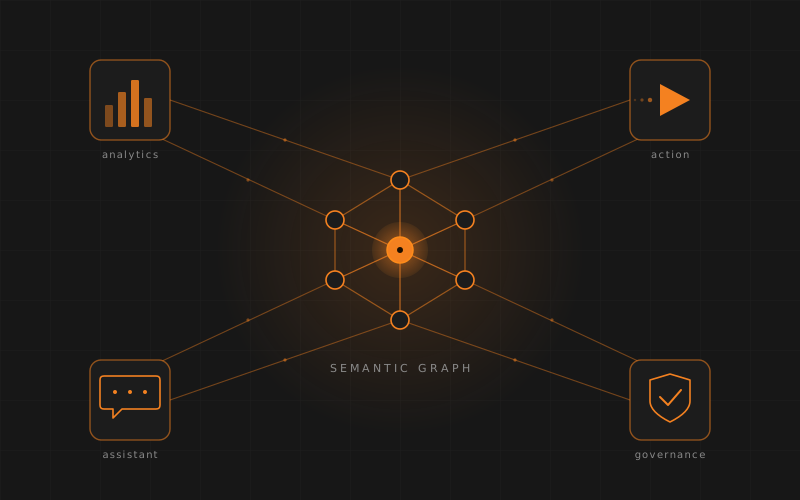
Four enterprise AI agents - analytics, action, assistant, and governance - each reasoning through a single shared semantic graph at the centre.
Semantic Layer & AI Agents 18 Apr 2026

Semantics for Enterprise AI Agents: The Deterministic Foundation for Reliable Autonomous Work

Why AI agents hallucinate, how errors compound across steps, and how a deterministic semantic layer makes enterprise agents reliable and auditable.

Read more
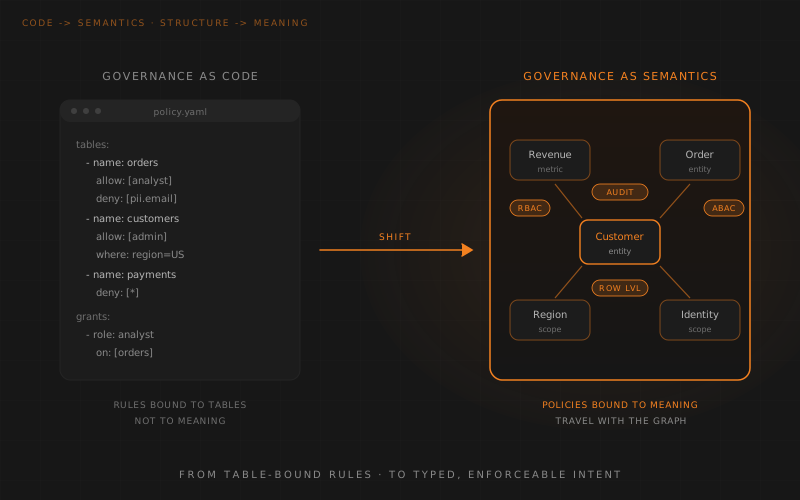
Two side-by-side panels showing code-based access rules on the left and semantic-graph-bound policies on the right.
Governance, Security & Compliance 05 Apr 2026

Governance as Code to Governance as Semantics

Manual tagging decays, policy-as-code stays runtime, semantic governance compiles policy into meaning for provable, audit-ready compliance.

Read more
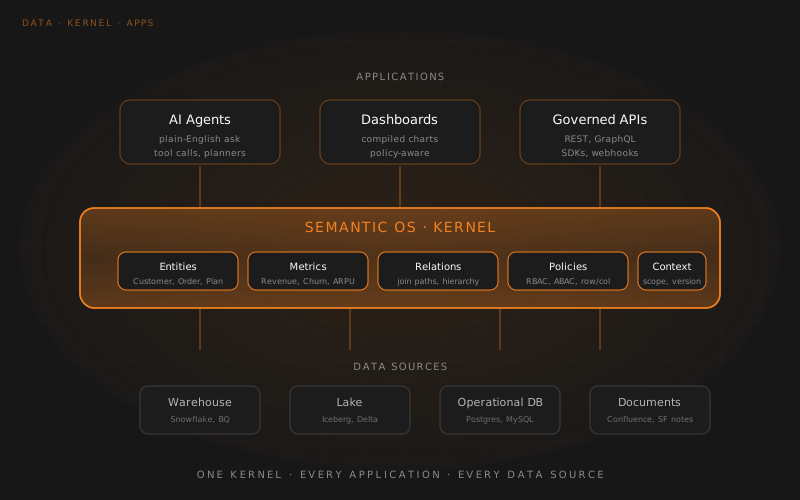
A vertical OS-style stack with applications on top, semantic OS kernel in the middle, and data sources at the bottom.
Semantic Layer & AI Agents 29 Mar 2026

The Semantic Operating System Inside the Enterprise

Why the semantic layer is becoming the enterprise operating system: semantic graph as kernel, MCP as syscalls, compile-then-execute as security.

Read more
Enterprise causal graph showing events, DAGs, confounders, and backdoor paths explained through Pearl's Ladder of Causation.
Data Architecture & Modeling 20 Mar 2026

Events, Triggers, and Causal Chains: The Hidden Logic in the Enterprise

Dashboards show correlation; decisions need causation. How events encode causal chains and a semantic layer captures DAGs, confounders, do-calculus.

Read more
Semantic-first data stack architecture showing the semantic layer as the central control plane, with deterministic compilation to SQL and dialect-perfect outputs across multiple warehouse engines.
Data Architecture & Modeling 14 Mar 2026

Why the Future of Data Engineering Is Semantic-First

Semantics used to come last. Now they come first. How semantic-first data engineering grounds AI agents, governs by construction, and spans every warehouse.

Read more
Automated documentation workflow showing schema introspection, drift detection, lineage tracking, and human approval loops replacing manual documentation maintenance.
Governance & Compliance 17 Feb 2026

The Death of Manual Documentation: Why Your Data Should Document Itself

Manual data documentation goes stale, doesn't scale, and fails audits. See how semantic graphs, lineage, and drift agents make data document itself.

Read more
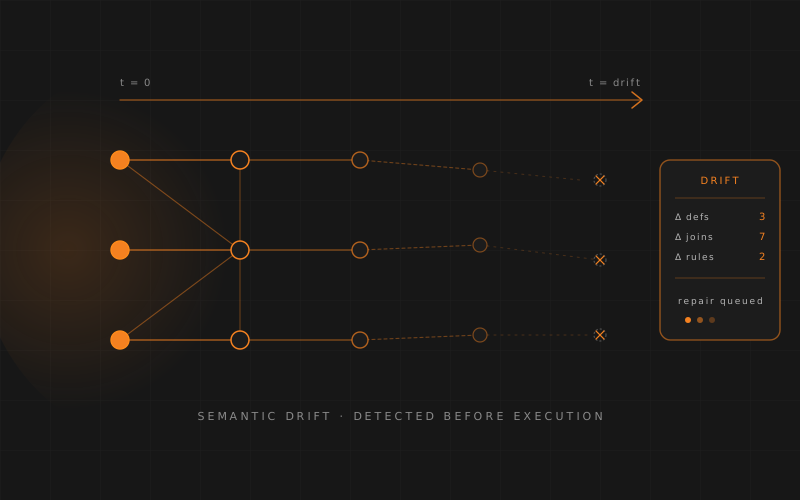
A clean lattice of concepts on the left gradually drifting and decaying toward the right; a side panel reports detected delta counts.
Technology 09 Feb 2026

Knowledge Drift and Semantic Decay

The new technical debt of AI systems - and how autonomous maintenance keeps the graph honest.

Read more
Maintenance agents - repair, refresh, verify, extend - actively patching nodes inside a semantic graph.
Technology 22 Jan 2026

Agents That Maintain Your Data Systems

Data maintenance now eats 53% of engineering time. See how autonomous agents detect drift, remediate, and preserve meaning, with risk-tiered human approval and audit trails for SOX, HIPAA, and GDPR.

Read more
Fourteen disparate tools tangled by chaotic connections collapse into a single clean semantic graph.
Data Architecture & Modeling 18 Jan 2026

The Accidental Complexity in Modern Data Stacks

Most data-stack complexity is accidental, not essential. Using Fred Brooks' framing, here is what it costs, why tool consolidation fails, and how a semantic layer removes it.

Read more
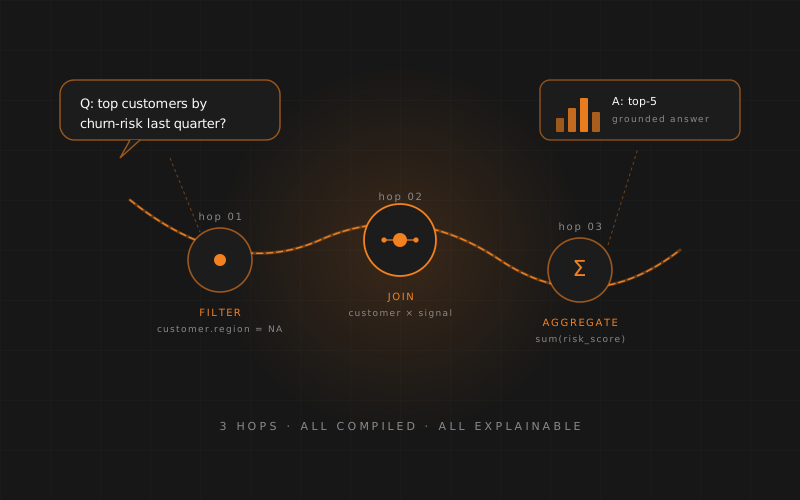
A natural-language question traced through three semantic hops - filter, join, aggregate - to produce a grounded answer.
Business Intelligence 22 Dec 2025

Multi-Hop Query Understanding: The New Frontier of BI

Multi-hop queries are where LLMs and traditional BI both fail silently. See why joins, cardinality, and ambiguous paths break text-to-SQL, and how a semantic execution layer makes multi-hop deterministic.

Read more
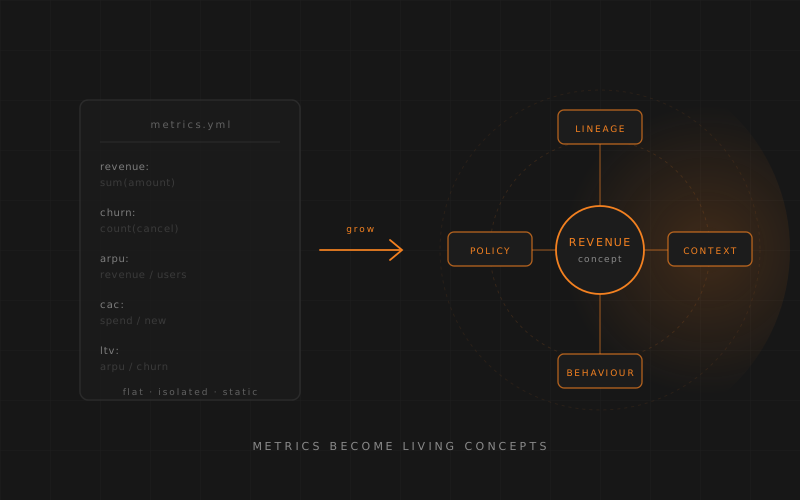
A flat list of metric definitions transforming into a living concept graph with lineage, context, behaviour, and policy orbits.
Architecture 16 Dec 2025

From Metric Stores to Knowledge Machines

Why static metric definitions can't scale to AI - and what replaces them.

Read more
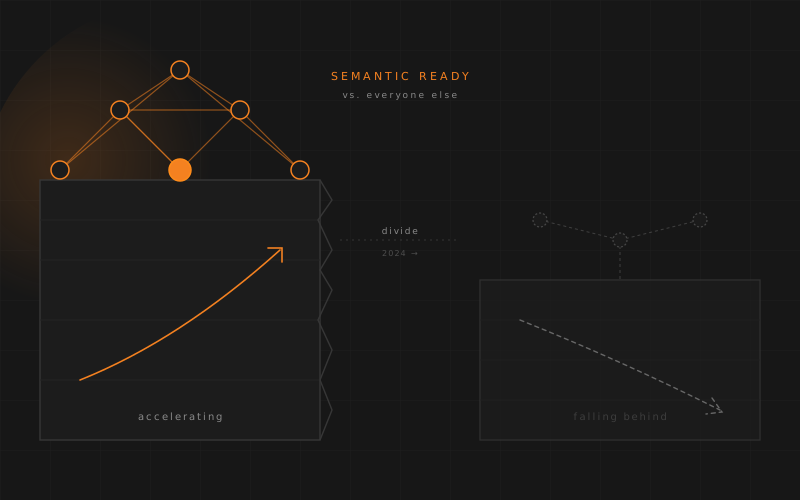
Two cliffs separated by a chasm: the left cliff has a dense semantic graph and rising velocity, the right cliff is sparse and fading.
Strategy 16 Dec 2025

The Semantic Divide

Why future-ready enterprises will outpace the rest - and what's at stake for laggards.

Read more
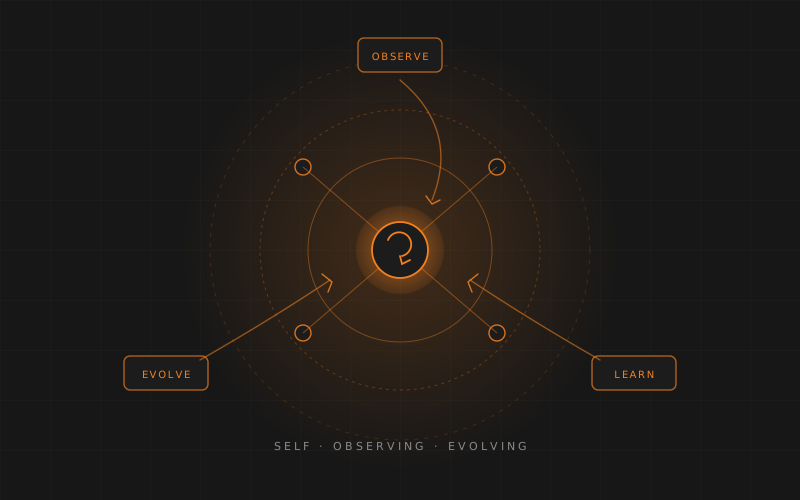
A central semantic core surrounded by self-orbiting feedback loops - observe, learn, evolve - that re-feed the core continuously.
Architecture 15 Nov 2025

The Rise of Autonomous Semantic Systems

A new category of infrastructure that learns the enterprise - and updates itself.

Read more
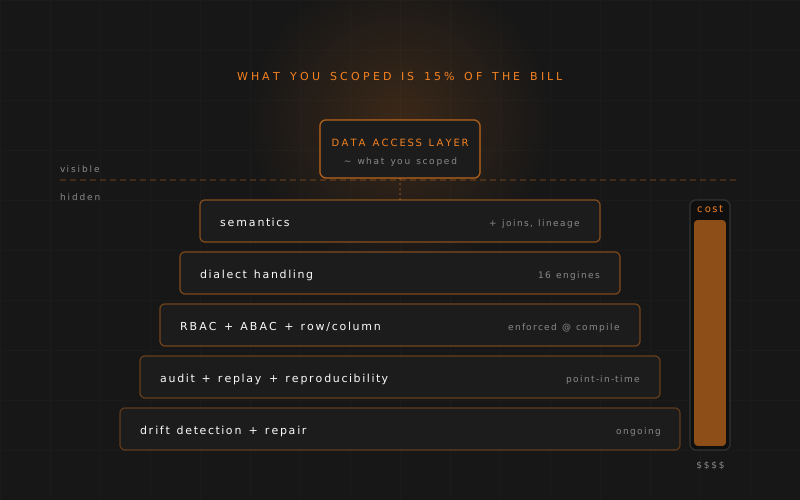
An iceberg metaphor: a small visible data-access layer above water, a stack of hidden costs below - semantics, dialect, RBAC, audit, drift.
Engineering 16 Aug 2025

The Hidden Cost of Building Your Own Data Access Layer

Roll your own semantic + governance + dialect handling - here's the bill.

Read more
A natural-language clinical query passing through a HIPAA-aligned shield to produce an audited, redacted answer.
Healthcare 06 Jun 2025

Conversational Analytics for Clinical Data (HIPAA)

Safely leveraging AI for data insights in a regulated, audit-heavy environment.

Read more
Vector retrieval scattered points on the left vs. semantic search traversing a typed corporate-concept graph on the right.
Search 23 May 2025

Semantic Search on Corporate Data

Beyond vector retrieval - structural understanding of corporate data.

Read more
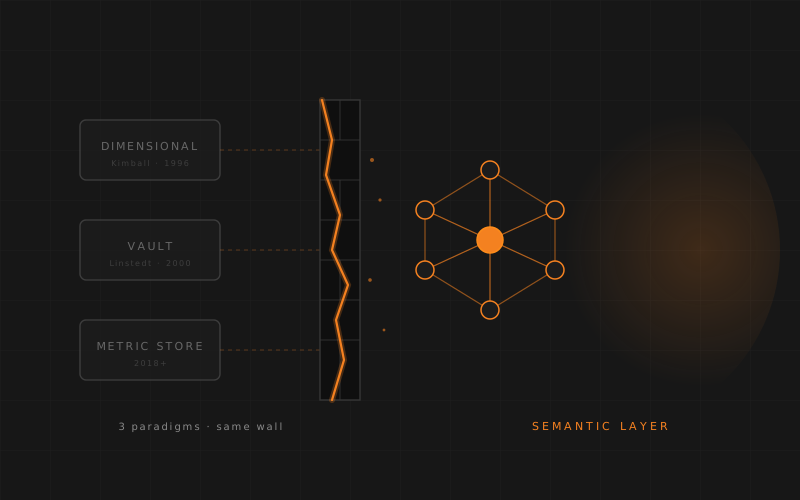
Three legacy modeling paradigms - Dimensional, Vault, and Metric Store - pressing against a cracked wall that opens onto a flowing semantic graph.
Architecture 08 Jan 2026

Breaking the 20-Year Deadlock in Data Modeling

Why dimensional, vault, and metric-store paradigms all hit the same wall - and what comes next.

Read more
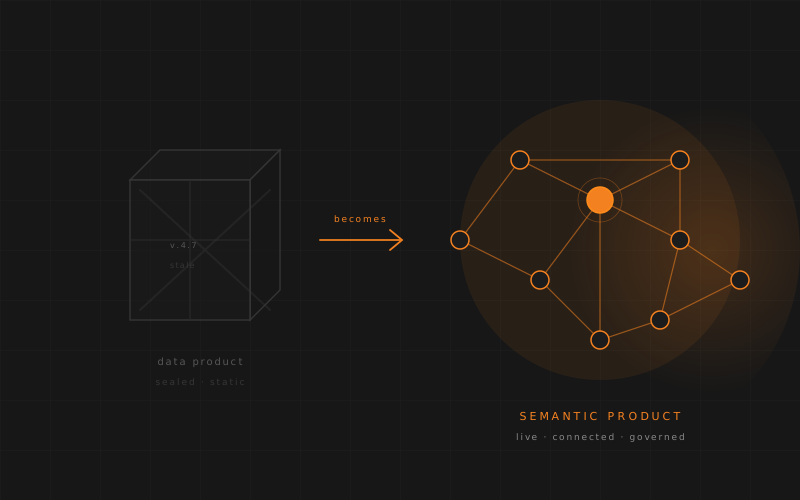
A sealed static data-product crate transforming into a living, connected semantic graph.
Strategy 16 Jan 2026

Data Products Are Dead. Long Live Semantic Products.

The data-mesh era is closing. The semantic-product era is opening.

Read more
A data table with cell-level masks - PII columns redacted, EU rows blocked, NA rows visible - all enforced at compile time.
Security 16 May 2025

Fine-Grained Data Access Control: Precision Security

RBAC + ABAC + row/column-level predicates - the layered model enterprise AI needs.

Read more
Three business-team personas - sales, finance, ops - asking plain-language questions that compile through a shared semantic layer into governed answers and charts.
BI 09 May 2025

Self-Serve Analytics: Empowering Business Teams

What it actually takes to put AI-grade analytics in the hands of non-technical teams.

Read more
A user request passing through a policy gatekeeper that enforces RBAC, ABAC, row, and column rules - allowed paths reach the data, denied paths are blocked.
Security 02 May 2025

Data Authorization: The Problems and the Solution

Why authorization at the BI layer is structurally too late - and where it should live.

Read more
Three gauges labelled dbt Semantic Layer, Cube, and AtScale showing what each pricing meter taxes: query volume, team size, and model richness.
Data Architecture & Modeling 12 Jun 2026

dbt Semantic Layer vs Cube vs AtScale: Choosing an Enterprise Semantic Layer

Three credible semantic layers, three different meters - and the one assumption all three share that your evaluation should price in.

Read more
Three generations of semantics-as-code: LookML inside the BI tool, MetricFlow beside the transformations, and an autonomously built compiled graph.
Data Architecture & Modeling 12 Jun 2026

LookML vs dbt Semantic Layer vs a Compiled Semantic Layer

Three generations of semantics-as-code, compared on the axis that decides it: who maintains the model.

Read more
Two side-by-side walled gardens labelled Snowflake (containing Cortex Analyst) and Databricks (containing Genie), each fenced as its own platform boundary with no path across.
Semantic Layer & AI Agents 12 Jun 2026

Snowflake Cortex Analyst vs Databricks Genie: Where Warehouse-Native AI Stops

Semantic views vs Genie spaces, the real curation tax, what the accuracy claims measure, and the platform boundary both share.

Read more
Two gated booths labelled Power BI Copilot and Tableau Pulse, each with its vendor's own documentation warning on a caution sign.
Analytics & Search 12 Jun 2026

Power BI Copilot vs Tableau Pulse: Two Takes on AI BI, Same Ceiling

Generative assistant vs metric feed - what each is gated behind, and the honest warnings both vendors ship in their own docs.

Read more
Two locked warehouse perimeters inside a larger enterprise estate, with disconnected knowledge sources floating outside the walls - illustrating why a warehouse-native semantic layer cannot span the full data estate.
Architecture 30 Apr 2026

Why Snowflake and Databricks Can't Be Your Enterprise Semantic Layer

Warehouse-native semantic layers stop at the warehouse boundary - and a cross-estate semantic layer is a different product.

Read more
The same question answered by a black box with no query to inspect and a glass box with the SQL attached.
Analytics & Search 12 Jun 2026

7 Power BI Copilot Alternatives That Show Their SQL

If you cannot see the query, you cannot audit the answer. The transparency ladder, ranked.

Read more
A LookML code box with four exit doors: your dbt project, as-code AML, spreadsheet freedom, and an autonomous graph highlighted in orange.
Analytics & Search 12 Jun 2026

8 Looker Alternatives Without the LookML Lock-In (2026)

Organized by what actually replaces the modeling layer - dbt models, as-code AML, spreadsheet UX, or an autonomous semantic graph.

Read more
Three warehouse cylinders with semantic-layer bars above them: native views per platform, single-platform incumbents, and one orange graph spanning all three.
Data Architecture & Modeling 12 Jun 2026

dbt Semantic Layer Alternatives for Multi-Warehouse Estates (2026)

Six credible options, sourced and priced - written after the Fivetran-dbt merger closed, with the constraints each carries.

Read more
Nine semantic-analytics tools laid out in a 3x3 grid - asking who builds the semantic context. Eight answer
Analytics & Search 12 Jun 2026

8 ThoughtSpot Alternatives for Governed, Auditable AI Analytics (2026)

An honest, sourced tour of the search-driven analytics market - nine tools on conversational fit, modeling effort, governance, and cost.

Read more
An iceberg with the $25/user/month list price above the waterline and the $92,521 median contract, implementation adder, and modeling labour below it.
Enterprise Strategy 12 Jun 2026

ThoughtSpot Pricing Explained: List Price, Real Contracts, and the Cost of Modeling

$25/user/month on the page, $92,521 median in procurement data - and the modeling line item neither number includes.

Read more
The Fabric SKU ladder from F2 at $262.80 to F128 at $16,819.20 per month, with the token meter strip beneath it.
Enterprise Strategy 12 Jun 2026

Power BI Copilot Pricing: The Fabric Capacity Reality (2026)

Not a license - a capacity, plus a token meter. The SKU ladder, the field-measured burn rates, and worked examples for three org sizes.

Read more
A Looker price tag reading Call Sales next to a precisely priced Gemini Data Token meter card with the October 2026 overage rates.
Enterprise Strategy 12 Jun 2026

Looker Pricing in 2026: What Google Publishes, What You Actually Pay

A pricing page with no prices - except the token meter, priced to the dollar with the clock set for October.

Read more
A radar scorecard rating semantic layers across six axes - governed consistency, join and grain safety, deterministic compilation, agent-native MCP serving, open interoperability, and self-building autonomy.
Semantic Layer 2 Jun 2026

The Semantic Layer Buyer's Guide for 2026

A 12-point framework for choosing the layer your analysts and AI agents can actually trust.

Read more
A clipboard checklist of evaluation questions with an orange PROVE IT stamp across the corner.
Enterprise Strategy 12 Jun 2026

The Semantic Layer Evaluation Checklist

40 questions across 7 dimensions, built for RFPs - each with the follow-up that exposes a weak answer.

Read more
The 2026 AI analytics field plotted on accuracy and governance axes, with the compiled-and-governed dot top right.
Analytics & Search 12 Jun 2026

The 9 Best AI Analytics Tools in 2026

Scored on the two axes that decide production success: accuracy and governance - not demo quality.

Read more
Radar scorecard showing six evaluation criteria with Colrows highlighted at maximum across all axes, versus a winners podium showing competing approaches ranked by these criteria.
Buyer's Guide 07 May 2026

The Best Semantic Layer for AI Agents in 2026

An honest comparison of every major semantic layer in 2026 - and the five criteria that actually matter for AI workloads.

Read guide
Why data catalogs (Alation, Atlan, Collibra) cannot execute AI agents deterministically.
Comparisons & Evaluations 25 Jun 2026

Why Data Catalogs Can't Execute AI Agents (Alation, Atlan, Collibra)

Catalogs document, ground, and govern metadata - they do not compile and execute governed SQL. The case for catalog + semantic execution layer.

Read more
MicroStrategy alternatives for agentic enterprises.
Comparisons & Evaluations 25 Jun 2026

MicroStrategy Alternatives: Why Enterprise BI Can't Execute AI Agents

Strategy One's runtime security filters and tunable LLM temperature are misaligned with deterministic agent execution.

Read more
Qlik Sense alternatives for agentic enterprises.
Comparisons & Evaluations 25 Jun 2026

Qlik Sense Alternatives: Why Dashboard-First BI Is Dead for Agentic Enterprises

Section Access vs compile-time governance. Insight Advisor's NL limits vs deterministic compilation.

Read more
WisdomAI alternatives for enterprise data teams.
Comparisons & Evaluations 25 Jun 2026

WisdomAI Alternatives: Beyond a Learned Context Engine

Learned context vs proven semantic graph. Query-time vs compile-time governance. The CTO checklist for agentic analytics.

Read more
Cortex Analyst alternatives for multi-warehouse agentic analytics.
Comparisons & Evaluations 25 Jun 2026

Cortex Analyst Alternatives: More Than Snowflake's Agentic Analyst

Cortex is excellent inside Snowflake but bounded. Multi-warehouse, regulated, and reproducibility-driven buyers need a layer Cortex does not provide.

Read more

Follow Colrows on LinkedIn

Product updates, technical deep-dives, and field notes from teams shipping AI to production.