
Enterprise AI Architecture
Compare Colrows against BI platforms, semantic layers, and AI tools to find your deterministic foundation.
29 comparisons
Choosing a semantic layer is not just about features. It is about deciding whether to build your enterprise AI on a dashboarding tool or a deterministic compiler. This hub contains the objective architectural comparisons you need to make the right choice for your data stack.
The Decision Framework
| If you need... | ...you should read: | Because... |
|---|---|---|
| Enterprise Governance | Looker vs Colrows | BI semantic layers don't scale for autonomous agents. Compile-time governance is non-negotiable. |
| Warehouse-Native Logic | AtScale vs Colrows | OLAP cubes are too rigid for AI. Deterministic compilation works across multi-warehouse estates. |
| Agentic Accuracy | Copilot vs Colrows | Embedded AI lacks a unified context. Agents need a semantic compiler to avoid hallucination. |
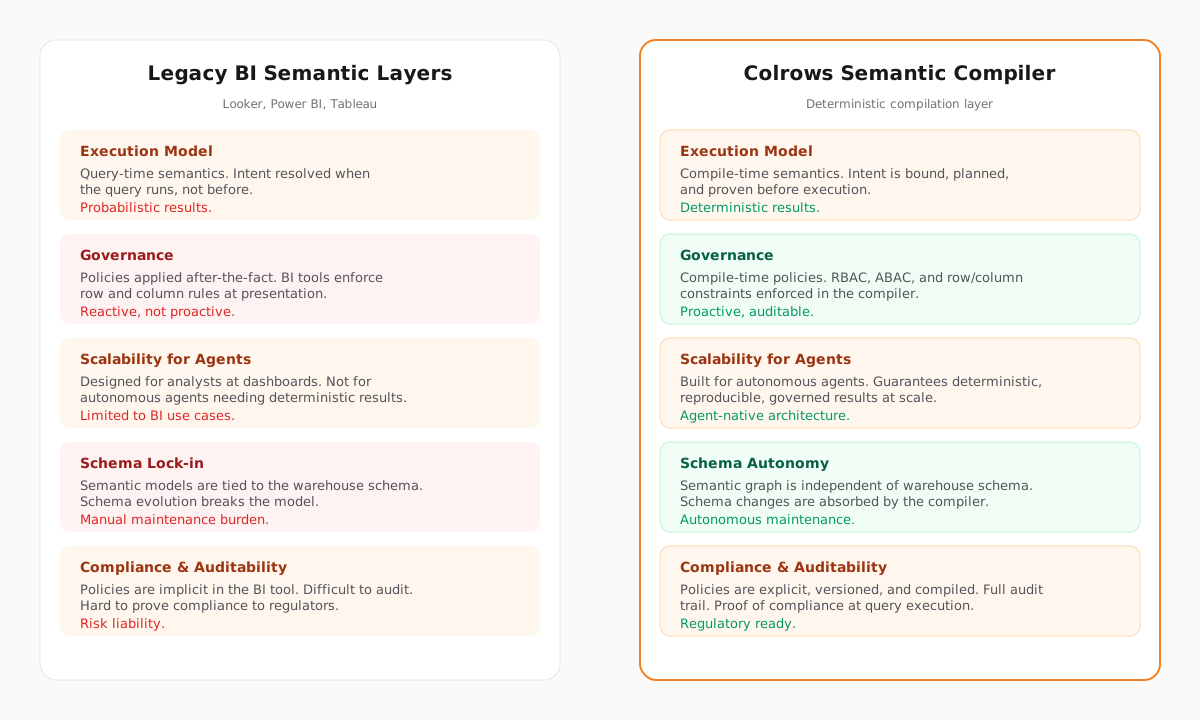
Category 1: Enterprise BI Platforms
How Colrows compares to the dominant BI semantic layers built for dashboarding and analytics.
Colrows vs. Power BI Copilot: Choosing Your AI Data Foundation
Deterministic compilation vs. generative BI. Capacity requirements, real costs, governance, and auditability.
Read comparison
Colrows vs Tableau Pulse: Metric Feed vs Compiled Semantics
Metric-insight feed vs. compiled semantics. Pulse's documented limits and governance differences.
Read comparison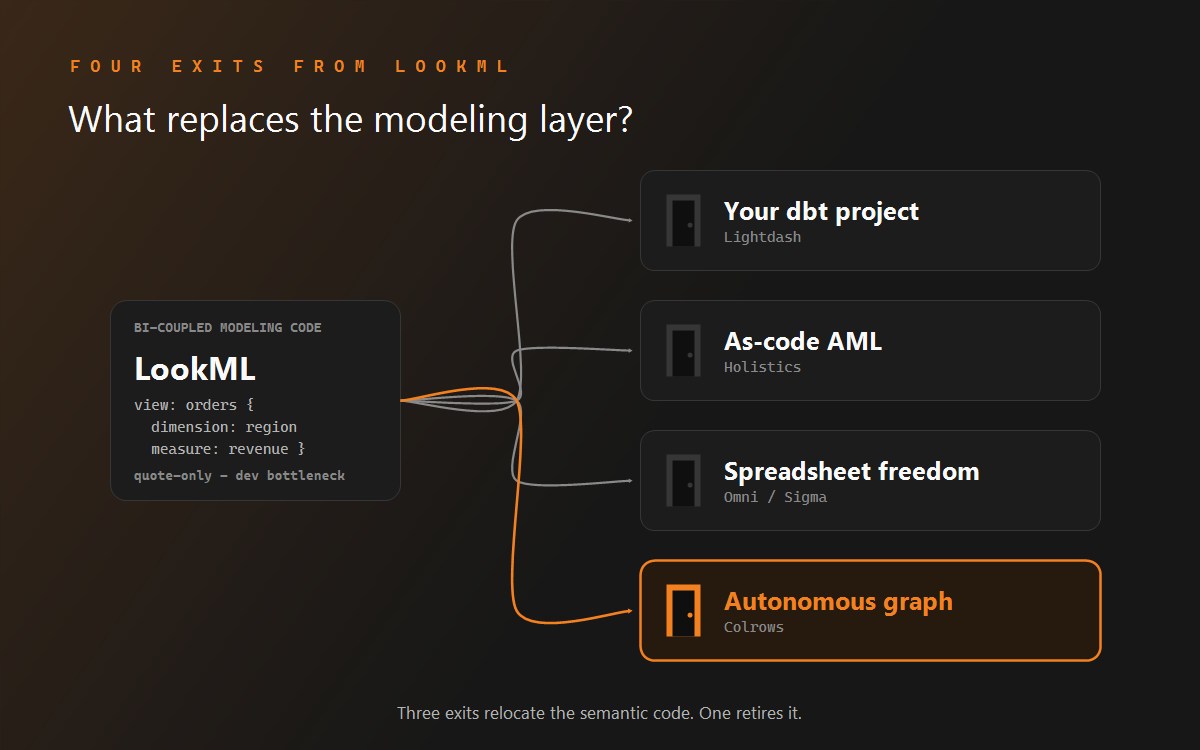
8 Looker Alternatives Without the LookML Lock-In (2026)
Semantic layers that compile instead of present-time, and what you gain in governance.
Read moreCategory 2: OLAP and Semantic Layers
Colrows vs legacy OLAP architectures and open-source semantic layer projects.
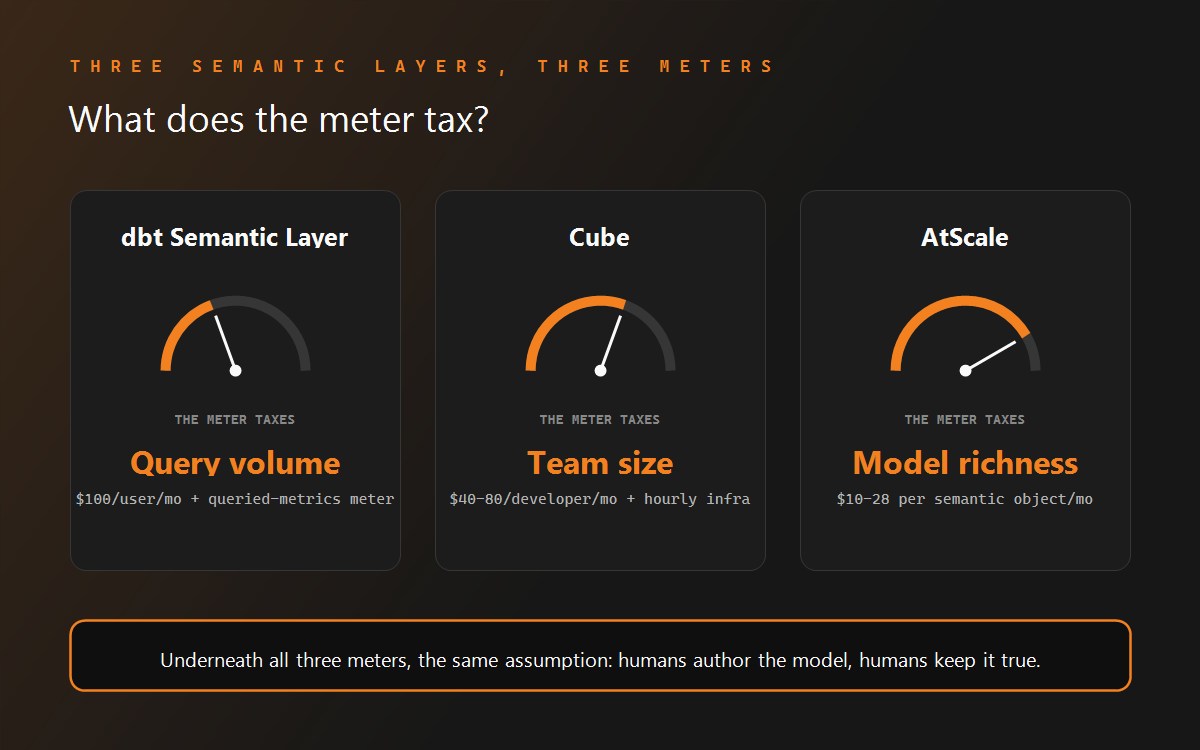
dbt Semantic Layer vs Cube vs AtScale: Choosing an Enterprise Semantic Layer
Pricing meters, modeling approach, and the architectural boundaries of each platform.
Read more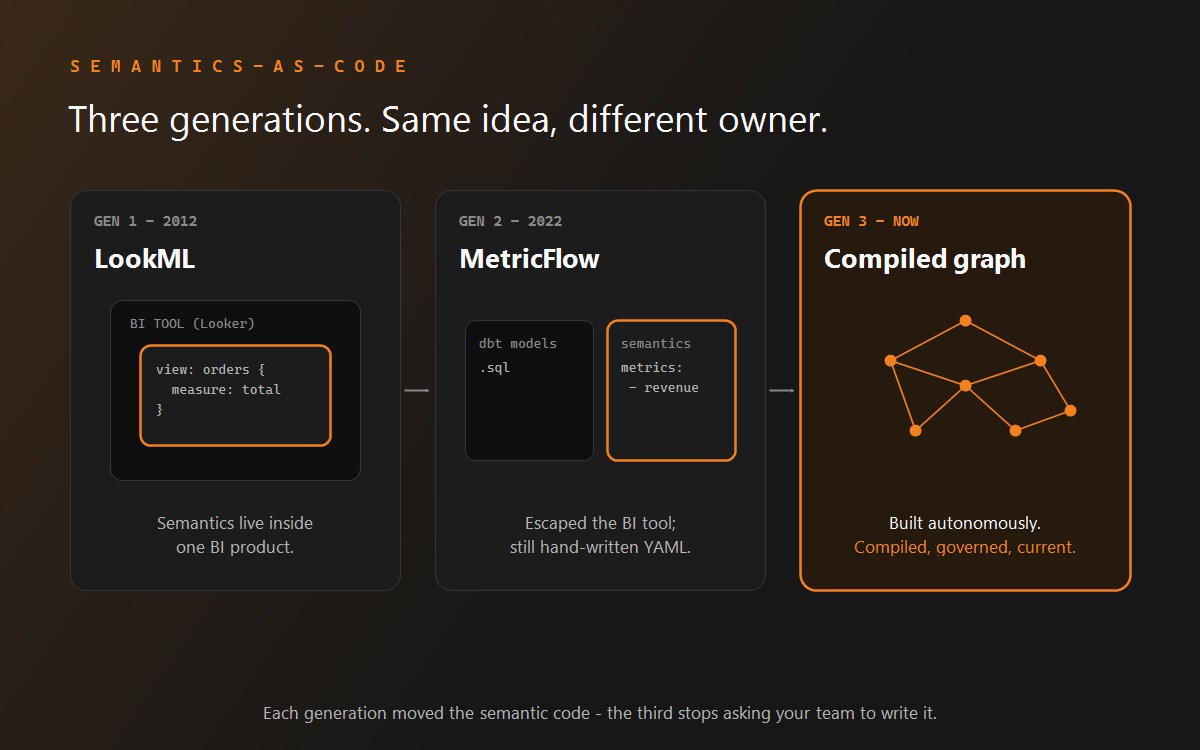
LookML vs dbt Semantic Layer vs a Compiled Semantic Layer
BI-centric modeling vs. warehouse-native semantics. Where each wins and what you lose.
Read more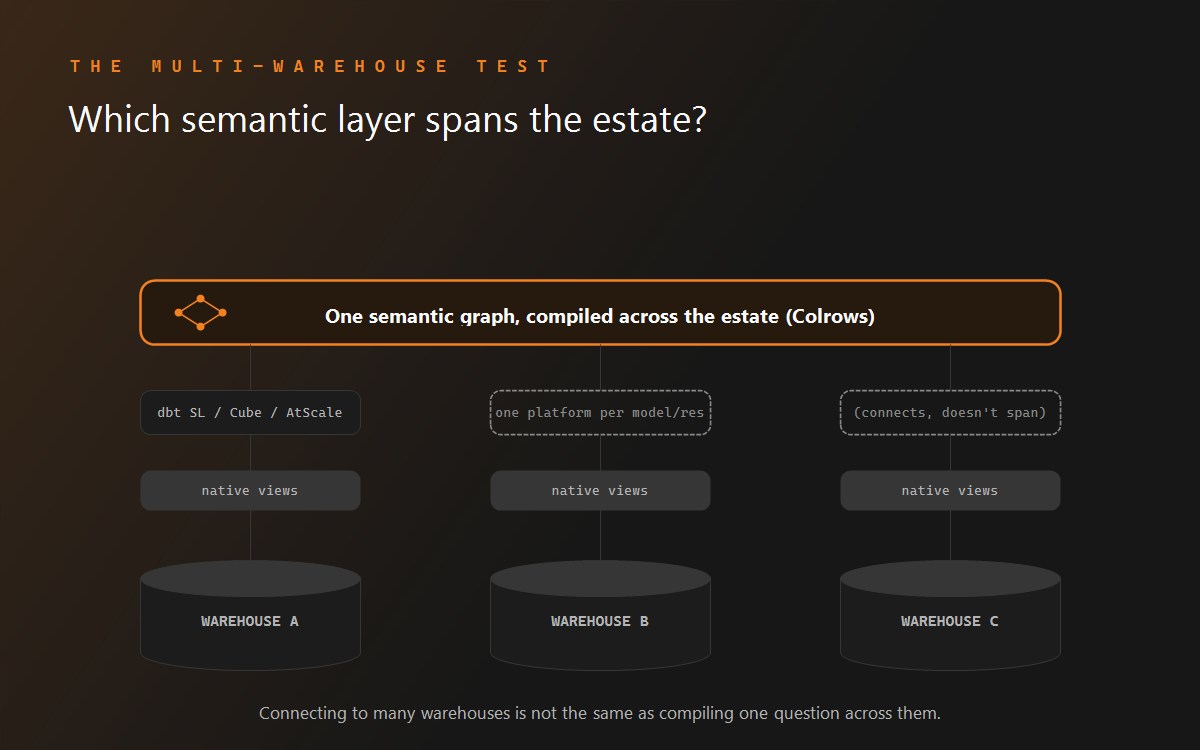
dbt Semantic Layer Alternatives for Multi-Warehouse Estates (2026)
When to stay with dbt, and what other platforms offer beyond the metric API.
Read moreCategory 3: Ecosystem-Locked AI
Colrows vs warehouse-native and embedded AI tools that bind semantics to a single platform.
Colrows vs Databricks Genie: Curated Spaces vs Compiled Semantics
Curated per-domain chat spaces vs. compiled semantics across the estate. The boundary Genie cannot cross.
Read comparison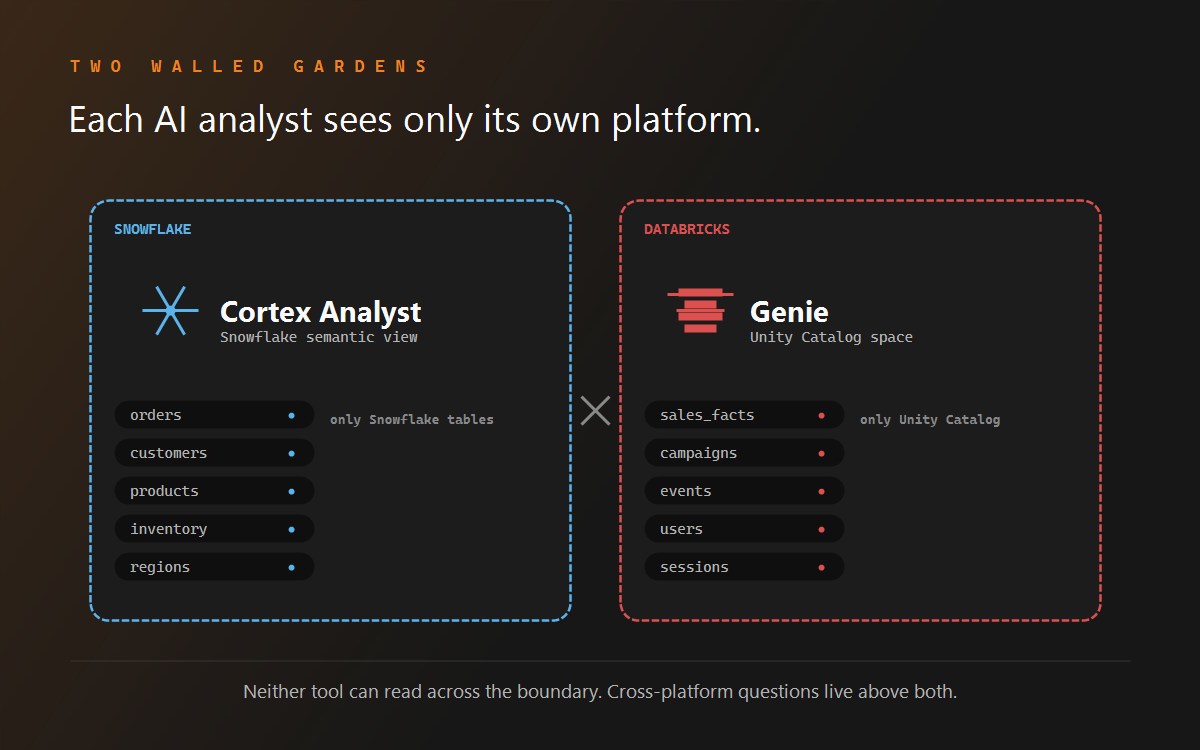
Snowflake Cortex Analyst vs Databricks Genie: Where Warehouse-Native AI Stops
Warehouse-native semantic grounding. How Snowflake and Databricks approach governed AI analytics.
Read more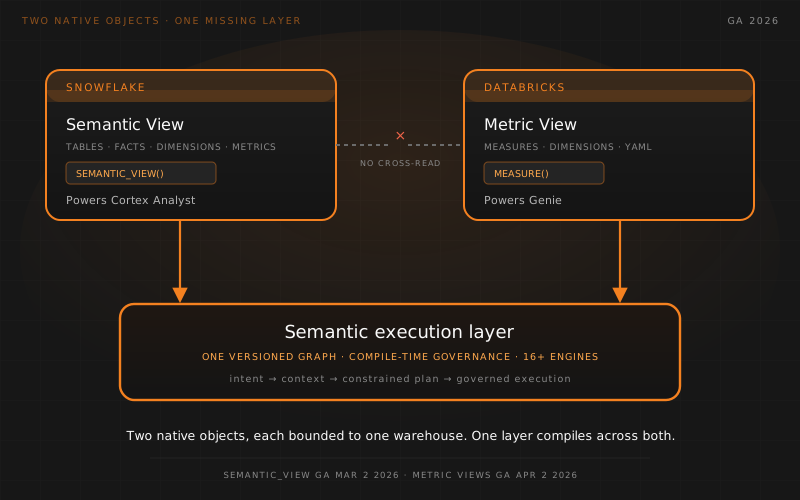
Snowflake Semantic Views vs Databricks Metric Views (2026): Two Native Objects, One Missing Layer
Two native catalog objects, each bounded to one platform. Semantic Views power Cortex Analyst; Metric Views power Genie. Why the enterprise answer is often both, plus a layer above.
Read more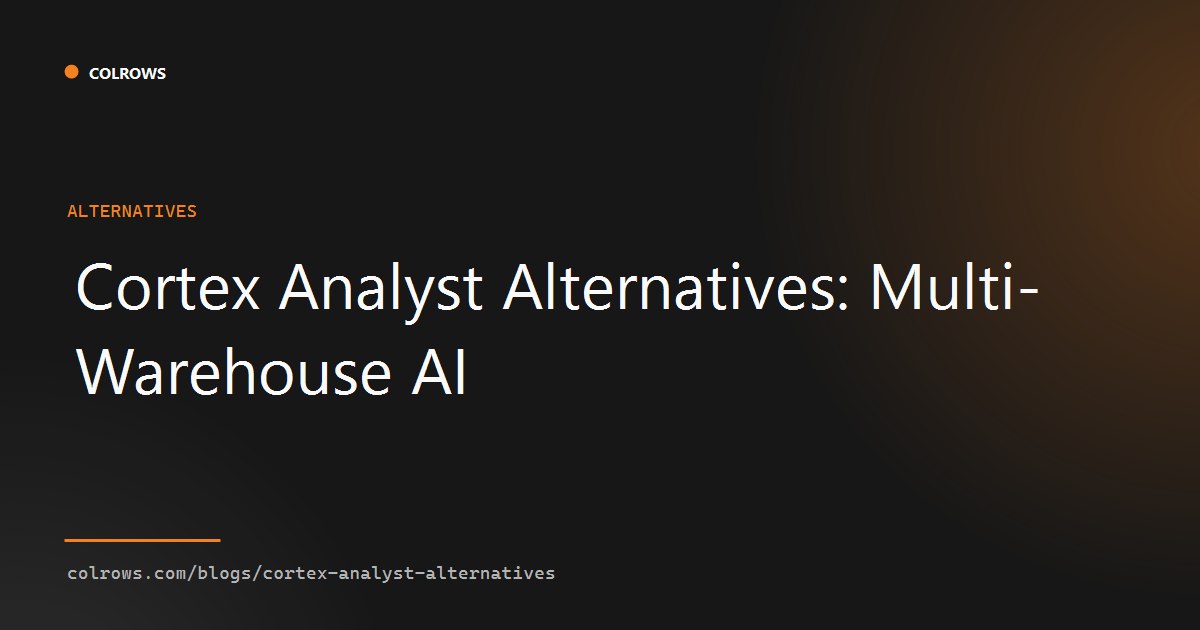
Cortex Analyst Alternatives: Why Your Company Needs More Than Snowflake's Agentic Analyst
Excellent inside Snowflake but bounded. Multi-warehouse and reproducibility-driven buyers need more.
Read moreKey Architectural Comparisons
Deep-dive comparisons on semantic architecture, cost, and strategic choice frameworks.
Semantic Layers Were Built for Dashboards. AI Agents Need Something Else.
Colrows, ThoughtSpot, Timbr.ai, and Databricks Genie compared across four architectural generations.
Read more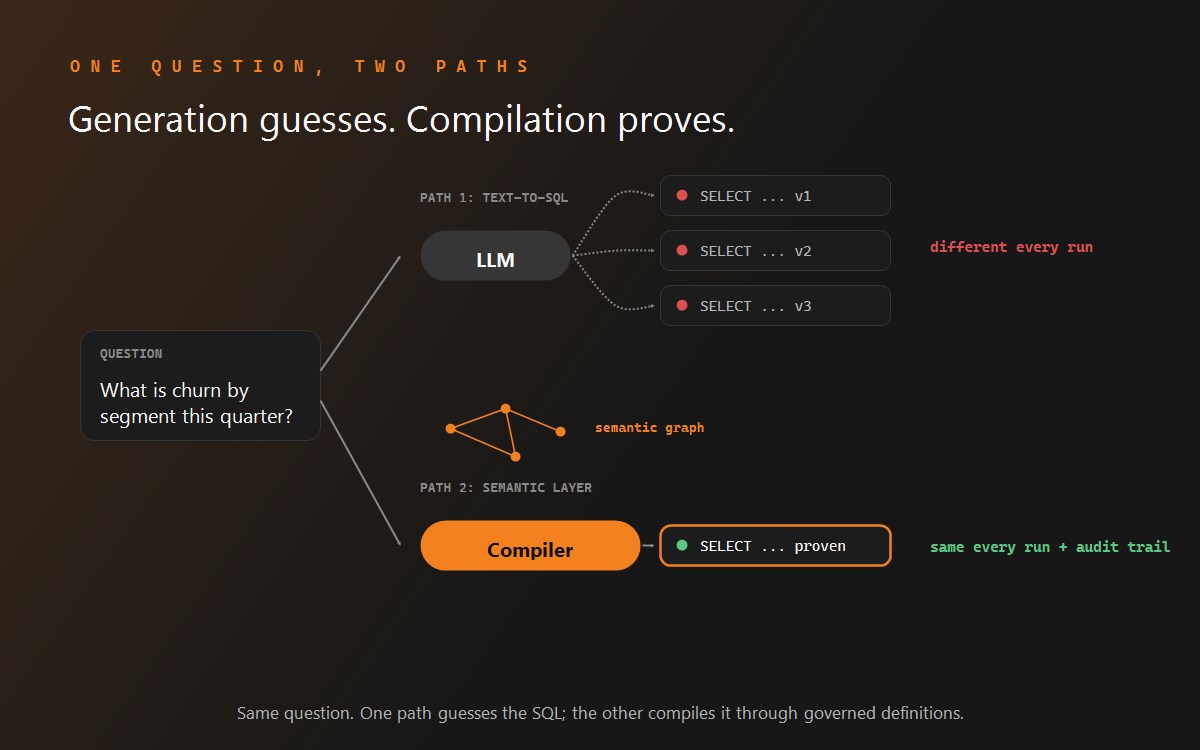
Semantic Layer vs Text-to-SQL: When Each Wins, and Why Mature Teams Use Both
Accuracy benchmarks, failure modes, cost structure, and why mature teams use both architectures.
Read more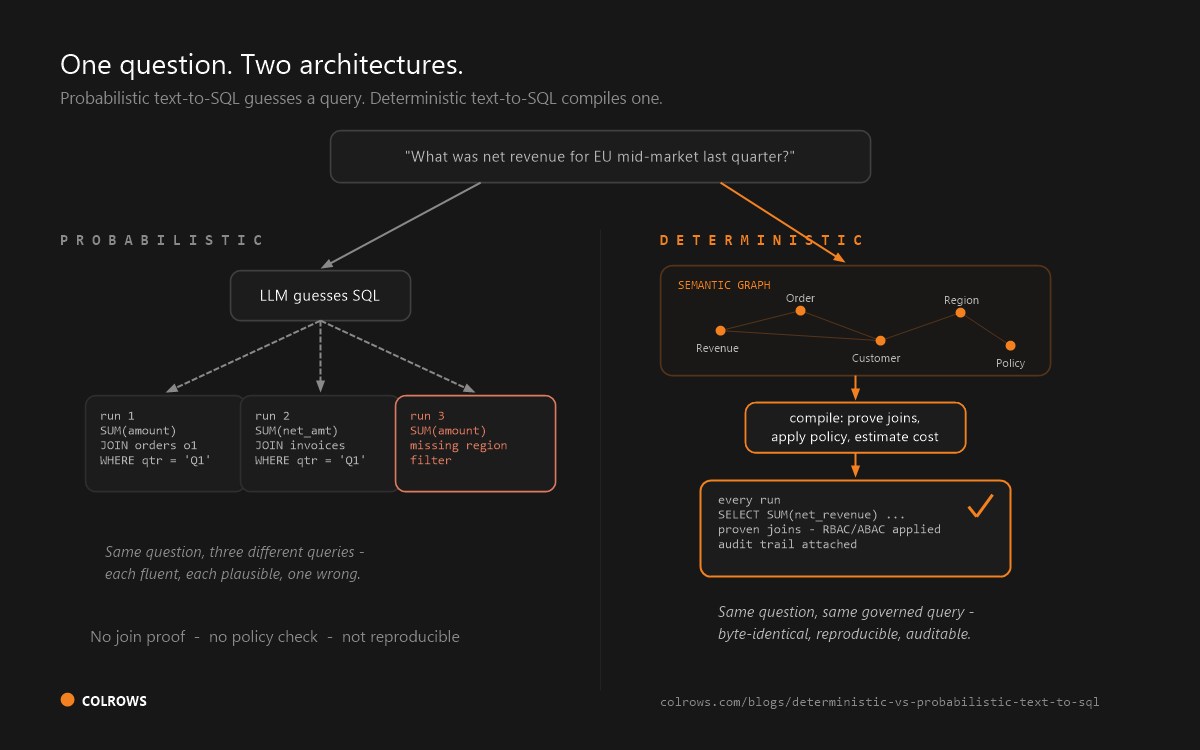
Deterministic vs. Probabilistic Text-to-SQL: Why Accuracy Matters
Why probabilistic text-to-SQL fails silently while deterministic compilation does not.
Read more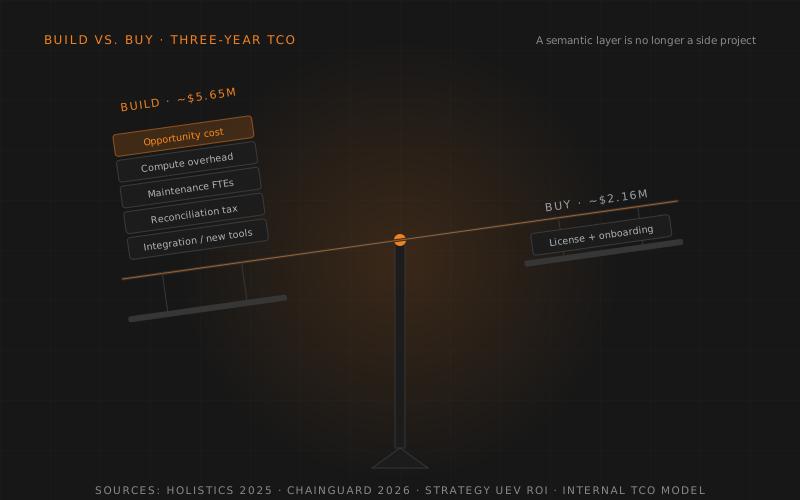
The Build vs. Buy Decision for Enterprise Semantic Layers: What Teams Get Wrong
A practical framework for calculating the real cost of building your own semantic layer.
Read more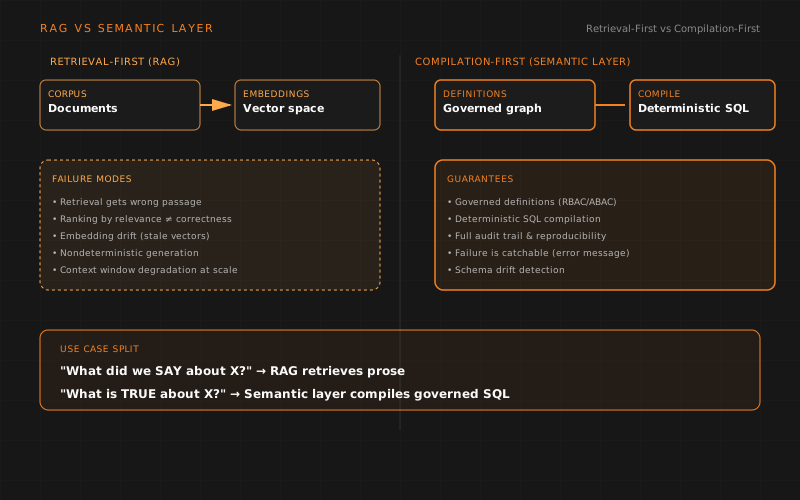
RAG vs. Semantic Layer: Why AI Needs Deterministic Governance
Retrieval-first vs. compilation-first. Architecture, failure modes, cost, and when enterprises need both.
Read more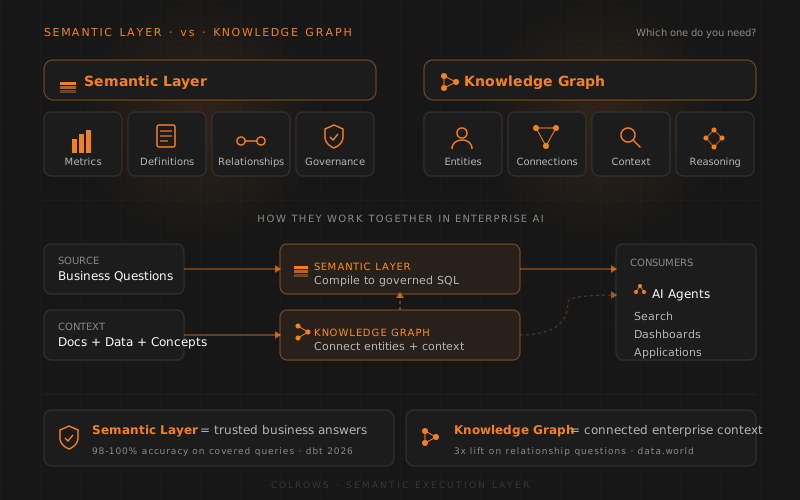
Semantic Layer vs. Knowledge Graph: Choosing Your AI Data Foundation
98-100% accuracy vs 84-90% for text-to-SQL. The pragmatic architecture is both, layered.
Read moreBuyer’s guides, tool round-ups and vendor alternatives
Reference pages for shortlisting: what each tool costs, what it does, and what to use instead.
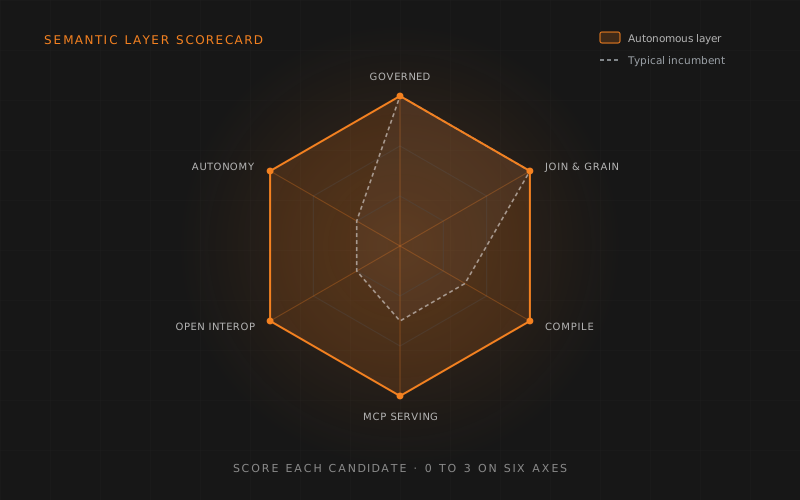
The Semantic Layer Buyer's Guide for 2026
A 12-point framework for choosing the layer your analysts and AI agents can actually trust.
Read more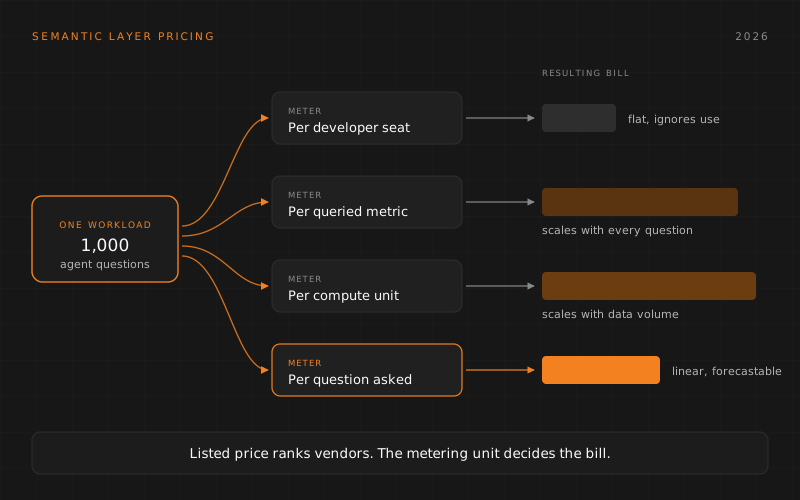
Semantic Layer Pricing in 2026, Compared on Metering Unit, Real Cost, and What Triggers Overage
Every semantic layer publishes a price. Almost none bill you on it. Six platforms compared on the meter that decides the invoice.
Read more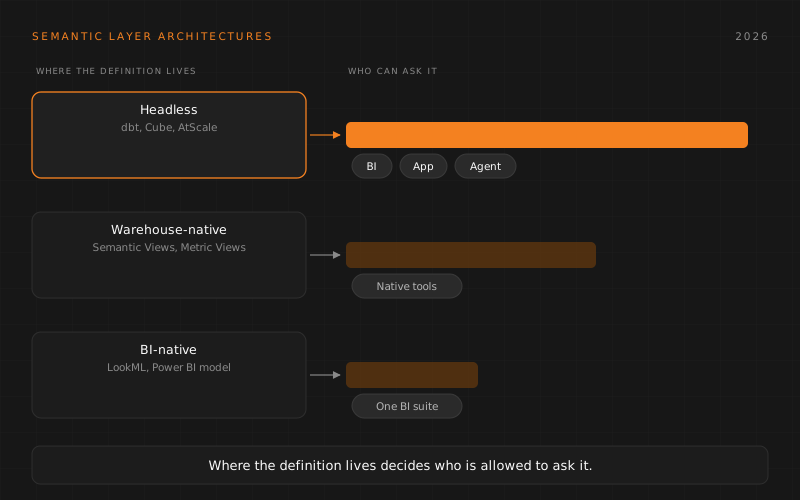
Best Semantic Layer Tools in 2026, Scored on Correctness, Governance Timing, and Dialect Reach
Eight tools ranked on published accuracy evidence, governance timing, and dialect reach.
Read more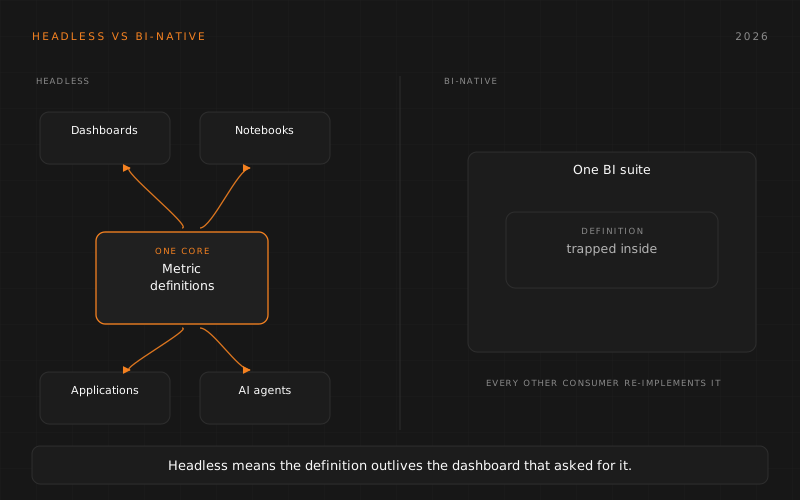
Headless BI and Metrics Layer Tools in 2026, Compared on What They Serve and What They Enforce
One tool ships with no authentication at all and says so in its own README.
Read more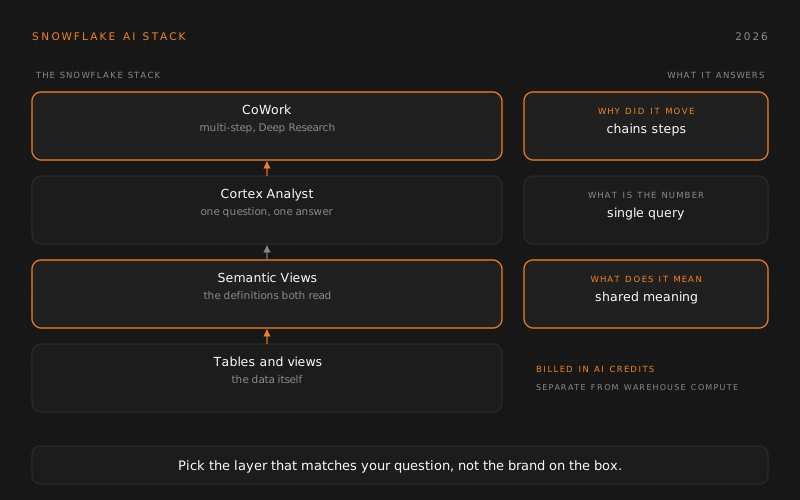
Snowflake AI Tools in 2026, Compared by the Question Each Layer Actually Answers
Five overlapping products, two renames, and two different billing currencies.
Read more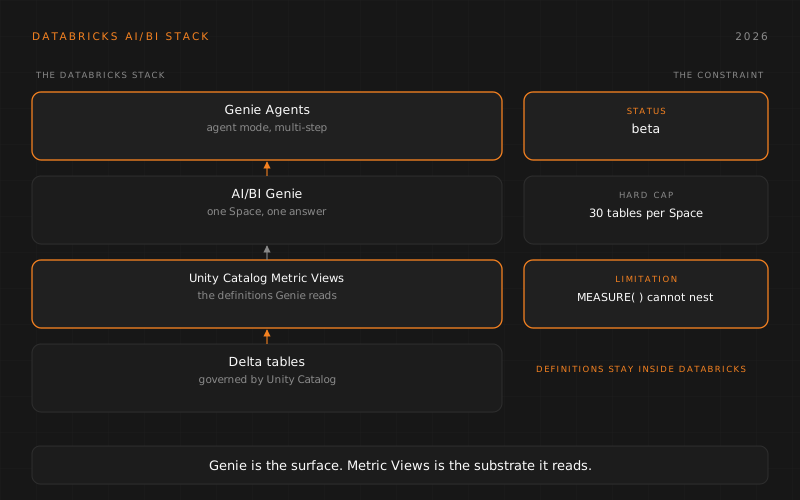
Databricks AI and BI Tools in 2026, Compared After a Year of Renames
Genie now means three different products. A map of the stack after four renames.
Read more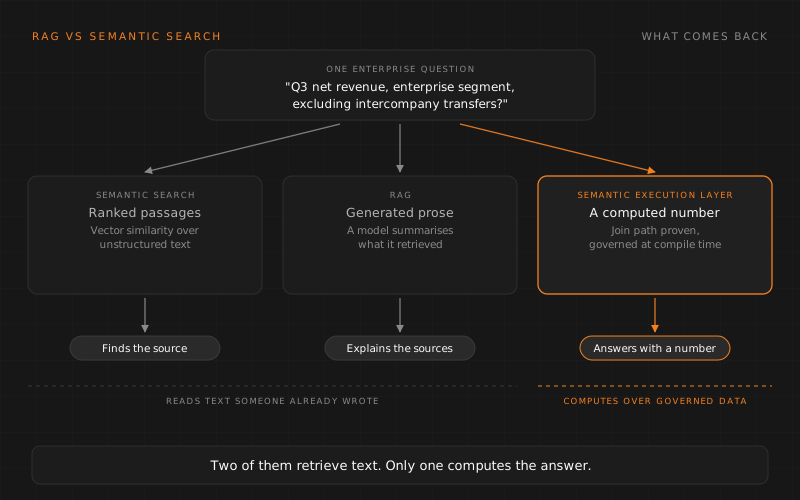
RAG vs Semantic Search: What Each One Can Actually Answer, and the Question Neither Can
Semantic search ranks passages. RAG summarises them. Neither computes a governed number. A decision guide for routing questions to the right architecture.
Read more
MicroStrategy Alternatives and Competitors: 7 Platforms, Scored on Agentic Execution
Strategy One's runtime security filters and tunable LLM temperature are misaligned with deterministic agent execution.
Read more
Qlik Sense Alternatives: Why Dashboard-First BI Is Dead for Agentic Enterprises
Section Access vs compile-time governance. Insight Advisor's NL limits vs deterministic compilation.
Read more
WisdomAI Alternatives: Why Enterprise Data Teams Are Moving Beyond WisdomAI
Learned context vs proven semantic graph. Query-time vs compile-time governance. The CTO checklist for agentic analytics.
Read more
Cube Alternatives: When a Headless Semantic Layer Stops Fitting Your AI Agents
Cube is a strong headless metric API. AI agents that need deterministic, multi-warehouse, compile-time-governed SQL need a different layer. The real alternatives, by job to be done.
Read more
AtScale Alternatives: When OLAP Cubes Stop Fitting Agent-Native Analytics
AtScale is a strong aggregate-aware OLAP semantic layer for BI tools. Agent-native teams need compile-time, multi-warehouse execution instead. The alternatives, matched to the job.
Read more
Tableau Pulse Alternatives: When a Metric Feed Stops Fitting Agent-Native Analytics
Tableau Pulse is a useful metric-insight feed, bounded to one source, metric-only Q&A, and cloud-only. Agent-native teams need deterministic, multi-warehouse SQL. The alternatives.
Read more
Databricks Genie Alternatives: Beyond Curated Spaces Inside Unity Catalog
Genie is strong inside Databricks and Unity Catalog, but bounded to one platform and 30 tables per Space. Multi-warehouse, regulated teams need more. The alternatives, by job to be done.
Read more
Wren AI Alternatives: When Open-Source GenBI Needs Production Governance
Wren AI is a strong open-source GenBI engine, but its operational governance layer is still in active development. The alternatives for governed, deterministic, managed execution today.
Read more
Vanna AI Alternatives: When RAG-Trained Text-to-SQL Needs Governance
Vanna AI is a flexible, self-hosted RAG text-to-SQL framework, but governance and determinism are yours to build. The alternatives that ship them out of the box.
Read more
Cube Pricing 2026: The Cloud Tiers, the Compute Units, and the Real Cost Drivers
Cube Cloud lists $40 and $80 per developer, but the bill is driven by Cube Compute Units. How Cube pricing actually works and what to model before you commit.
Read more
dbt Semantic Layer Pricing 2026: The Tiers, the Per-Metric Charge, and the Real Cost
The dbt Semantic Layer needs a paid dbt Cloud plan and bills per queried metric on top of seats. How dbt Semantic Layer pricing actually works, and what drives the total.
Read more
AtScale Pricing 2026: Why There Is No List Price, and What the Quote Includes
AtScale sells an annual enterprise license with no public price. How the contract is structured and the modeling and compute costs behind the license.
Read more
Why Data Catalogs (Alation, Atlan, Collibra) Can't Execute AI Agents
Catalogs document, ground, and govern metadata - they do not compile and execute governed SQL. The case for catalog + semantic execution layer.
Read moreWhy Colrows
Every comparison in this hub leads to the same conclusion: probabilistic tools create probabilistic results. BI semantic layers optimize for dashboards. Warehouse-native tools bind you to a single vendor. Text-to-SQL agents hallucinate with 10-16% frequency and leave no audit trail.
Colrows is the only architecture built for deterministic, compile-time semantic governance across the enterprise. Your intent is bound, your query is proven correct, your governance is audited. Before the warehouse ever sees the statement. Fix the context, not the model.
Still weighing the architectural trade-offs?
Book a technical architecture review with our solutions team