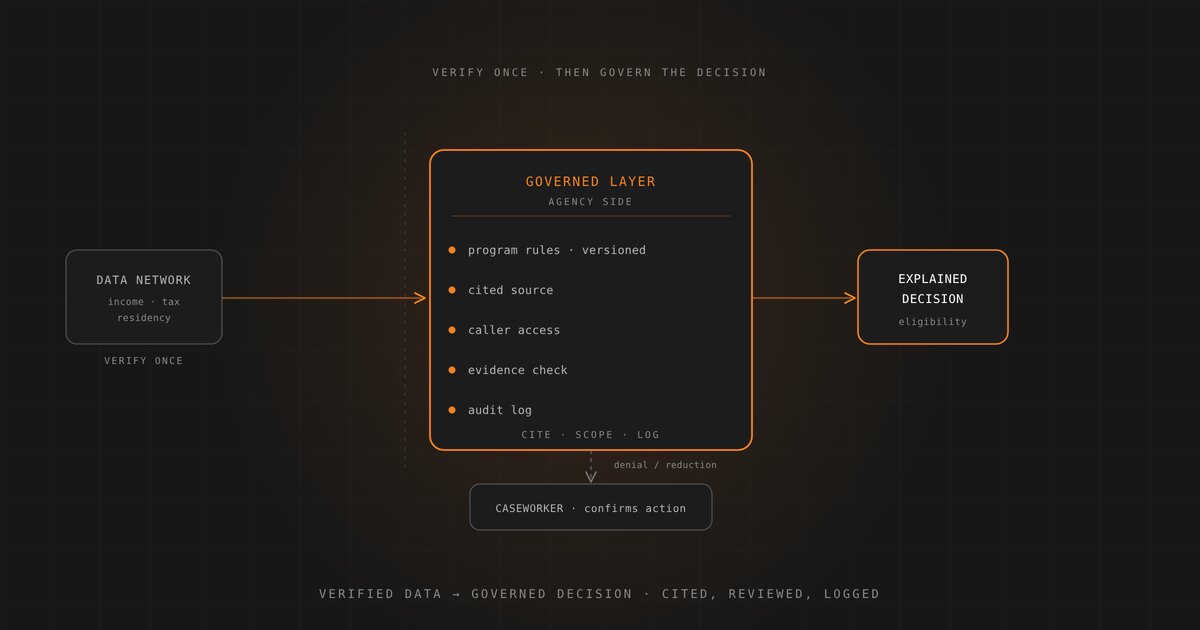
Short answer: YC's Plaid for Government Benefits asks for a consented data network that verifies income, tax and residency once and reuses it across programs. That is necessary for 2027, when Medicaid adds six-month renewals and a monthly work requirement. It is not sufficient. Verified data still has to meet each program's own rules, cited and applied consistently, with a person confirming any denial. Colrows is not a data network. It is the agent orchestration platform and governed semantic layer on the agency side, where verified data becomes an explained decision.
"Prove your income. Prove who lives with you. Prove where you live. Then do it all again for the next program, and again at renewal." That is how Y Combinator describes applying for benefits in "Plaid for Government Benefits", one of its Winter 2027 Requests for Startups. YC wants a consented layer that pulls verified records from the source, because "AI agents will handle enrollment, but only if they can trust the data."
The pipes YC describes answer one question: what does the source say this person earned? The agency still has to decide whether that matches what was reported, which exemption applies, and what notice goes out. During the 2023 to 2024 Medicaid unwinding, 69% of the 25 million people removed lost coverage for procedural reasons. From 2027, Medicaid adds six-month renewals and a monthly work requirement for expansion adults. Colrows is not a data network. It is the agent orchestration platform and governed semantic layer on the agency side, where verified data becomes an explained decision. Here is how the approaches compare.
| Decision point | Manual caseworker review | Data network on its own | Data network plus agents governed by Colrows |
|---|---|---|---|
| Income evidence | Pay stubs, checked by hand | Verified from payroll or bank sources | Verified from source, joined to the state's own records |
| How rules are applied | Each worker's reading of the manual | Outside the network's scope | Program-specific, versioned definitions compiled into governed SQL; an ambiguous rule does not run |
| Before an adverse action | Depends on caseload | Outside the network's scope | Every claim cited; denials and reductions go to a caseworker |
| Audit | Case notes | The network's own logs | A run history of which data, definition and person shaped each case, exportable for retention |
What YC asked for in Plaid for Government Benefits
The item sits in YC's Winter 2027 Requests for Startups. The YC page shows no byline on it; press coverage credits YC partner Gustaf Alströmer (Postdigitalist). The core of the request:
"Before Plaid, every fintech app built its own bank connections. After Plaid, all it took was one tap. The government needs the same layer. With your consent, it pulls verified income, tax, and residency records straight from the source, into every program at once. Verify once, apply everywhere."
YC ties it to a deadline: "Starting in 2027, states must re-check millions of Medicaid enrollees every six months." It also says that "the Government Accountability Office estimates fraud costs the federal government up to half a trillion dollars a year." That figure needs context. GAO's estimate is a range of $233 billion to $521 billion a year for all federal programs, based on fiscal years 2018 to 2022, and GAO says it should not be applied to single programs or compared with improper payment estimates (GAO-24-105833). YC quoted the top of that range.
"None of them share data" also overstates the gap: federal Medicaid rules already require states to request data from state wage agencies, the IRS, SSA, SNAP and TANF (42 CFR 435.948). And "fraudsters have nothing to fake" holds for forged pay stubs, not for identity theft or account takeover.
Why 2027 turns verification into infrastructure
Medicaid: two requirements, not one
The 2025 reconciliation law adds two separate requirements for most Medicaid expansion adults. The first is eligibility renewal every six months instead of every year, starting with renewals in 2027; CBO counted it separately in its coverage estimates (Georgetown CCF). The second is the monthly community-engagement requirement. They work together, but they are different checks on different schedules.
CMS issued its interim final rule on Medicaid community engagement on 1 June 2026, and states must generally implement it by 1 January 2027 (Federal Register). Adults subject to the requirement must show 80 hours a month of work, education, community service or a work program, with exemptions for groups such as pregnant people, medically frail people and caregivers. States must verify at application and at renewal. The rule puts data first: before a state accepts a self-declared medical frailty exemption, it must check Medicaid claims and other administrative data (AHA; Holland & Knight).
CMS's own modelling makes the case for reliable verification. It projects about 15% disenrollment among people subject to the rule, about 2.3 million fewer enrollees in 2027, and attributes a substantial share to procedural and administrative barriers rather than to failing the requirement itself (Holland & Knight). These are projections, not outcomes, and procedural losses can include people who are no longer eligible as well as eligible people lost to paperwork or processing errors. Either way, the verification process needs to be reliable before anyone acts on it.
Work requirements start on 1 January 2027 in 43 states including DC, and 34 states plan to verify compliance every six months (TechTarget, May 2026).
SNAP: error rates now carry a price
From fiscal 2028 in most cases, states with a SNAP payment error rate of 6% or more pay 5%, 10% or 15% of benefit costs, depending on their own rate. The national rate was 10.62% in fiscal 2025, about $10.1 billion in overpayments and underpayments (USDA FNS, June 2026). Based on fiscal 2025 rates, about 35 states may pay a share in fiscal 2028 (Brookings), though a one-year delay is under consideration in the Senate (CRS). Payment errors include underpayments as well as overpayments, and they are not the same as fraud. Accurate verification has financial value in both directions.
The unwinding lesson: data use mattered more than data supply
The 2023 to 2024 Medicaid unwinding is the closest rehearsal for 2027. At least 25.2 million people were disenrolled, and 69% of those removals were procedural (KFF). States could renew people "ex parte", from data they already held, without asking for new paperwork. Nationally, 61% of renewals were done this way. The range ran from more than 90% in Arizona, North Carolina and Rhode Island to less than 20% in Pennsylvania and Texas (same source).
Medicaid already has substantial data-sharing rules. The unwinding showed that access to data does not guarantee effective use of it. Policy choices, staffing, contact details and system design all played a part, but the spread between states is hard to ignore. A consented data layer adds fresh, verified income. The state still has to read that income against its own verification plan, inside a consistent, program-aware workflow.
Keep the numbers straight
These measures are often blended into one "waste" figure. They are different.
| Measure | Figure | What it measures |
|---|---|---|
| Federal fraud, all programs | $233B to $521B a year, fiscal 2018 to 2022 data (GAO) | Estimated fraud losses across the federal government |
| Improper payments | $186B in fiscal 2025, up from $162B (GAO) | Payments made wrongly or without documentation, including underpayments |
| SNAP take-up | 88% of eligible people, fiscal 2022 (USDA FNS) | Share of eligible people who receive the benefit |
| SNAP timeliness | 47 states below the 95% on-time standard in fiscal 2025 (USDA FNS) | Share of applications processed on time |
The same paperwork that lets errors through also keeps eligible people out. Better verification works on both.
Who is building the pipes
The supply side is active.
- Equifax's The Work Number is the incumbent. About half of states use it, and on 3 February 2026 Senators Warren, Wyden and Sanders opened an investigation into its pricing, citing four-year per-query increases of 126% in Colorado and 120% in Kansas (Senator Warren).
- Consent-based payroll connectors let applicants log in to their own payroll account. Checkr announced its acquisition of Truv in August 2026; Truv says it works with a growing number of state agencies on Medicaid and SNAP (HousingWire). SteadyIQ built a verification service with Missouri's Department of Social Services.
- Plaid and ID.me announced a partnership in September 2026 so agencies can confirm a payment account belongs to the verified person (PYMNTS).
- CMS's Emmy is an open-source, consent-based app that lets applicants verify income through payroll providers and produces audit-ready evidence packages. It is free to use, but states pay to host it and must buy a payroll data provider, and CMS is not running new pilots for now (CMS). Ten large vendors also pledged about $600 million in discounted or free work-requirement services (Fierce Healthcare).
CMS's Medicaid director put the direction plainly: "We want data-first approaches and automation versus more paperwork" (Bloomberg Law). Emmy shows governments will build and share consent-based tools. It does not remove the need for data providers, integration, hosting, policy interpretation or governance of what happens once verified data reaches the agency.
Consent is not the whole legal story
"With your consent" carries a lot of weight in the RFS. Several sets of rules decide what a data layer and any agent on top of it may do.
- Consumer data. The CFPB's open-banking rule (Section 1033) was finalised in 2024, but a federal court stayed its compliance dates in October 2025 while the CFPB rewrites it (Bloom Credit). The FCRA still applies to providers that act as consumer reporting agencies; the CFPB lists The Work Number as one (CFPB).
- Medicaid verification rules. States may accept self-attestation in many cases, must sign written agreements with use limits before exchanging data with other agencies, and must tell people before requesting data about them (42 CFR 435.945).
- Due process. For covered federal matching programs, computer matching law requires independent verification and notice before an adverse action (5 USC 552a). Medicaid's own rules add a reasonable-compatibility test and notice and hearing rights, and Goldberg v. Kelly requires notice and a hearing before benefits end.
- Purpose limits. In 2025 and 2026, courts limited disclosure of IRS data to immigration enforcement and blocked a federal demand for state SNAP recipient data under the SNAP Act's confidentiality rules (CRS; Civil Rights Litigation Clearinghouse). Consent from an applicant does not override a statute's purpose limit.
- AI in decisions. OMB memo M-25-21 presumes federal AI used to decide benefits, continued eligibility or benefits fraud is "high-impact", with or without human oversight, and requires testing, impact assessment, human review and appeal (OMB M-25-21). It binds federal agencies, not states, but it is a useful benchmark for state programs. Colorado's SB 26-189 brings notice, explanation, correction and human-review rights to automated decisions about essential government services (Colorado General Assembly).
- Security. CMS's ARC-AMPE standard, based on NIST SP 800-53 Rev. 5, has been required for state Medicaid Eligibility and Enrollment systems since 4 March 2026, replacing MARS-E, and includes event logging and log retention (AWS Public Sector Blog).
History explains the caution: Michigan's automated unemployment-fraud system, MiDAS, ended in a $20 million settlement (University of Michigan), and in 2024 a federal court found "systemic errors" in Tennessee's Medicaid eligibility system (KFF Health News via CT Public).
A verified pay record is only as useful as the rule applied to it. Agencies need each program's rules defined and versioned, applied consistently, cited in every case, and checked by a person before anyone loses coverage. That context sits around the data and the model, and that is where reliability comes from.
How Colrows builds benefits agents on the agency side
Start with the boundary. Colrows is not a consented data network, a payroll connector, a consumer reporting agency or an identity verifier, and it does not hold applicant credentials or source income, tax or residency records. It sits where data from those networks meets the agency's own records (the eligibility system, claims, wage data, case files and policy manuals) and has to become a lawful, explained decision.
Shared facts, program-specific rules
Medicaid, SNAP and TANF do not share one definition of household, countable income, income period or exemption, and two states running the same program can differ too. So Colrows does not collapse them into one meaning. It keeps shared facts in one place (identity references, employment records, household relationships, residency evidence and where each came from) and holds each program's and each state's rules as separate, versioned definitions linked to those facts.
Colrows reads eligibility system tables, data catalogs, reports, policy manuals and verification plans, reconciles conflicting sources, and proposes definitions and relationships with the evidence behind them, such as Medicaid's countable income, "80 qualifying hours" and each exemption category. Close to 80% of definitions and relationships are proposed automatically; staff review and approve them before agents rely on them. Versioning means past cases can still be explained under the rule that applied at the time, and access policies encode statutory purpose limits on which program may see which fields. (In the product, this is the Consensus engine and the Curator agent.)
Rules run as governed SQL; the model gathers evidence
The line between the model and the rules matters most here. Verification rules are applied as approved definitions that compile into governed SQL, run in place on the agency's systems with no data migration. Join paths are validated before any query runs, and if a rule reference is ambiguous, nothing runs. The model's job is to gather evidence and draft the case summary. It does not decide eligibility. The state's eligibility system makes the official determination, and any denial or reduction goes to a caseworker. Answers about policy documents carry citations within each user's document access (Docent), and every claim must map to a cited source. Document intelligence reads scanned pay stubs, but reading a document does not prove it is genuine; verified source data is the defence against forgery.
One design principle matters more than any other here: absence of evidence is not evidence of ineligibility. Verified income is not verified work hours, and volunteering, education or an exemption each need their own evidence. A missing payroll record means the agent asks for more information or escalates the case. It never marks someone as failing the requirement.
The governance record agencies are asked for
Quorum, the Colrows agent control plane, registers every agent with an owner, a spec, its tools and its scope. Administrators review and seat each version before it runs, with evaluations where required. Every run is audited: who ran what, as whom, with which tools and outcome. Agents run on workers in the agency's own environment, with short-lived tokens limited to approved tools, and raw SQL is never part of a run's grant. Audit logs can be exported and retained under the agency's own retention schedule. Impact assessments, appeal processes and risk sign-off remain the agency's decisions.
| YC's need | What Colrows-governed agents do | What stays with data networks or staff |
|---|---|---|
| "Verify once, apply everywhere" | Reuse shared, sourced facts across Medicaid, SNAP and TANF while applying each program's own versioned rules, within each program's access limits | Applicant consent and source connections; data-sharing rights between agencies |
| "AI agents... only if they can trust the data" | Cite a source for every claim, run under the caller's access, and record each run | Confirming any denial or reduction; impact assessments and appeals |
| Six-month re-checks | Run renewal checks ahead of each due date against the state's own data and network data, and route unresolved cases to staff | Fresh payroll data from the state's chosen provider |
| Fraud resistance | Flag mismatches between reported values, source data and case history for human review | Proving a document is genuine; identity proofing |
Worked example: a six-month Medicaid renewal
An enrollee's renewal is due in six weeks.
- The agent is approved before it runs. The state's renewal agent is registered in Quorum with read access to the eligibility system, state wage records, Medicaid claims and the income data the state receives from its verification provider. An administrator seated it after evaluation.
- It checks the state's own data first. On a schedule ahead of the due date, the agent pulls wage records and claims data the state is authorised to use for this program. It compares them with what the enrollee reported, using the state's Medicaid definitions and verification plan at their current version, and lists any missing or incompatible records.
- The state decides. The agent prepares an evidence package with citations (including the verification-plan section that sets the reasonable-compatibility threshold), dates and any discrepancies. Where information is missing or conflicting, it requests more information or escalates; it never labels the enrollee ineligible. The state's eligibility system and caseworkers make the official determination and send the required notice, with review and appeal rights intact.
- It leaves a record. The audit trail shows the agent, the data, the definitions and the outcome, and the agency keeps it under its own retention schedule.
Deploy inside the agency's controls
Colrows runs as SaaS on AWS, Azure and Google Cloud, or on-premise. For air-gapped sites it deploys open-weight models such as Gemma, Llama, Nemotron or Qwen inside the network, and on-premise installs make no telemetry, licence-check or update calls out of it. PII is anonymised before any prompt reaches a model, and the platform includes defences against prompt injections. The semantic model, including definitions, verified queries, policies and version history, exports as JSON and other formats and stays with the agency if the contract ends. Colrows deploys through forward-deployed engineering (Map, Build, Ship, Handover). The roughly eight-week target covers onboarding and compliance mapping: codifying the state's definitions and verification plan into the semantic layer, connecting systems, setting access policies and registering agents. The clock starts once data access and security approval are in place. See how we deploy.
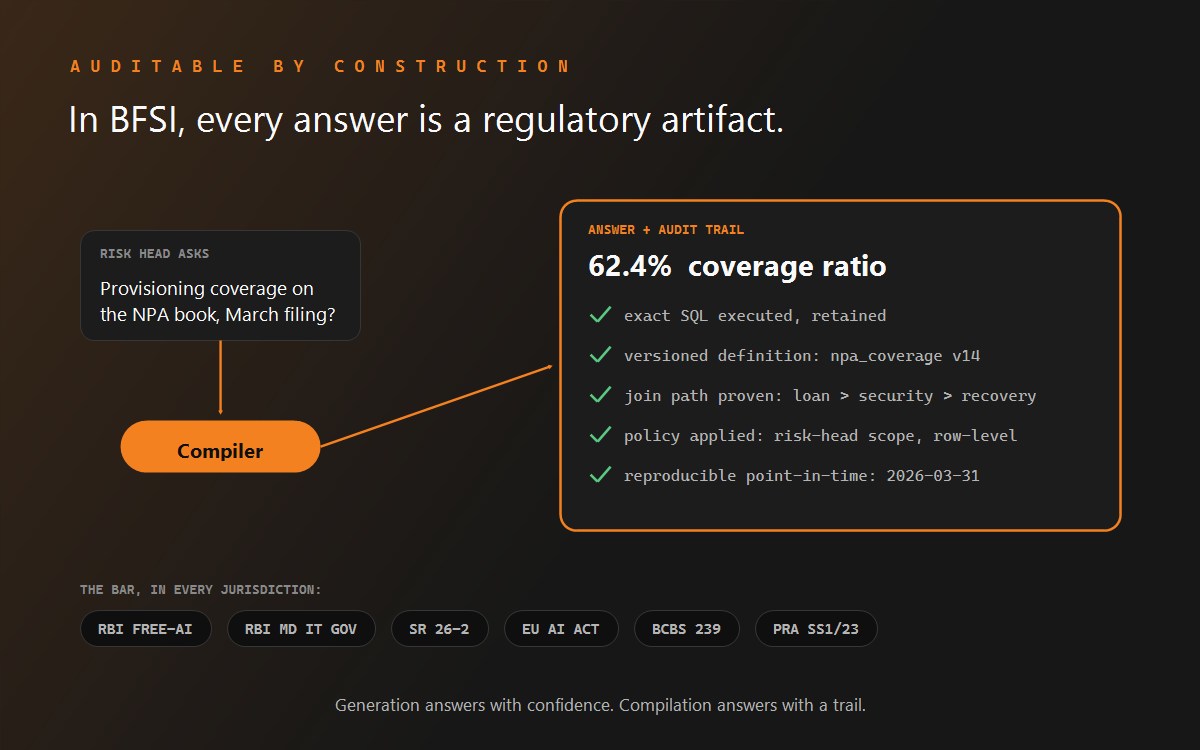
For a related look at governed answers in regulated work, read auditable SQL for regulated industries.
For systems integrators and data providers
Most states will deliver 2027 through the integrators and data providers they already use. Colrows is built for that route. It sits on top of existing eligibility systems and data feeds and queries them in place, so nothing is replaced. It adds the layer those systems were not designed to hold: approved, versioned rule definitions, a cited source for every claim, and a record of every agent run that a state can export and keep. In the US, Colrows is delivered through partners, and integrators and verification providers are the natural ones.
The case against
Five objections are fair. About half of states already use The Work Number, and with 1 January 2027 close, renewing an existing contract is the low-risk move. Open-source tools such as Emmy lower the cost of the applicant-facing step. Not every buyer wants less friction, since some of the law's budget savings depend on people leaving the rolls. Integrators control the systems of record, and most states say they will keep their current vendors, with only six considering AI or other innovations (TechTarget). And automated eligibility has a bad record that advocates are watching closely.
The response is to sell accuracy, not enrollment. Consistent, explainable verification catches payments that should not be made and prevents denials that should not happen, and both count toward a state's error rate and its legal exposure. Work with the data networks and integrators a state already has, and start with one flow, such as ex parte renewals, where the unwinding showed the biggest gap between states.
Six checks before an agent touches eligibility
- Are rules defined per program and versioned? Shared facts can be reused; each program's income tests, hours and exemptions need their own approved definitions.
- Does missing data trigger a request, not a denial? A gap in one source should never be read as failing a requirement.
- Does every claim cite its source? Each case summary should point to the data and the policy section behind it.
- Does a person confirm every adverse action? Denials and reductions need human review, notice and appeal.
- Are purpose limits enforced in the system? Statutes limit how IRS and SNAP data may be used. Access policies should encode those limits.
- Is every run logged and retained? Auditors and courts will ask what data and which rule shaped a decision.
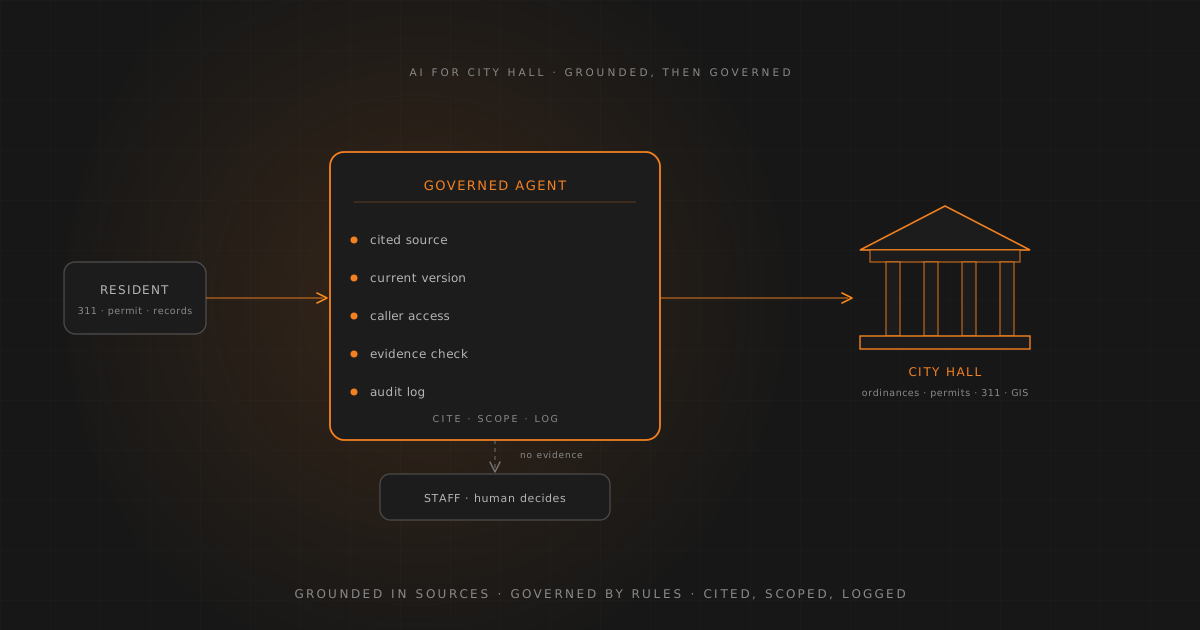
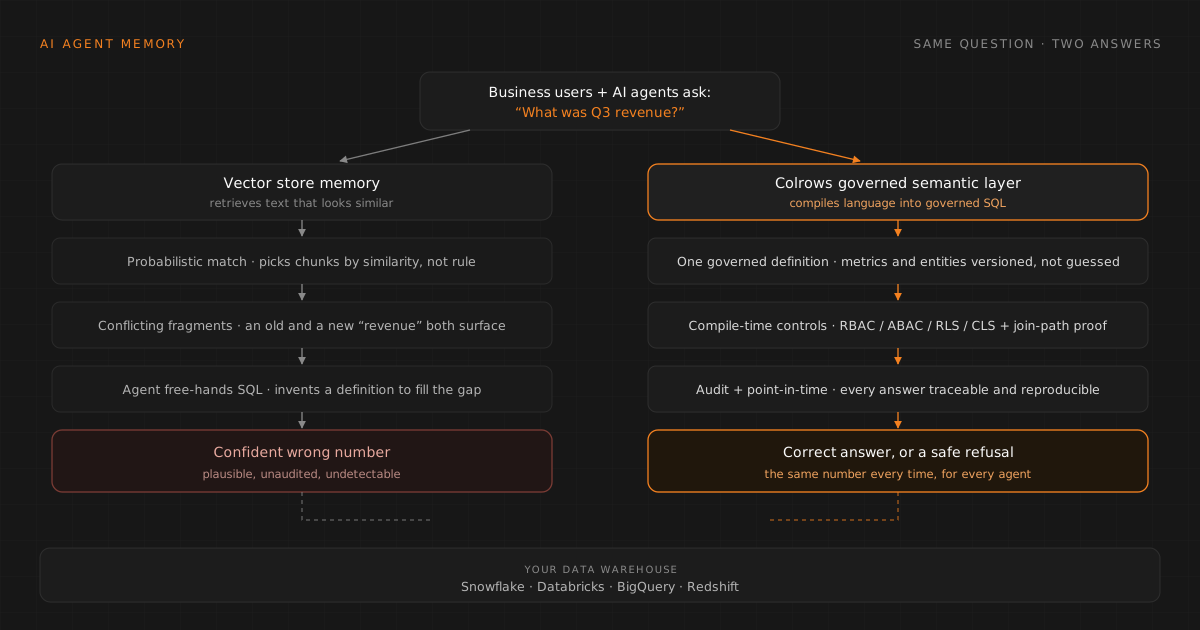
If any answer is no, fix it before 1 January 2027. For why agents also need governed memory, read why AI agent memory fails on enterprise data, and for the permits-and-records side of government work, YC's AI for City Hall. More on this theme in Governance & Security.
Plaid for Government Benefits: frequently asked questions
What is YC's Plaid for Government Benefits RFS?
A Winter 2027 Request for Startups asking for a consented data layer that pulls verified income, tax and residency records from the source into every benefits program: "Verify once, apply everywhere."
What changes for Medicaid in 2027?
Two things. Most expansion adults move to six-month eligibility renewals, and under CMS's June 2026 rule, adults subject to the community-engagement requirement must show 80 qualifying hours a month, verified at application and renewal from 1 January 2027.
Is Colrows a consented data network like The Work Number or Truv?
No. Colrows works on the agency side. It governs the definitions, evidence and agent actions that turn data from those networks and the state's own records into explained decisions.
Sources
Every figure is the cited source's own published claim. Several are projections or self-reported market figures; treat them as the source's claim, not an independent measurement.
- Y Combinator, Requests for Startups, Winter 2027
- Postdigitalist, YC Requests for Startups Winter 2027 (Oct 2026)
- GAO-24-105833, Fraud risk management: fraud estimate (Apr 2024)
- eCFR, 42 CFR Part 435 Subpart J
- Federal Register, Medicaid community engagement interim final rule (3 Jun 2026)
- AHA, CMS issues interim final rule on Medicaid community engagement (1 Jun 2026)
- Holland & Knight, CMS interim final rule summary (Jun 2026)
- TechTarget, How states are preparing for Medicaid work requirements (May 2026)
- USDA FNS, SNAP payment error rates FY2025 (Jun 2026)
- KFF, Medicaid enrollment and unwinding tracker (Sep 2024)
- GAO, Improper payments FY2025 (Apr 2026)
- USDA FNS, SNAP participation rates
- USDA FNS, SNAP application processing timeliness FY2025
- Senator Warren, Investigation into Equifax (3 Feb 2026)
- HousingWire, Checkr acquires Truv (Aug 2026)
- PYMNTS, Plaid and ID.me partnership (Sep 2026)
- CMS, Eligibility made easy (Emmy) (Sep 2026)
- Fierce Healthcare, Vendors pledge $600M for work requirements
- Bloomberg Law, Tech and financial firms sign on to Medicaid work requirement effort
- Bloom Credit, Where Section 1033 stands (Oct 2026)
- CFPB, The Work Number consumer reporting company listing
- 5 USC 552a, Privacy Act and computer matching
- CRS, IRS data sharing litigation (Sep 2026)
- Civil Rights Litigation Clearinghouse, California v. USDA
- OMB, Memorandum M-25-21 (Apr 2025)
- Colorado General Assembly, SB 26-189
- AWS Public Sector Blog, MARS-E to ARC-AMPE
- University of Michigan STPP, MiDAS case brief
- KFF Health News via CT Public, Deloitte-run systems and Medicaid (Jul 2026)
- Georgetown CCF, CBO coverage estimates of the reconciliation law (Aug 2025)
- Brookings, The SNAP state cost-shift policy (Aug 2026)
- CRS IN12723, SNAP state cost-sharing and proposed delay (Aug 2026)