
The Semantic Layer: Foundation of Autonomous AI
The semantic layer has evolved. It is no longer just a metric catalog for BI dashboards. It is the active, deterministic compiler that bridges the gap between raw warehouse data and autonomous AI agents. Fix the context, not the model.
22 posts
The Evolution: From passive BI layers to active semantic compilers
Traditional semantic layers were passive metric stores. A data engineer built a schema, analysts queried it, dashboards displayed results. The layer itself did not decide. It reacted. Today, the semantic layer is infrastructure. It is where business meaning becomes executable code. A typed, versioned graph that every agent, dashboard, and query compiles through before reaching the warehouse. The layer that makes "revenue," "customer," and "compliance" mean exactly the same thing whether the question comes from a financial analyst, an autonomous AI agent, or a downstream system.
The Governance Mandate: Why the Semantic Control Plane is mandatory
Autonomous agents cannot operate on stale or ambiguous definitions. The semantic layer is no longer optional infrastructure for reporting. It is the only way to manage data access risk at the AI layer. RBAC, ABAC, and row/column-level policies are compiled before SQL is generated. Unauthorized questions fail at compile time, not at query time. This is where AI governance moves from post-execution audit to execution prevention.
The Accuracy Standard: How deterministic compilation solves the Text-to-SQL accuracy cliff
Text-to-SQL on real enterprise data: 10-21% accuracy. Semantic compilation: 90-100% on covered queries. The difference is not model quality. It is architecture. One approach generates probabilistically and hopes. The other compiles deterministically and proves. A semantic layer that treats SQL as the compiled target of a deterministic compiler, not the output of a prompt, is the only way to close the accuracy cliff.
Semantic Layer content map
| Content cluster | Key concept | Strategic value |
|---|---|---|
| Architectural | Semantic compiler | Moves from BI to AI infrastructure |
| Governance | Semantic control plane | Deterministic security and access control |
| Reliability | Text-to-SQL accuracy | Eliminating hallucinations and drift |
| Comparison | Colrows vs competitors | Evaluation and conversion framework |
Do not view the semantic layer as a storage strategy. View it as an execution strategy. It is the compiler that makes enterprise AI predictable, auditable, and production-ready. Fix the context, not the model.
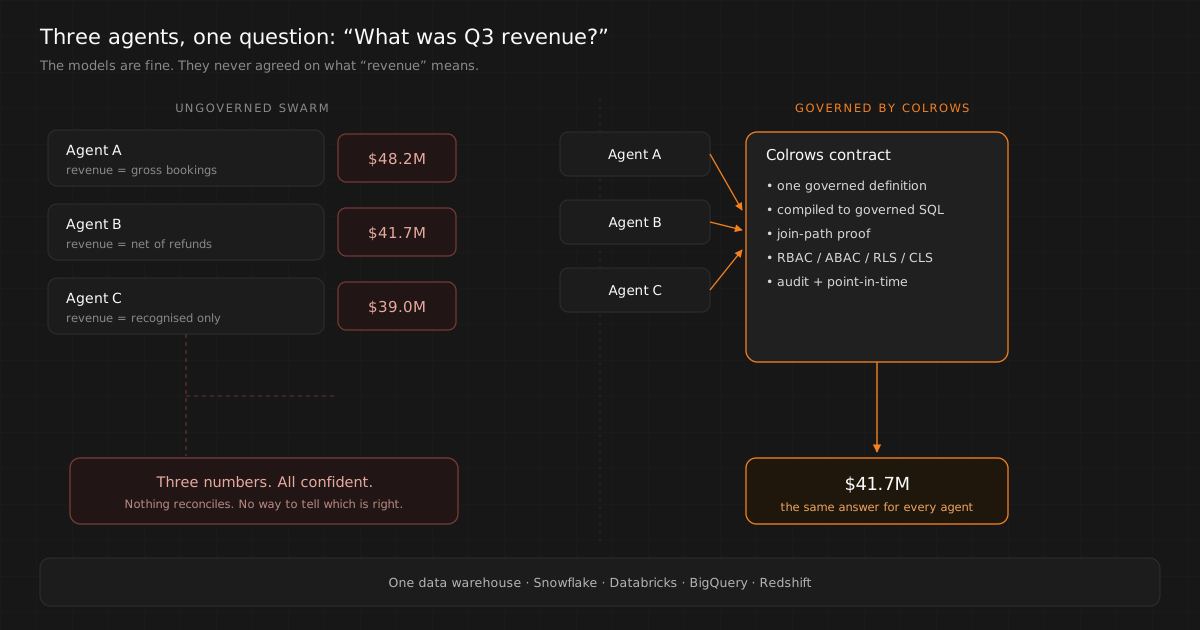
How to Build Multi-Agent Systems That Don't Fail: The Coordination Contract Enterprises Are Missing
Agents don't disagree because they can't talk. They disagree because they never agreed on what your metrics mean. The 2026 failure research, and the fix.
Read more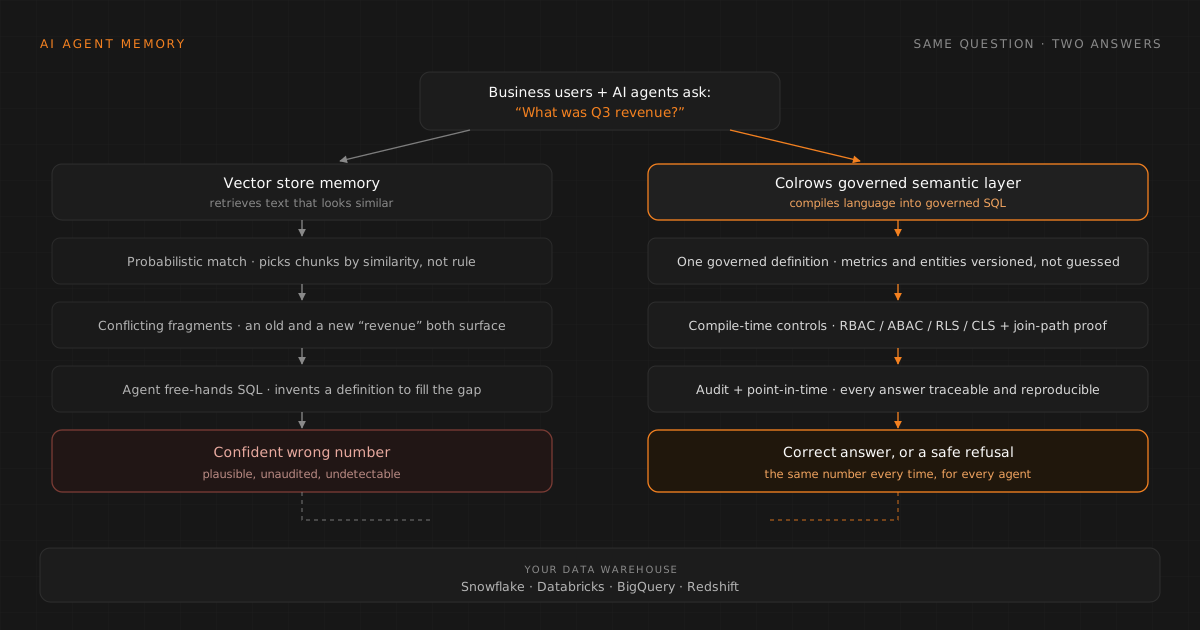
AI Agent Memory Fails on Enterprise Data: Why a Governed Semantic Layer Beats a Vector Store
Vector stores let agents invent your numbers. Why a governed semantic layer is the semantic memory enterprise agents need, with 2026 benchmark evidence.
Read more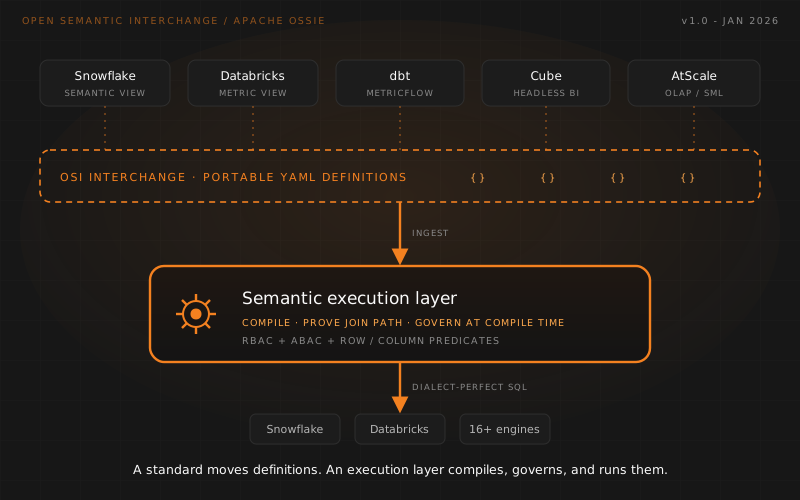
Open Semantic Interchange and Apache Ossie: Portable Definitions Are Not a Governed Execution Layer
A standard moves definitions between tools. It does not compile, prove, or govern the query. Where a semantic execution layer still fills the gap.
Read more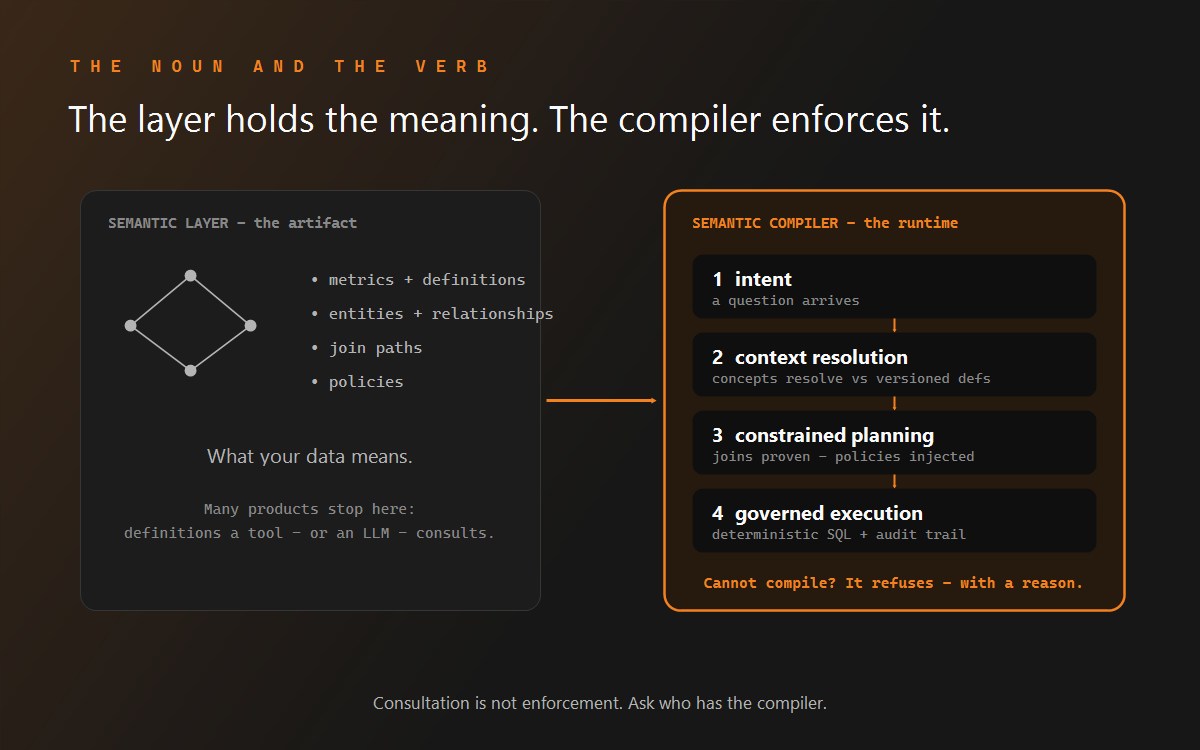
What Is a Semantic Compiler? Deterministic SQL for AI
The layer holds the meaning; the compiler enforces it. The five properties that qualify.
Read more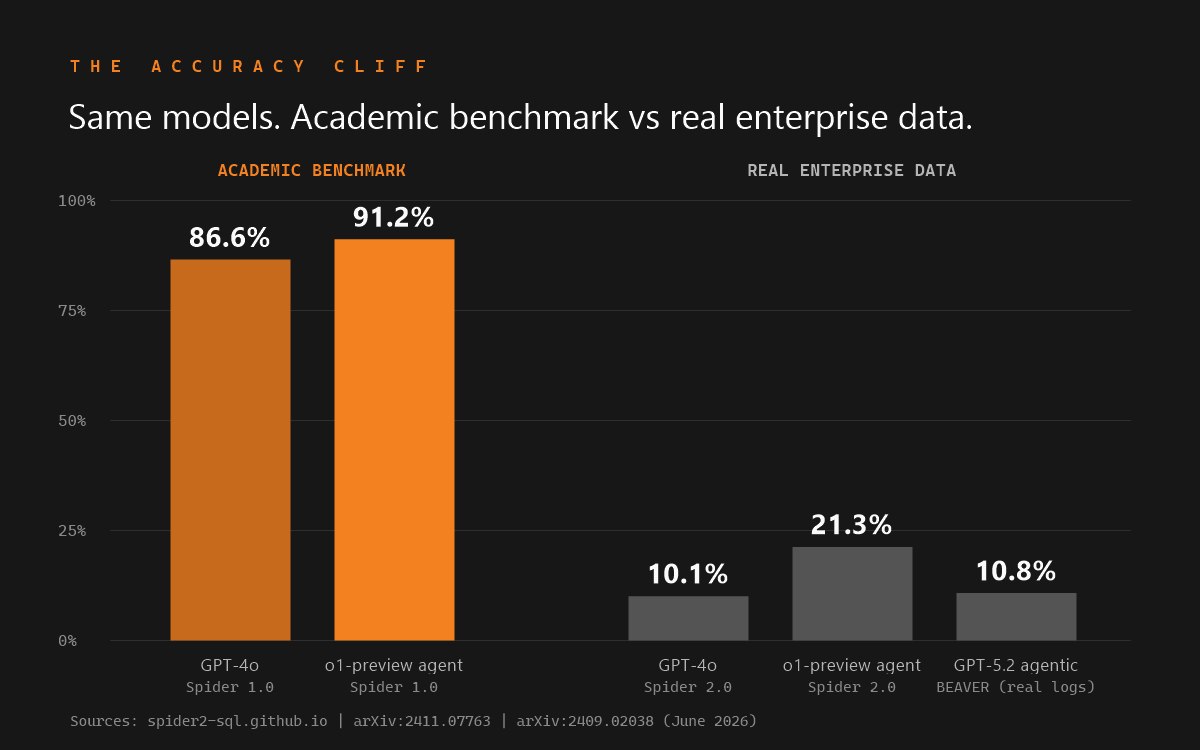
The Text-to-SQL Accuracy Cliff: Why Deterministic Compilers Beat LLM Guessing
91% on benchmarks, 21% in production. What Spider 2.0, BEAVER and BIRD actually measure, and what closes the gap.
Read more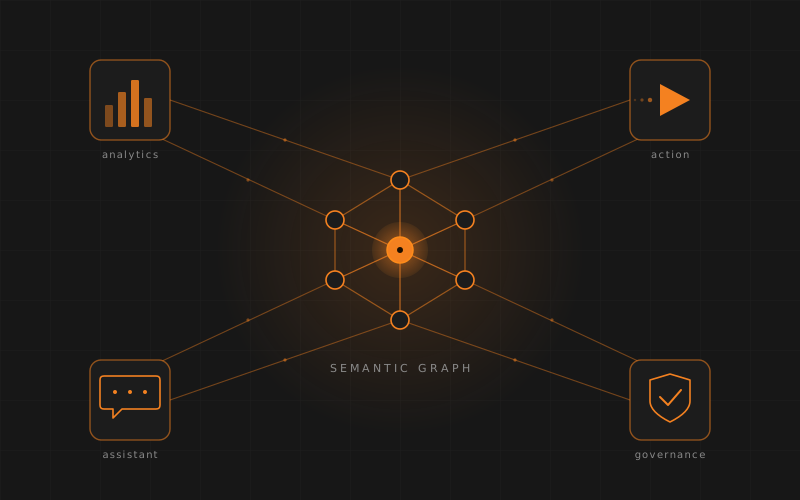
RAG vs. Semantic Layer: Why AI Needs Deterministic Governance
RAG retrieves passages. A semantic layer compiles queries. Two halves of the enterprise AI problem.
Read more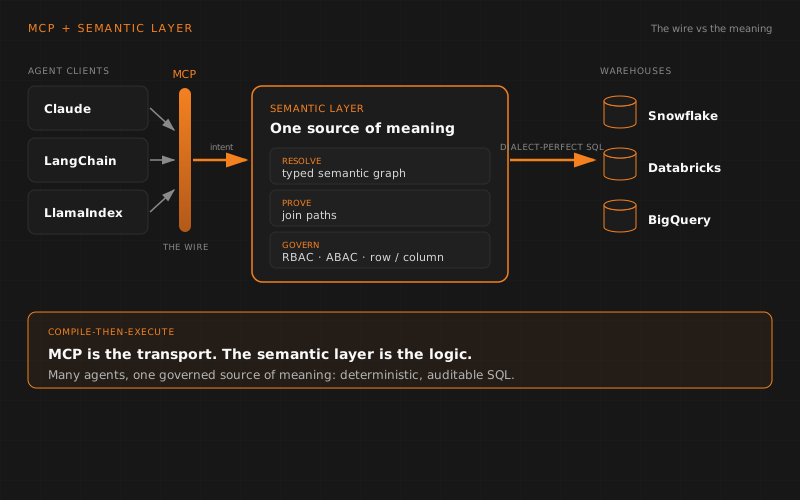
How to Build an MCP Semantic Layer Server (Architecture, Code, and the No-Rip-and-Replace Case)
MCP gives every AI agent the same connector. A semantic layer gives every connector the same meaning.
Read more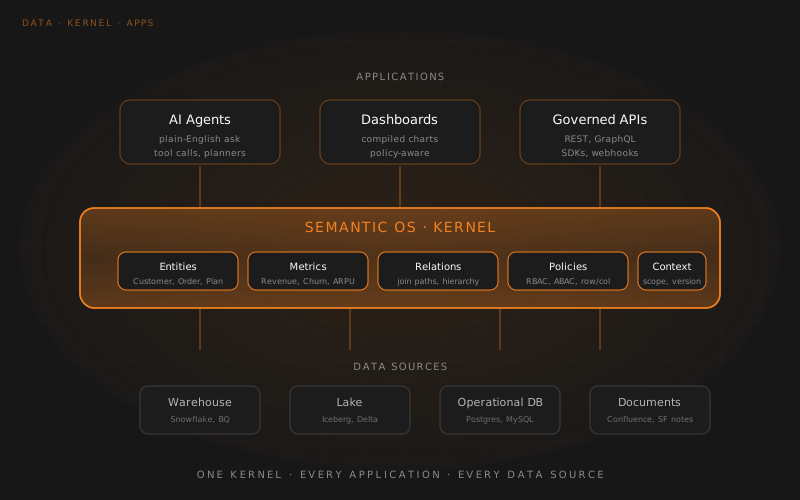
The Semantic Operating System Inside the Enterprise
Meaning becomes a kernel-level concern. One graph, one resolver, one policy plane - inherited by every consumer.
Read more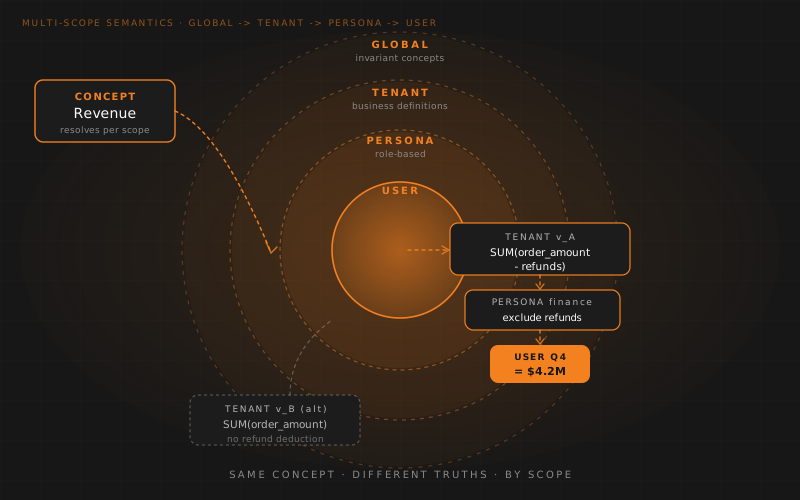
Multi-Tenant Semantic Isolation: Enforcing Tenant Boundaries at Compile Time
Data can be isolated. Meaning cannot. Why full semantic isolation is impossible - and how multi-scope semantics solves it.
Read more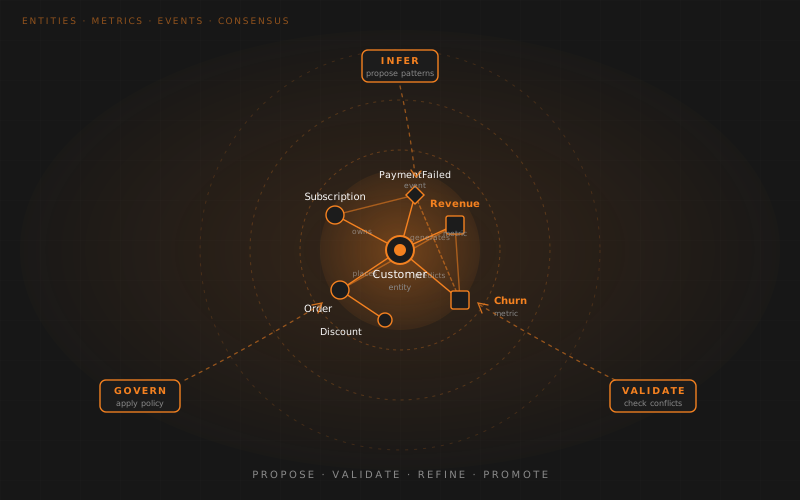
The Enterprise Memory Graph: Why AI-Native Companies Need a Memory They Can Trust
A technical deep dive into the six-layer architecture of semantic consensus.
Read more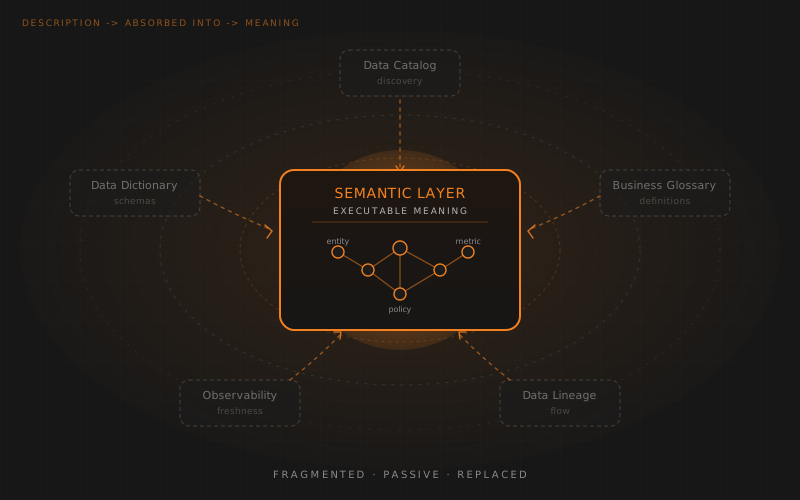
The Decline of Metadata Tools: Why You Need a Semantic Compiler
Catalogs, glossaries, lineage, dictionaries, observability - all collapsing into a unified semantic layer.
Read more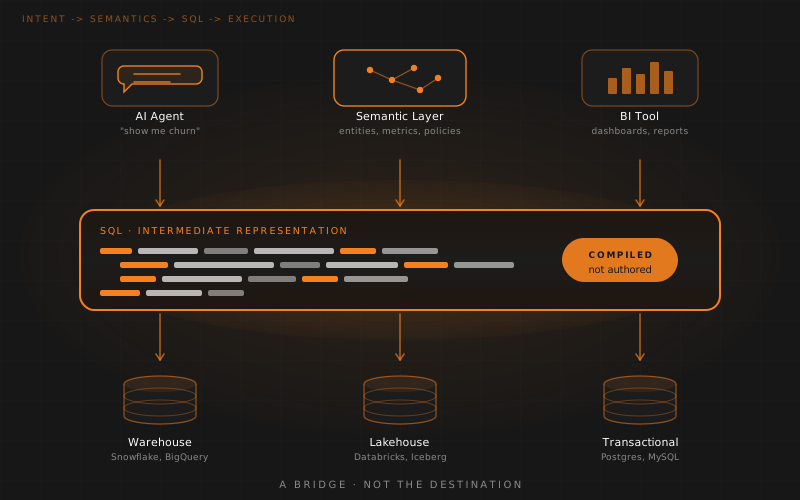
SQL as a Compiler Target: The Future of Governed Enterprise AI
SQL is moving down the stack as an intermediate representation - the semantic layer is the new interface.
Read more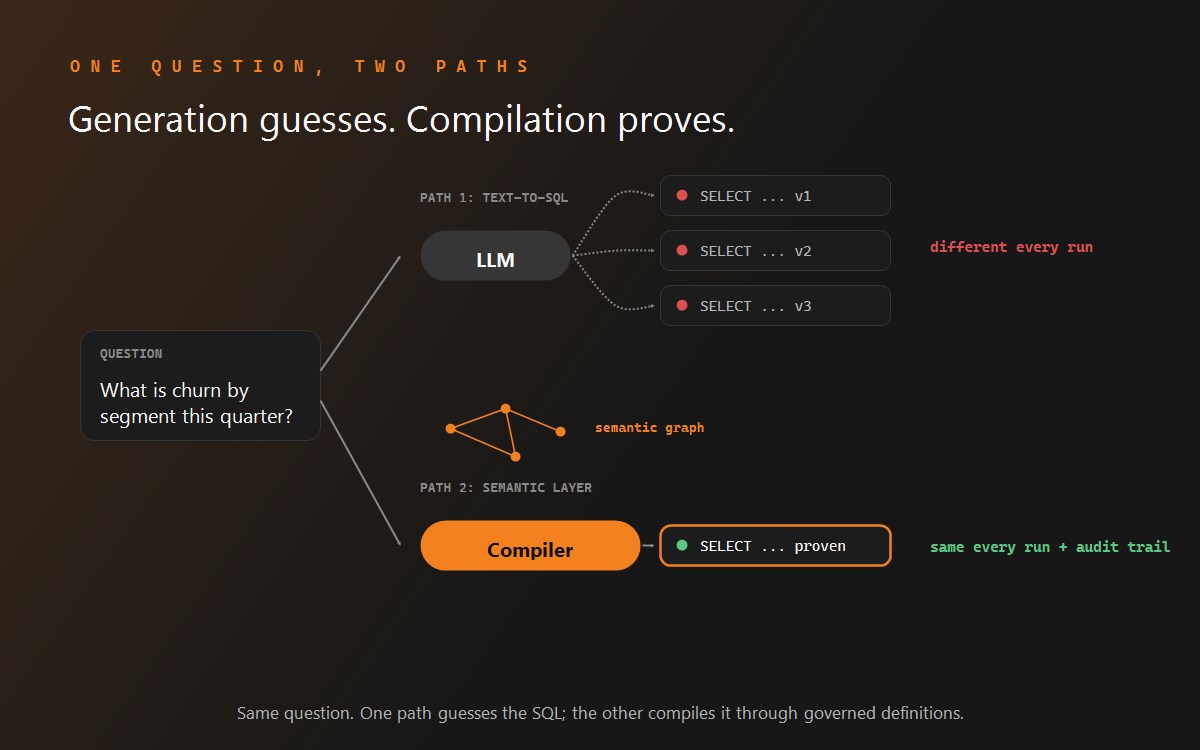
Semantic Layer vs Text-to-SQL: When Each Wins, and Why Mature Teams Use Both
The architecture decision behind natural-language analytics - and when raw text-to-SQL is genuinely fine.
Read more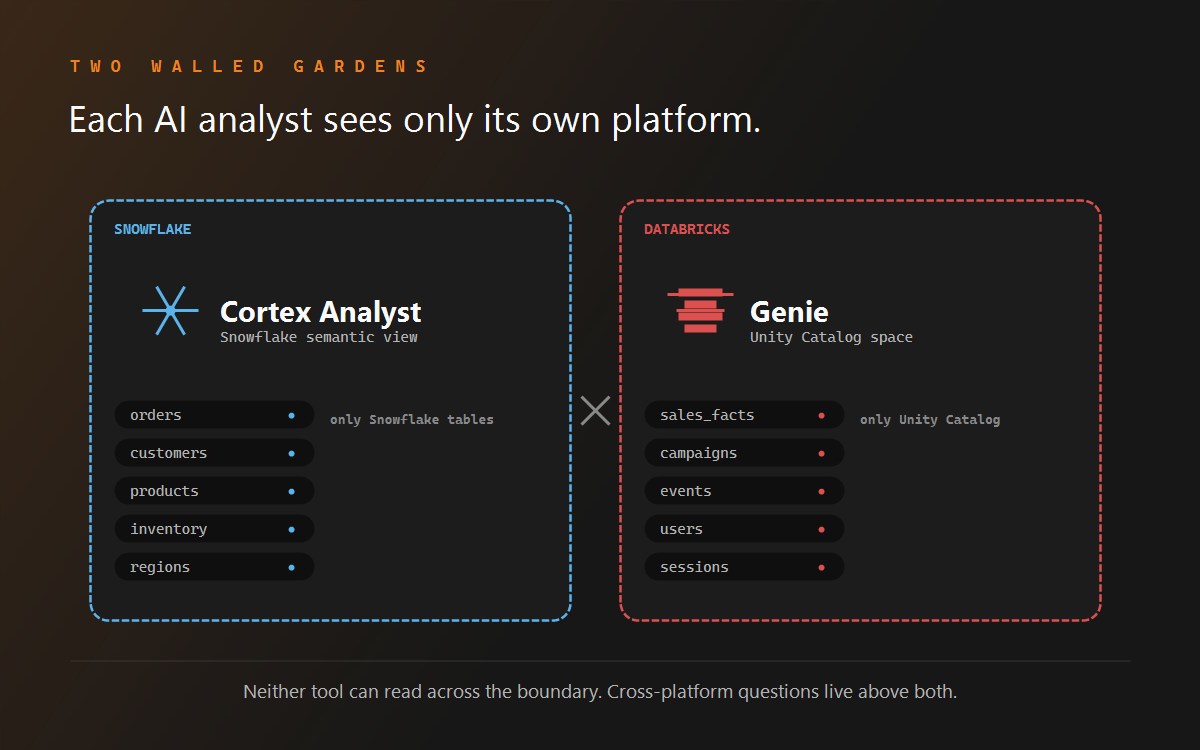
Snowflake Cortex Analyst vs Databricks Genie: Where Warehouse-Native AI Stops
Semantic views vs Genie spaces, the real curation tax, and the platform boundary both share.
Read more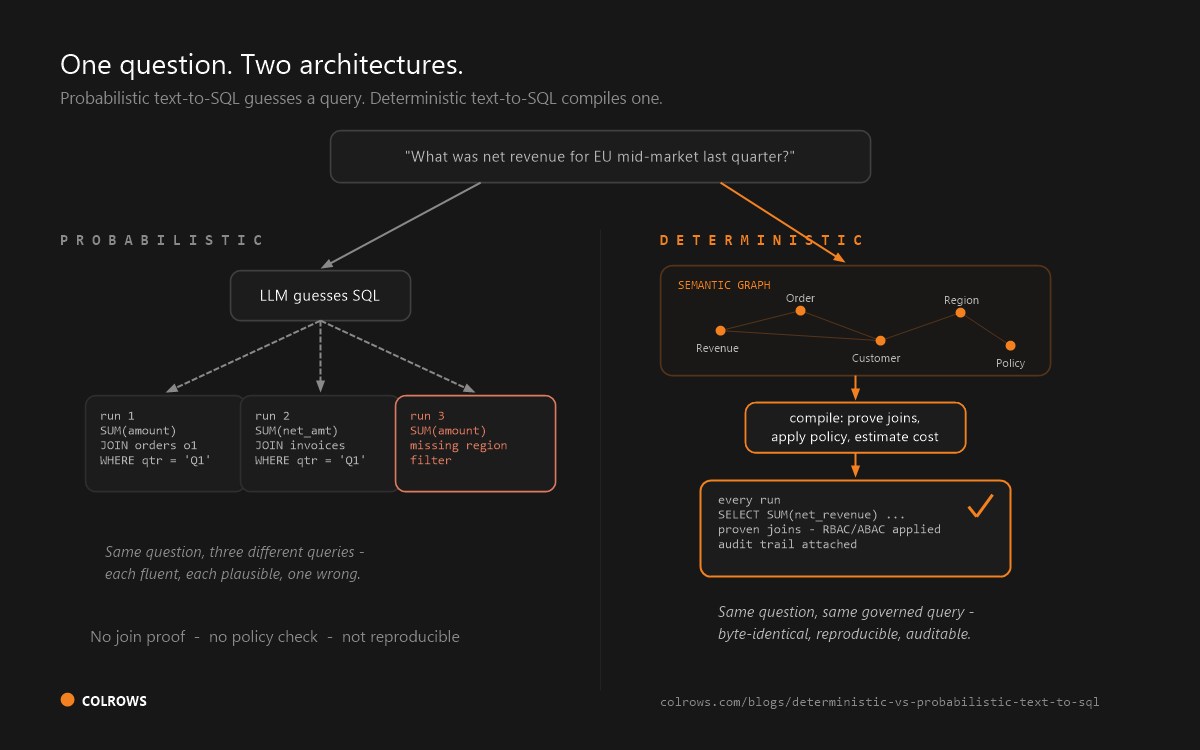
Deterministic vs. Probabilistic Text-to-SQL: Why Accuracy Matters
Raw models solve 10-21% of real enterprise SQL tasks; compiled semantic layers reach 90-100%. The buyer's framework.
Read more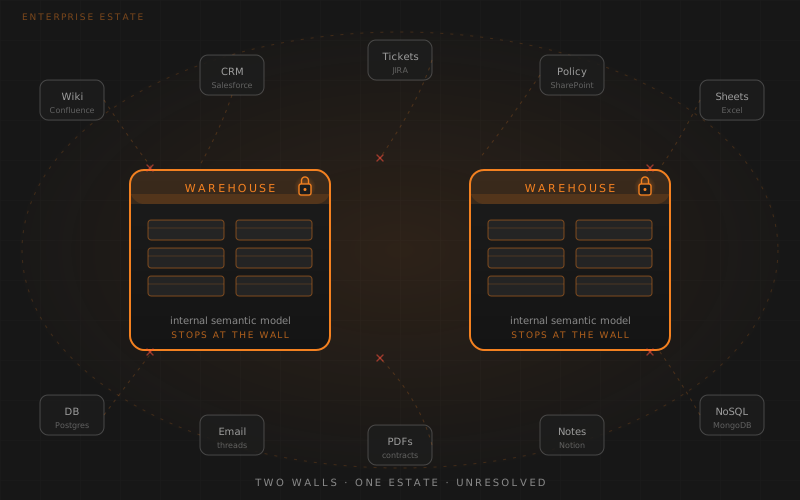
Snowflake vs. Databricks: Why You Need an Autonomous Semantic Layer
Warehouse-native semantic layers stop at the warehouse boundary - and a cross-estate semantic layer is a different product.
Read more
Semantics for Enterprise AI Agents: The Deterministic Foundation for Reliable Autonomous Work
Why generic LLMs fail at enterprise tasks - and what an explicit semantic layer changes.
Read more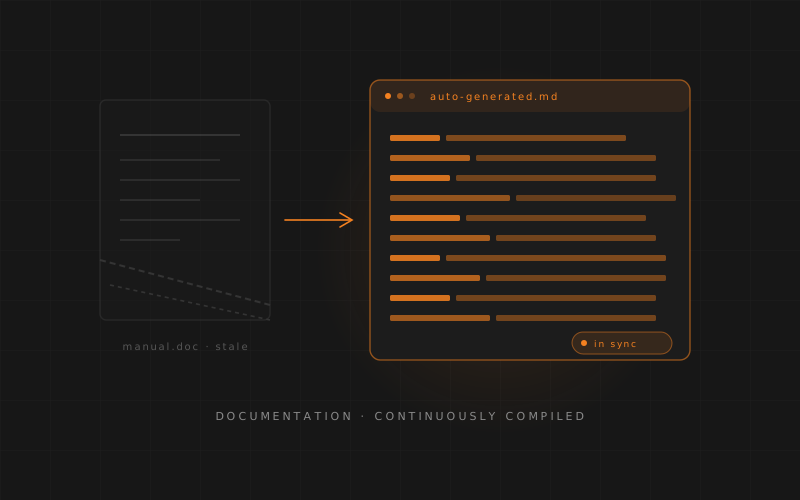
The Death of Manual Documentation: Why Semantic Compilers Replace Catalogs
Auto-generated, self-updating documentation that stays in sync with the data it describes.
Read more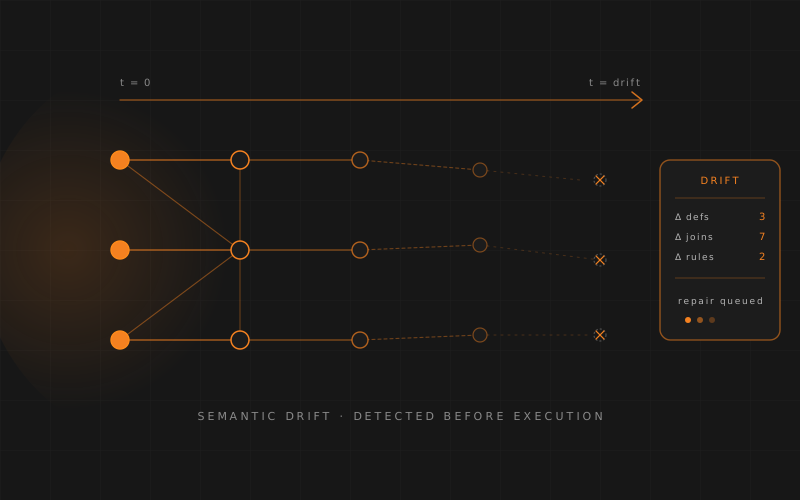
Stop Semantic Decay: Why AI Needs an Autonomous Compiler
The new technical debt of AI systems - and how autonomous maintenance keeps the graph honest.
Read more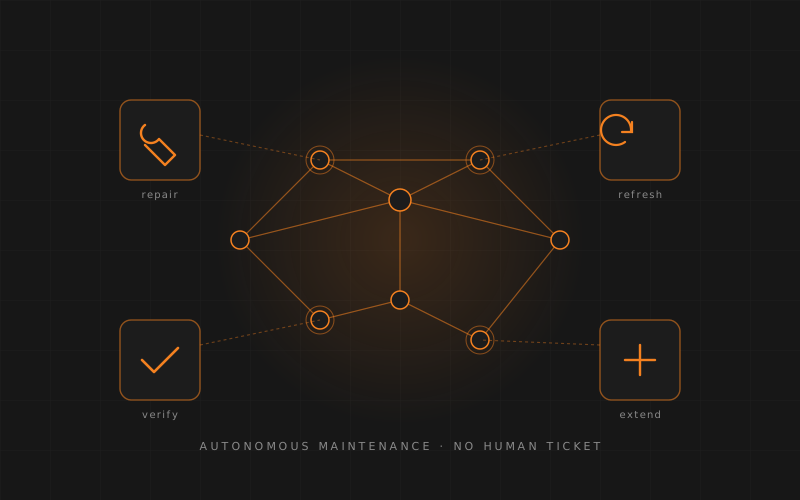
Agents That Maintain Your Data Systems
From human-curated catalogues to AI agents that detect drift, resolve conflicts, and evolve the graph.
Read more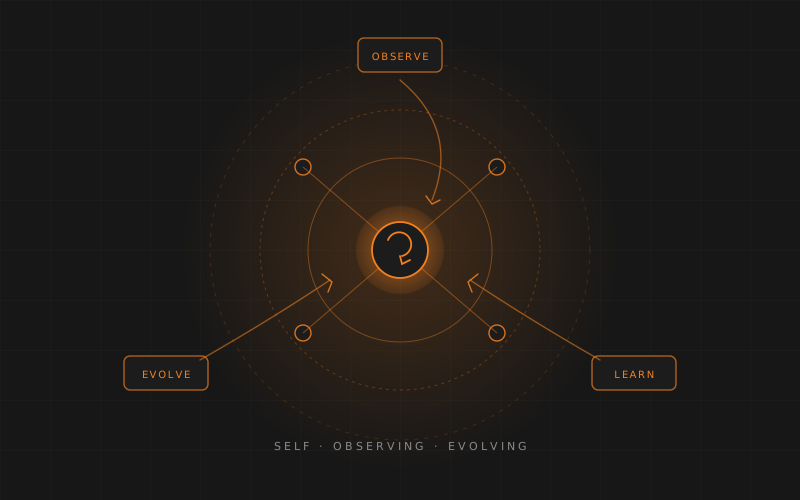
The Rise of Autonomous Semantic Systems
A new category of infrastructure that learns the enterprise - and updates itself.
Read more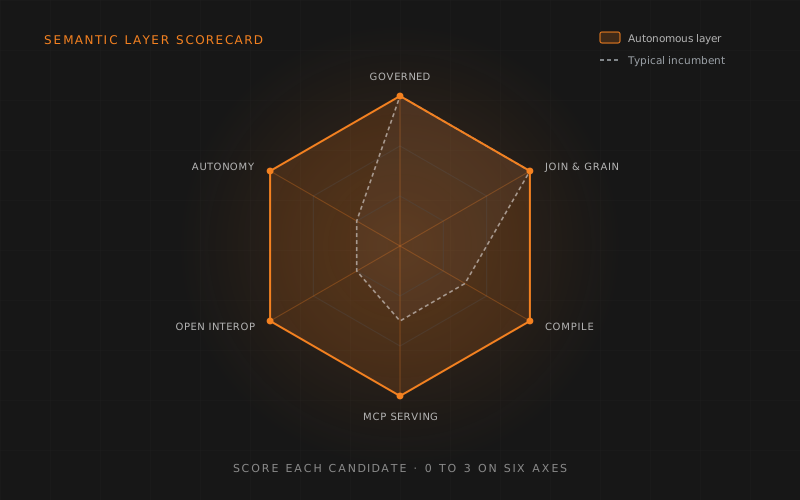
The Semantic Layer Buyer's Guide for 2026
A 12-point framework for choosing the layer your analysts and AI agents can actually trust.
Read more
Semantic Layer for Snowflake: Governed, Deterministic SQL for Your AI Agents
Snowflake's native AI is fast but Snowflake-only and governs after generation. A semantic execution layer compiles deterministic Snowflake SQL with governance before execution.
Read more
Semantic Layer for Databricks: Governed, Deterministic SQL for Your AI Agents
Genie is strong inside the lakehouse but bounded to it. A semantic execution layer compiles deterministic Databricks SQL with compile-time governance, across warehouses.
Read more
Semantic Layer for BigQuery: Governed, Deterministic SQL for Your AI Agents
Gemini in BigQuery helps humans write SQL, but agents need deterministic, governed SQL. A semantic execution layer compiles dialect-perfect BigQuery SQL, across warehouses.
Read more
Snowflake Semantic Views Explained: What They Are, and What Sits Beyond
Schema-level objects defining facts, dimensions, and metrics that power Cortex Analyst. What they do, how you query them, their limits, and what a semantic execution layer adds.
Read more
Databricks Metric Views Explained: What They Are, and What Sits Beyond
Unity Catalog objects defining measures and dimensions that power Genie and AI/BI. What they do, how you query them, their limits, and what a semantic execution layer adds.
Read more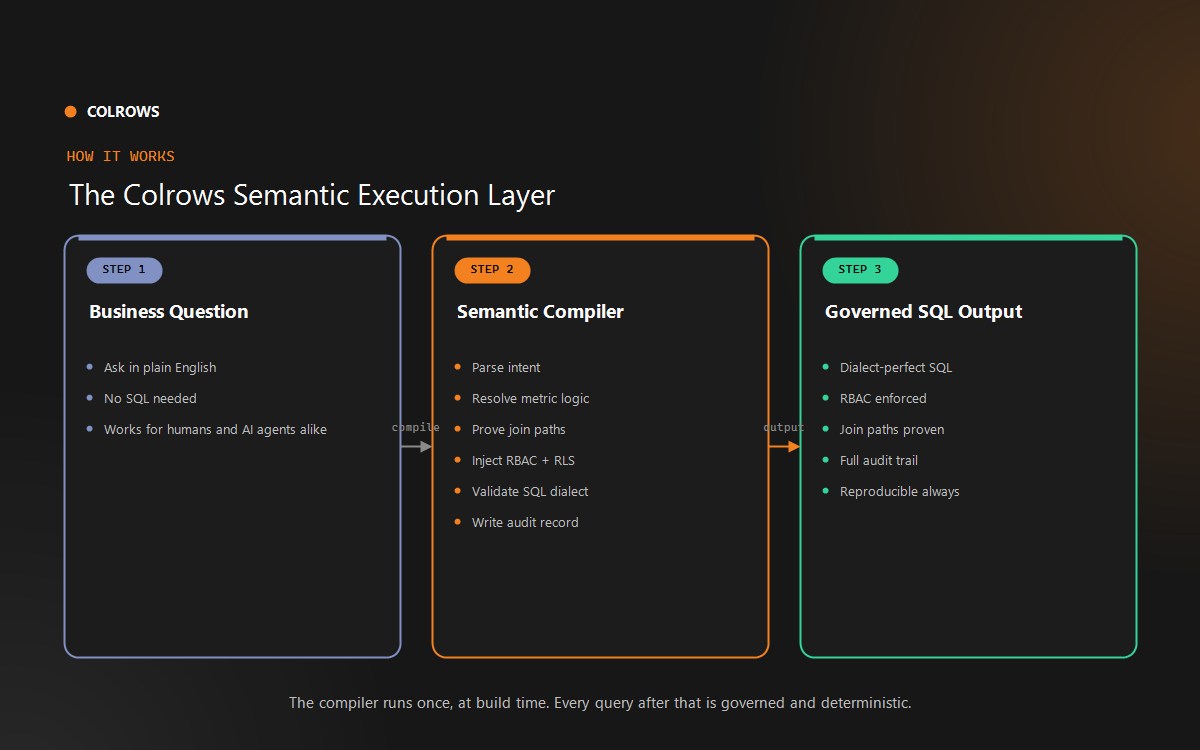
Semantic Layer vs. Semantic Execution Layer: What Every Data Leader Must Know
A semantic layer defines metrics at query time. A semantic execution layer compiles and governs them before any query runs. Here's why that difference changes everything for enterprise AI.
Read moreReady to architect the semantic layer for your agents?
Move from passive metric stores to active, deterministic compilation. Governed queries. Auditable execution. Production-ready AI.