Businesses need a more efficient, user-friendly approach to search and retrieval - one that is fast, intuitive, and doesn't require advanced technical skills. This is where semantic search comes in.
What is semantic search?
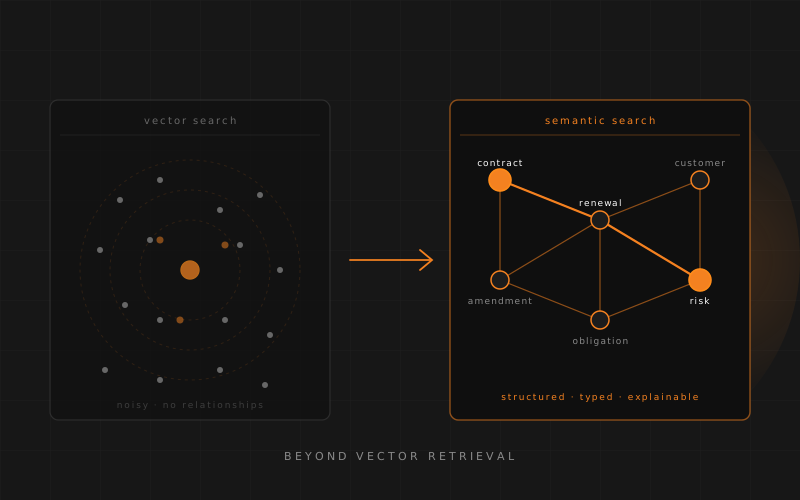
Semantic search is the process of searching for information that goes beyond matching query keywords. It considers the context, synonyms, intent, and meaning behind those keywords. Imagine a unified search tool that allows employees to query and retrieve data from multiple IT systems - from structured databases like SQL to unstructured data repositories such as file servers or cloud storage, as well as custom enterprise applications. Instead of manually navigating through disparate systems, employees can use a simple, intuitive search interface to find relevant information across all data sources. This brings the power of Google-like search functionality to the enterprise - unlocking the collective knowledge of an organisation, breaking down silos, and enhancing productivity.
Why should corporations care about semantic search?
Here's why semantic search is a game-changer for corporate databases:
- Faster data retrieval - corporate data often resides in different systems. Semantic search consolidates multiple sources into one unified query interface, dramatically reducing search time.
- Breaking down silos - data is often siloed in separate systems that don't integrate well. A unified search ensures all relevant data is accessible from a single interface, whether CRM, ERP, or file storage.
- Reduced dependency on IT - traditional data retrieval often requires IT support, but semantic search allows employees to query data on their own in real time.
- Better data security and compliance - semantic search can be integrated with security controls to ensure employees only see data they are authorised to view.
- Enhanced productivity - when employees can easily find the information they need, they spend less time searching and more time working.
What are the key features of enterprise semantic search?
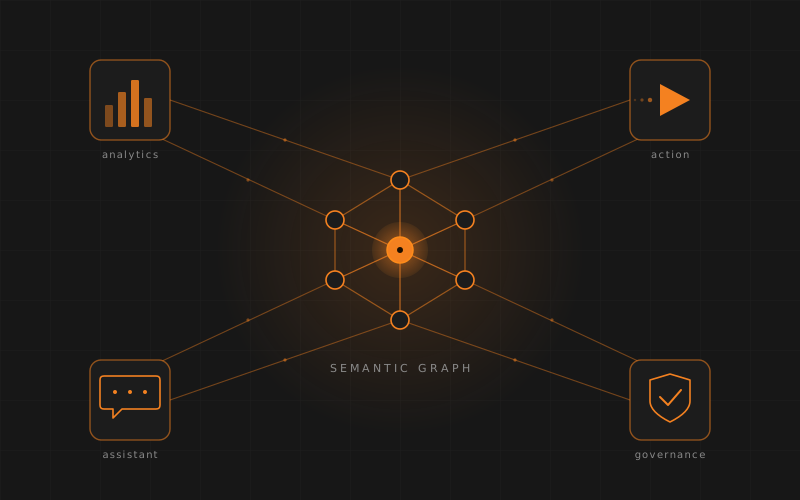
Cross-system search integration is the core capability - the ability to search across SQL, NoSQL, file storage, and enterprise applications like CRM and ERP in a single interface. Unlike traditional queries, semantic search indexes both structured data (tables, fields) and unstructured data (documents, emails), enabling employees to find information buried within unstructured content.
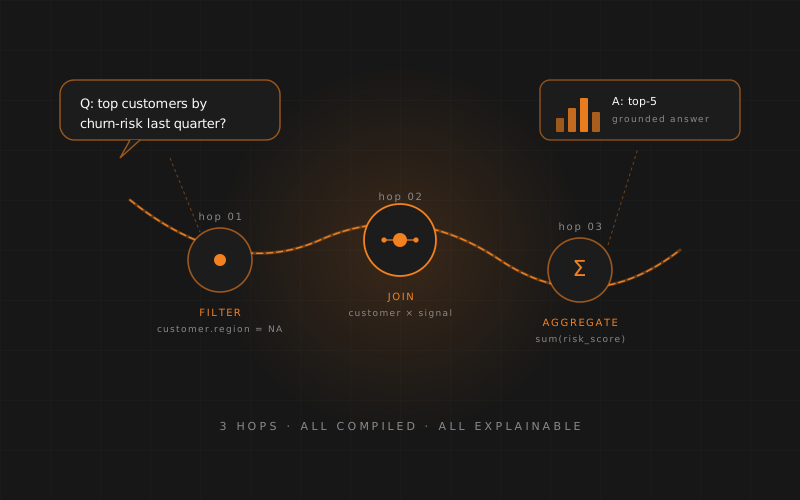
With NLP, users can search using natural language - such as "reports on Q4 2024 performance by region" - returning relevant documents even if those exact terms aren't used in the data. No SQL knowledge required.
Advanced filtering allows employees to refine results by criteria such as date, author, or file type. Search results are also tailored to user permissions, ensuring employees only see data they're authorised to access - protecting sensitive information while maintaining compliance with regulations like GDPR or HIPAA.
How do you overcome enterprise semantic-search challenges?
While implementing semantic search for corporate data has many advantages, there are challenges to consider. Data privacy and security requires robust measures to protect sensitive data while enabling broad access. Data clean-up is essential - a successful search requires well-organised and relevant data, and companies may need to tag and structure data to improve search accuracy. User adoption may face resistance, requiring training and support for a smooth transition.
As businesses continue to manage complex data, semantic search will play a crucial role in unlocking the full potential of their information assets. With a Google-like search for corporate IT data, organisations can optimise data access, enhance decision-making, and streamline operations. The future of corporate data management lies in intelligent, integrated search systems that provide real-time access to relevant information - empowering employees to work smarter and more collaboratively.