Why are the stakes so high for clinical data analytics?
Clinical datasets are rich, complex, and sensitive - encompassing Electronic Health Records (EHRs), lab results, prescription histories, claims and billing data, and patient demographic information. Unlocking this data can improve diagnostics, reduce costs, and enhance outcomes. But HIPAA violations can lead to massive fines and reputational damage. The governing rule set lives in 45 CFR Part 164 (the HIPAA Privacy and Security Rules), published by the U.S. Department of Health and Human Services Office for Civil Rights, which specifies the administrative, physical, and technical safeguards required for any system that handles Protected Health Information (PHI).
That's why traditional analytics workflows in healthcare are tightly controlled, often limited to SQL-savvy analysts working in isolated environments. The question isn't whether to use AI - it's how to do it safely.
Why does conversational analytics need guardrails?
With the rise of LLMs and AI copilots, it's tempting to plug natural language interfaces directly into clinical databases. But without proper controls, this introduces serious risk - PHI exposure through overly broad queries, misuse of access across departments, inaccurate aggregations from ambiguous terms, and audit failures with no trace of who accessed what.
A query like "Show me all patients with heart failure under 40 at XYZ Hospital" is natural language - but represents a serious HIPAA risk without row-level security and policy enforcement built into the query layer.
How does Colrows enable HIPAA-grade conversational analytics?
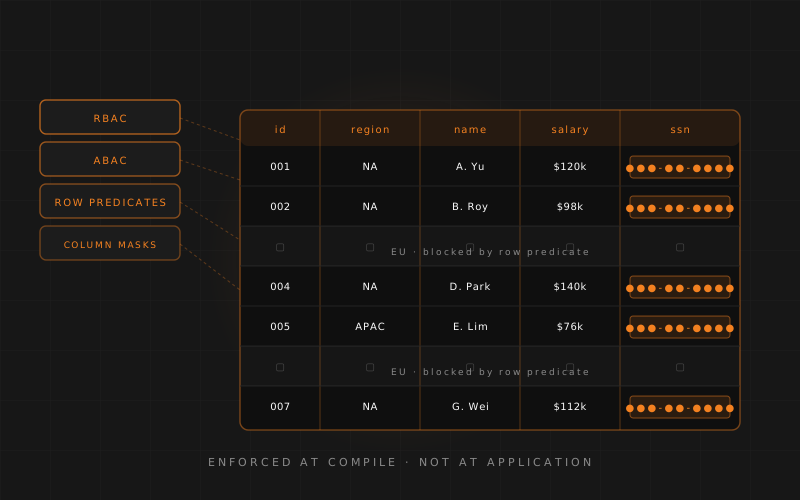
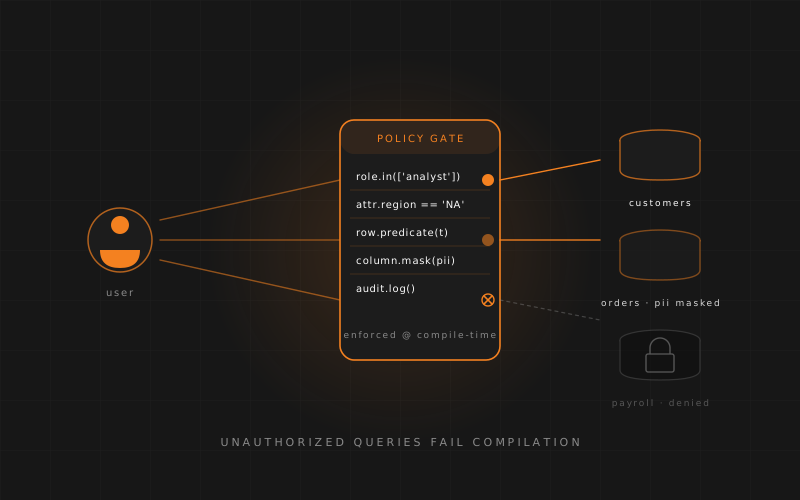
Colrows provides a HIPAA-conscious approach to conversational analytics through role- and attribute-based access control. Policies restrict who can query what data, at what granularity, using which fields as filters, with real-time user context and auditability. For example: a cardiologist can query de-identified patient summaries across departments; a claims analyst can access only billing tables scoped to their region; a data scientist can analyse trends, but never access names or contact information.
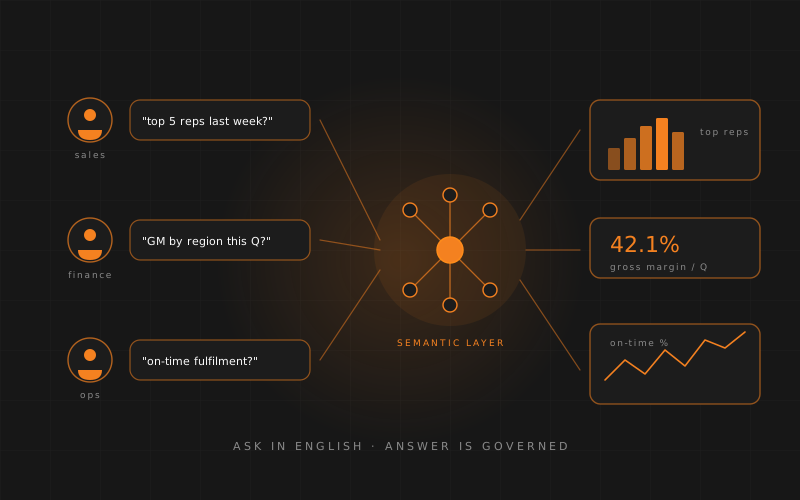
The AI query engine pairs the assistant with your data catalogue and security policies - understanding clinical schemas and definitions, applying policy-based filters automatically to queries, preventing exposure of PHI or PII in results, and sanitising ambiguous user input for safety.
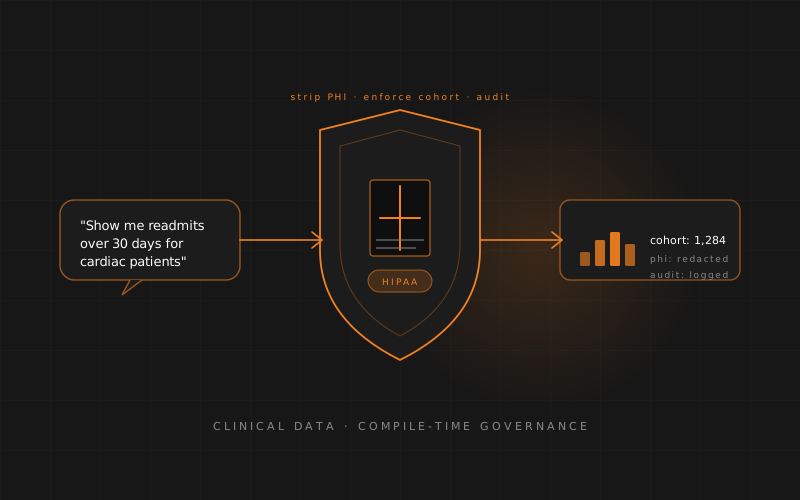
Real-world example - ask: "What's the readmission rate for diabetic patients over 60 in Q1?" Get: a policy-compliant query that returns aggregate insights, never raw rows. All within HIPAA boundaries, with full audit logging.
How does Colrows handle audit, logging, and compliance reporting?
Every interaction - whether by human or AI - is logged: who asked what, when, what data was accessed, and whether the response passed through policy enforcement. Colrows gives compliance officers complete visibility for audits or internal reviews. For healthcare data scientists, Colrows also provides native Python notebooks, AI-assisted exploration of structured data, and reusable parameterised queries with safe execution contexts.
Conversational analytics doesn't have to mean compliance nightmares. With Colrows, healthcare teams can empower clinicians, analysts, and researchers - while respecting HIPAA and institutional policies - and unlock insights faster without unlocking patient risk.
Talk to your data. Protect your patients. Do both - with Colrows.