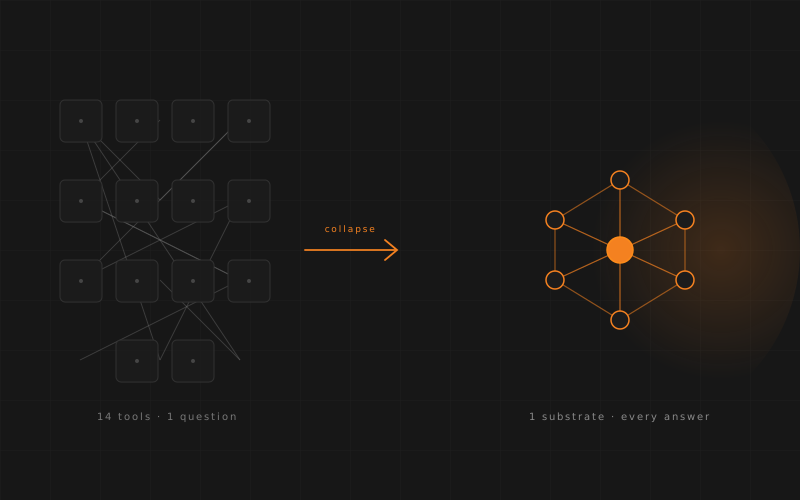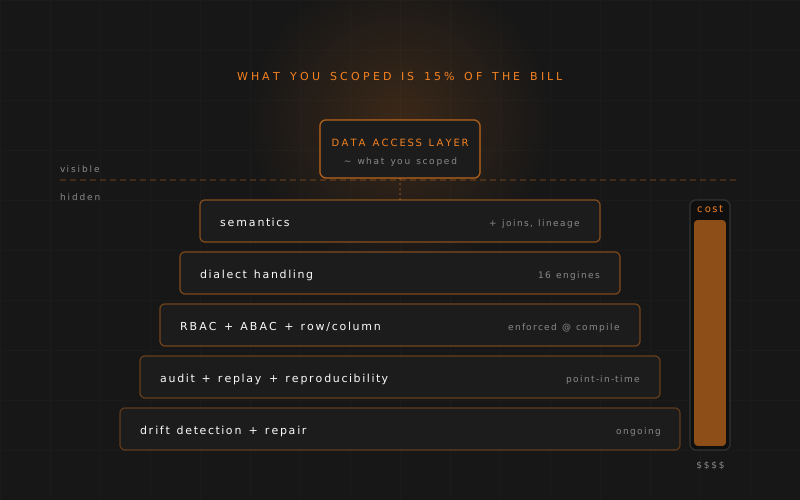
This post exposes the real cost of building a modern data access layer, and why CTOs and data leaders are increasingly adopting Colrows as a purpose-built alternative.
What are you really signing up to build?
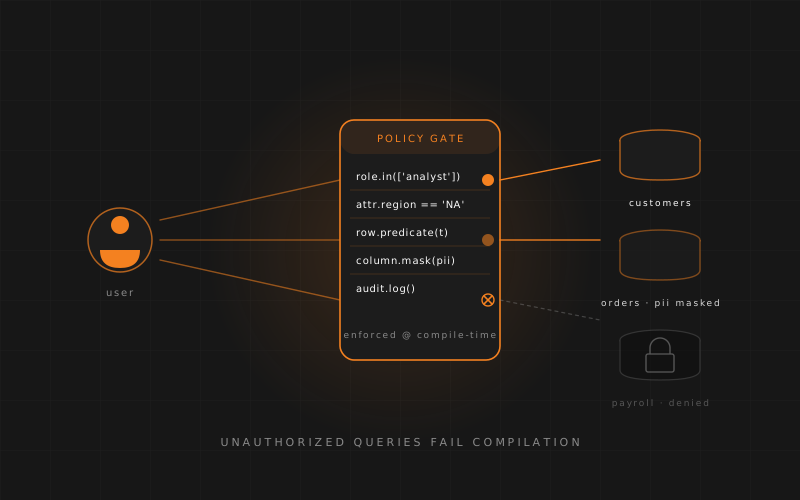
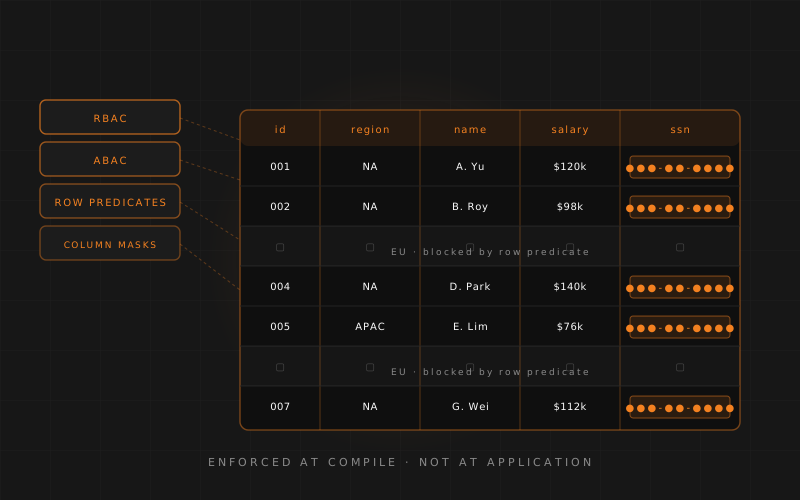
The full scope of what's typically needed for modern, secure, self-serve analytics includes: secure SQL access and APIs; data connectors for PostgreSQL, Snowflake, MongoDB, and APIs; authentication and RBAC; row/column-level policies; query governance and reuse; an AI layer for SQL generation; a metadata catalogue for AI context; Python notebooks for analysis; audit logging and versioning; caching, rate limits, and query previews; and team collaboration and review workflows.
The total? Easily 6-12 months of work by senior engineers - and that's just to hit parity with baseline features.
What are the hidden costs in detail?
Building and maintaining data connectors for multiple warehouses and databases isn't trivial. You'll need different drivers and dialect handling, credential vaulting, source-specific quirks and limits, and schema discovery and refresh. Colrows ships with built-in, production-ready connectors, saving months of work and dozens of potential bugs.
The real challenge with AI-assisted analytics isn't generating SQL - it's generating valid, context-aware SQL.
That means building schema readers, join graph builders, role-based access filters that influence output, confidence scoring, fallback strategies, and sandboxed execution. Colrows bakes all of this into a production-grade AI assistant that's aware of schema, metadata, user permissions, and input constraints.
Catalogue and metadata infrastructure requires mapping tables to business entities, columns to metrics and PII flags, and relationships to join paths and data lineage. This is a non-trivial effort, often requiring a separate data catalogue or custom tooling. Colrows auto-generates a semantic catalogue as you connect and query sources - fuelling both AI and governance.
Notebook access for data science requires secure ephemeral notebooks, context-aware SQL-to-Pandas workflows, managed compute and network boundaries, and integrated policy enforcement. Colrows offers built-in Python notebooks, pre-authenticated to data sources and governed by the same policies - no extra infrastructure needed.
What is the TCO of a custom data access layer?
The in-house cost of replicating Colrows breaks down approximately as: 2 full-time backend engineers for 12 months at $300,000+; DevOps and infrastructure support at $100,000+; ongoing maintenance and bug fixes at $50,000 per year; plus missed opportunity cost from slow delivery - hard to quantify, but very real. And that's before scaling, onboarding, audits, or compliance demands.
What is the Colrows alternative?
With Colrows, you get unified access across databases, warehouses, and APIs; enterprise-grade access control and policy enforcement; smart conversational interface powered by structured metadata; Python notebooks; reusable queries, safe parameterisation, instant REST APIs; and governance without gatekeeping - in a single platform designed to deliver value in days, not quarters.
Rolling your own data access layer may seem like a shortcut - until you see how deep the rabbit hole goes. With Colrows, you avoid technical debt, accelerate delivery, and keep your team focused on what actually matters: insights, not infrastructure.